









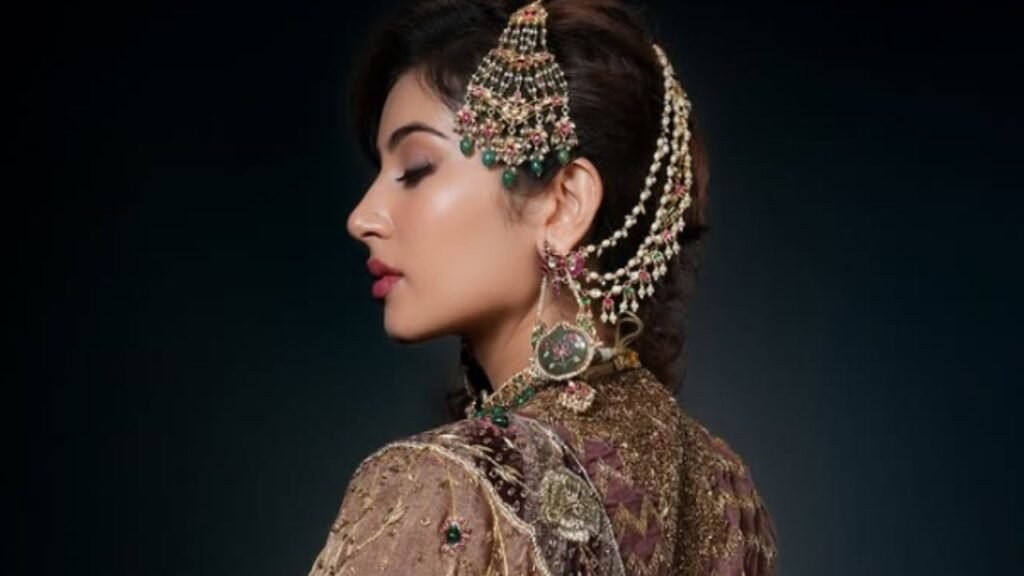

Actor Sara Arjun brings centuries-old Indian textile artistry into contemporary focus with a newly unveiled look from Dhurandhar. Released through official still photographs, the ensemble spotlights lampi work—an intricate Mughal-era metal embellishment technique—reintroduced through a cinematic fashion narrative.
The Look Unveiled
The stills from Dhurandhar reveal Sara Arjun in a lampi-work lehenga designed by heritage-focused label Divani. The look stands out for its emphasis on materiality and structure, allowing traditional craftsmanship to take centre stage rather than relying on excessive ornamentation.
The lehenga’s muted metallic surface creates a controlled visual drama, reflecting light subtly while maintaining a regal restraint—an aesthetic closely associated with historic court dressing.
Design Details & Craftsmanship
According to Divani, Sara Arjun is seen wearing their Lampi-Chaddi lehenga, constructed using traditional lampi gota. The technique gives the fabric a sculptural, armour-like finish, echoing ceremonial garments once worn by royalty.
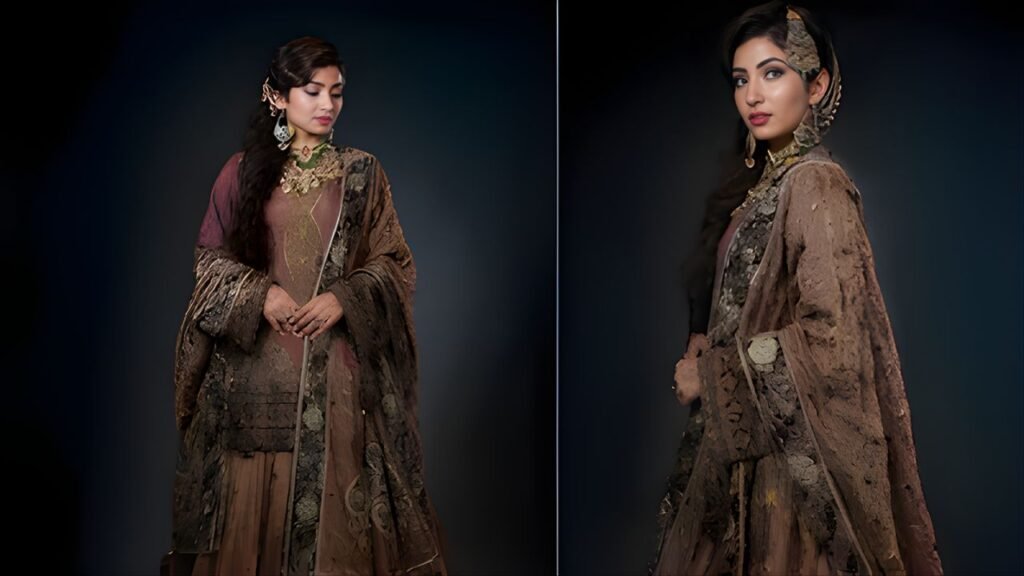
The ensemble is paired with an intricately crafted zardoz kurti, elevated by handcrafted naqshi jhallar detailing. Each metal element is individually shaped and applied by skilled artisans, creating a rhythmic fringe that adds movement and depth to the silhouette.
Adding softness to the structured base is an Ek Taar Tissue odhana, detailed with semi-precious pearls and emeralds. The veil is layered with traditional naqshi challa work and finished with hand-rolled naqshi jhallar trims. The use of rich, handwoven Banarasi textiles anchors the look firmly in Indian weaving traditions.
Fashion & Heritage Context
Lampi work is a historic metal application technique and a refined form of gota work. It involves flattening fine metal wires—traditionally gold, silver, or copper—into thin strips that are stitched, couched, or woven onto fabric. Frequently paired with zardozi, badla, and naqshi, lampi work creates embossed floral and geometric motifs prized for their reflective, mirror-like finish.
The craft flourished during the Mughal era and was widely patronised by princely courts, including the Nizams of Hyderabad, where it symbolised prestige, ceremony, and power. Over time, the labour-intensive nature of the technique led to its decline in mainstream fashion.
By placing lampi work within a contemporary cinematic costume, Dhurandhar repositions the craft for modern audiences, allowing heritage textiles to function as visual storytelling tools rather than archival references.
Fashion Community Response
Fashion observers and craft enthusiasts have responded positively to the stills, noting the deliberate shift toward technique-driven design. Sara Arjun’s restrained styling allows the craftsmanship to command attention, reinforcing a growing industry focus on authenticity, artisan labour, and cultural continuity.
The look has been widely appreciated for feeling archival yet cinematic—an example of heritage fashion adapted thoughtfully for the screen.
What’s Next?
As Dhurandhar continues to reveal more visual material, its costume design is expected to remain a point of discussion within fashion and craft circles. Sara Arjun’s lampi-work ensemble sets a strong benchmark for heritage-led fashion narratives in Indian cinema.
Jay-Ho! will update this story as more details emerge.