











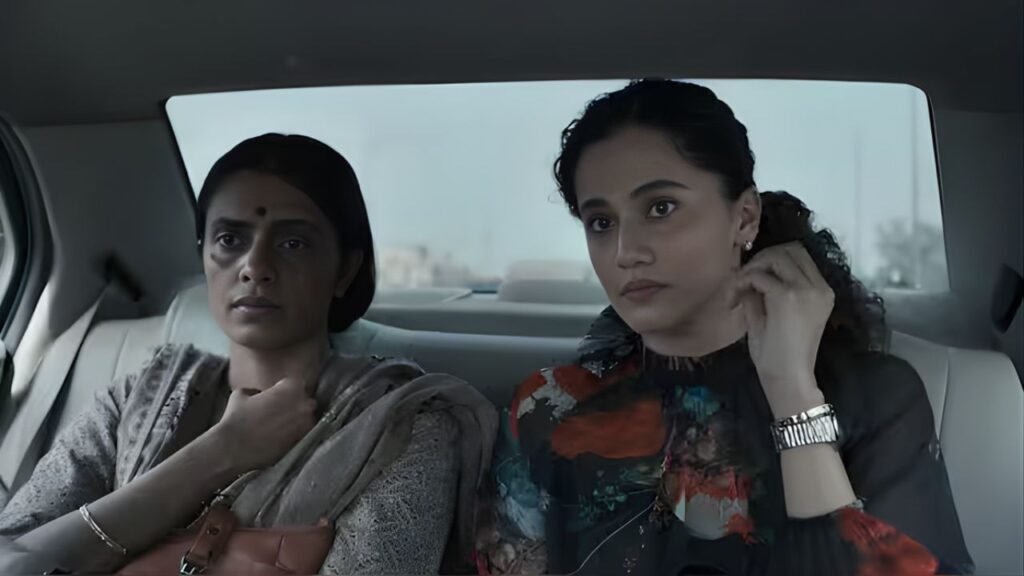

Assi, directed by Anubhav Sinha, is not an easy film to watch—and it is not meant to be. Audacious, unsettling, and deeply political, Assi continues Sinha’s body of work that interrogates dignity, justice, and systemic failure in modern India. Much like Mulk and Thappad, the film explores how women reclaim agency after violence. But while Thappad examined domestic violation within marriage, Assi widens the lens to address sexual assault, institutional apathy, and the brutal cost of delayed justice.
A Harrowing Opening, A Familiar Reality
Assi announces its intent from the first frame. A woman is discovered near railway tracks—bloodied, bruised, clothes torn. The image is stark and deeply uncomfortable. The narrative then moves back in time, introducing us to Parima, a middle-class Malayali woman living in Delhi with her Haryanvi husband Vinay and their young son.
Their life is unremarkable in the most ordinary sense. Morning routines, school, work, shared responsibilities—until violence shatters everything.
One night, after a farewell party runs late, Parima takes the metro home. She is followed, abducted, and gang-raped by five men in a moving car. The assault is filmed without sensationalism but with chilling clarity. The perpetrators treat the crime like a grotesque competition—boasting, laughing, turning brutality into a performance of masculine dominance.
Justice Delayed, Justice Denied
What follows is not just Parima’s fight, but her family’s slow unravelling. Evidence disappears. Files are tampered with. Influence shields the accused. Enter Raavi, a lawyer determined to fight the case, and Kartik, a colleague of Vinay’s, dealing with his own unresolved grief after losing his wife in a hit-and-run incident.
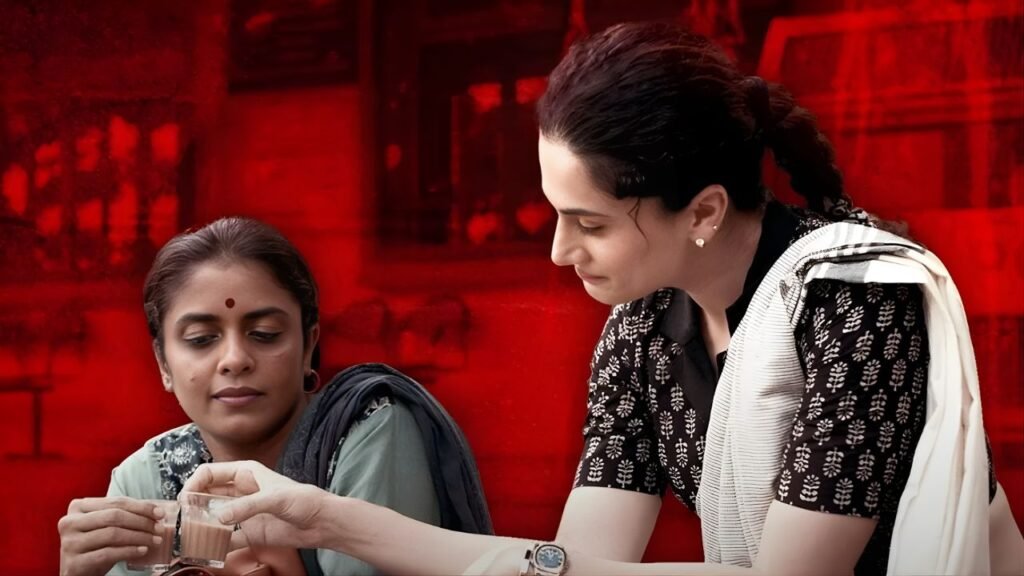
The film asks difficult questions without offering easy answers:
Is justice delayed truly justice denied?
What defines criminality in a system that protects the powerful?
Can violence ever be avenged without perpetuating more violence?
Sinha is less interested in courtroom triumphs and more focused on the grinding machinery of bureaucracy that exhausts survivors into silence.
Where the Film Falters—and Why It Still Works
At times, Assi stretches itself thin. The inclusion of police apathy, legal loopholes, Kartik’s personal trauma, and broader social commentary occasionally pulls focus away from Parima’s internal journey. The emotional core risks dilution as the narrative expands outward.
This is not Pink. There is no rousing climax, no clean moral victory. Raavi’s final courtroom argument feels less like a triumphant speech and more like an emotional breakdown—raw, mechanical, and unresolved. But perhaps that is precisely the point. Justice, in reality, is rarely cinematic.
Performances That Anchor the Film
While Taapsee Pannu brings intensity and moral urgency to her role, the film ultimately belongs to Kani Kusruti. As Parima, Kani delivers a performance of devastating restraint.
She never slips into self-pity. Instead, trauma manifests in silences, guarded body language, and emotional withdrawal. Her stillness speaks louder than dialogue. The pain lingers in how she walks, how she avoids touch, how she occupies space. It is a performance rooted in dignity, capturing not just the assault but its echo—how violence continues to live inside the body and mind.
Jay-Ho Scoop
Assi is not comfortable, not hopeful, and not designed for applause. It is urgent, unsettling cinema that insists on looking directly at systemic failure and collective complicity. It may falter in narrative focus, but it largely succeeds in its moral ambition.