








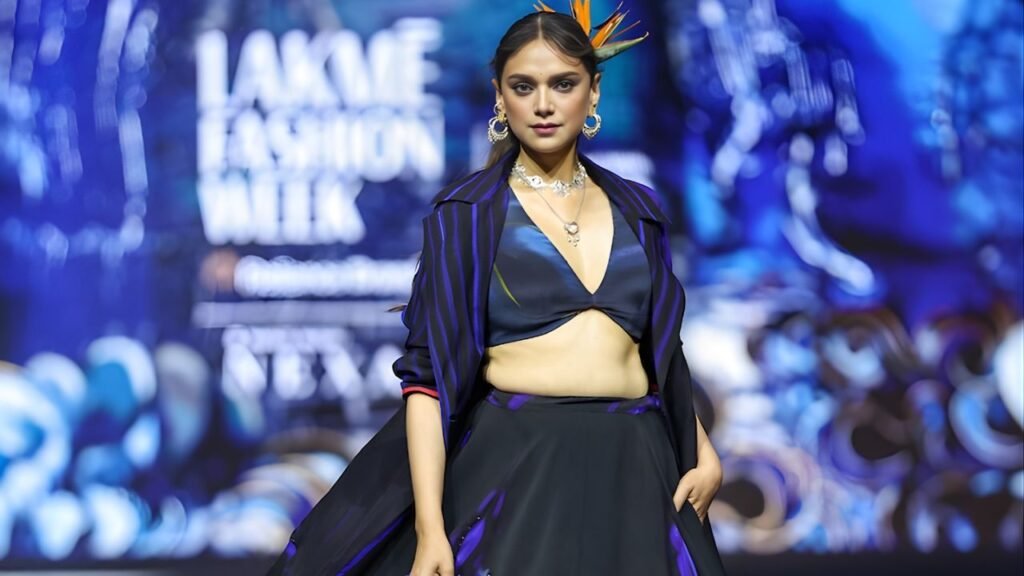

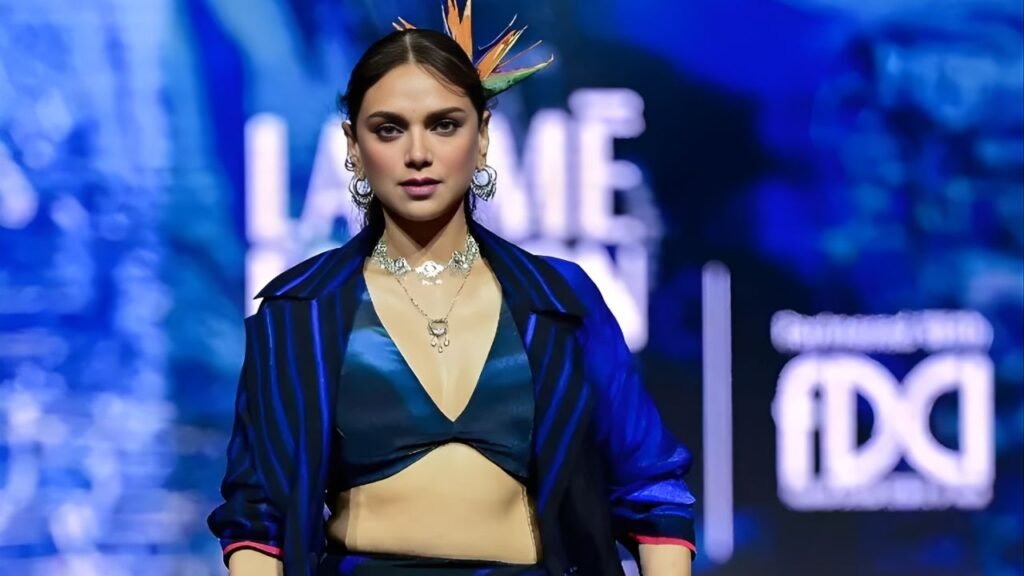
Aditi Rao Hydari has officially stepped into fashion design — and her debut could not have been more considered. At Lakmē Fashion Week x FDCI, the actor took the runway as Co-Creative Director for Satya Paul, presenting a capsule collection that blends the label’s signature print-forward identity with her own instinct for storytelling, colour, and effortless dressing. It is a first for Aditi in formal fashion design, and the result signals she arrived with a clear vision.
Aditi Rao Hydari at Lakme Fashion Week: The Satya Paul Capsule Explained
The capsule collection sits at the intersection of fluidity and occasion — garments designed to move with the wearer rather than define the event.
Working alongside Satya Paul’s creative directors, Aditi shaped a wardrobe built for the present. The pieces transition across settings with ease, collapsing the traditional boundary between daywear and occasion wear. Fluid drapes anchor the collection, balanced with contemporary layering that feels instinctive rather than constructed.
Print remains at the heart of the Satya Paul identity, and the capsule honours that heritage while pushing it into a more personal register. The colour choices are vibrant and deliberate, reflecting Aditi’s stated love of art and visual storytelling.
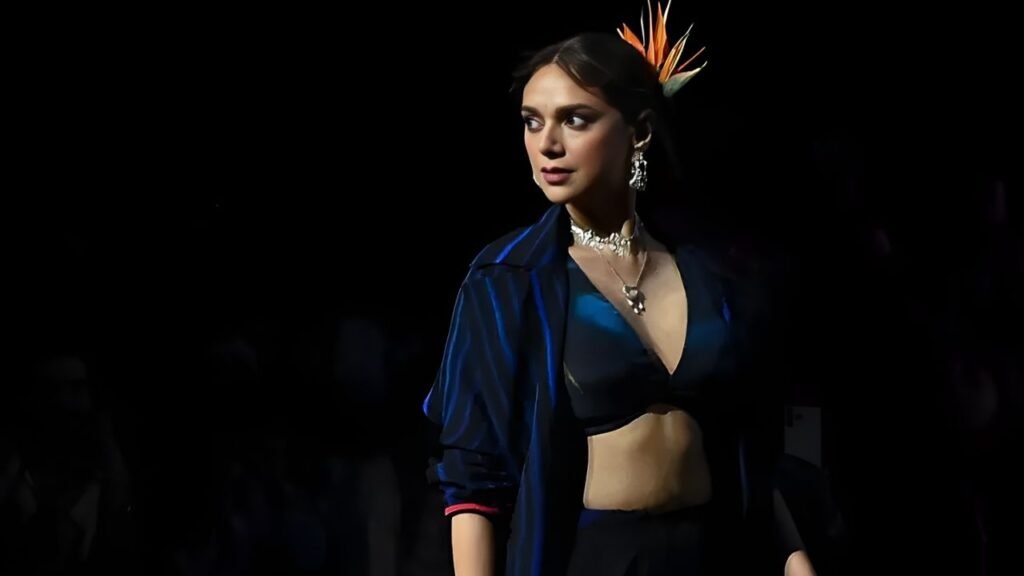
She took to the runway herself to close the presentation, embodying the collection’s ethos — expressive, easy, and styled for movement. Her appearance on the runway was not ceremonial. It was a creative statement.
Why This Matters
Aditi Rao Hydari’s transition into fashion design is not a celebrity collaboration in the conventional sense — and that distinction matters.
Industry experts believe the most meaningful actor-to-designer pivots occur when the creative involvement is genuine rather than nominal. Aditi’s role as Co-Creative Director places her in the design process itself, not simply at the front row or on the campaign poster. That is a meaningful difference, and Satya Paul’s decision to formalise that role signals confidence in her creative instincts.
The choice of Lakmē Fashion Week x FDCI as the debut platform also carries weight. It is India’s most prominent fashion showcase, and presenting a capsule there — rather than through a quieter retail launch — indicates that both Aditi and the label intended this to be seen as a serious creative moment.
Reports suggest the collection was developed over an extended period of collaboration, with Aditi deeply involved in the storytelling direction, colour palette, and silhouette decisions. Confirmed sources indicate this is not a one-off project but the beginning of a sustained creative partnership with the label.
Public and Fan Reaction
Social media is buzzing with reactions to both the collection and Aditi’s runway appearance.
Fashion communities have responded with genuine enthusiasm, noting that the capsule feels cohesive rather than a typical celebrity add-on to an existing label. The print choices have drawn particular attention — vibrant, layered, and rooted in a visual language that feels consistent with Aditi’s personal aesthetic as seen across her red carpet appearances over the years.
The internet is reacting with a mix of admiration and curiosity. Many fans noted that Aditi walking the runway herself — rather than sending out models while standing backstage — demonstrated a level of commitment to the creative vision that is rarely seen in debut collaborations of this kind.
Several fashion commentators have flagged the collection as one of the stronger debut capsules to emerge from a Bollywood actor in recent memory.
Hidden Details
What makes the Satya Paul capsule particularly interesting is the specific creative philosophy Aditi brought to it.
Her stated intention — to create garments that feel “easy and authentic” — is a direct pushback against the maximalism that has dominated Indian occasion wear for the past several years. The collection does not chase drama. It pursues fluidity, personality, and wearability across multiple contexts.
The saree, reimagined within this framework, becomes something quietly radical. Satya Paul has always treated the saree as a canvas for print and colour rather than tradition and formality. Aditi’s co-direction deepens that approach by asking what the saree looks like when it is styled not for an occasion but for a person.
That shift — from occasion-dressing to identity-dressing — is subtle. But it runs through every piece in the capsule and gives the collection a coherence that debut collaborations rarely achieve.
What Comes Next
No formal announcement has been made regarding future collections under Aditi’s Co-Creative Director role at Satya Paul as of March 19, 2026.
The success of the Lakmē Fashion Week x FDCI debut, however, makes a continued partnership the logical next step. If confirmed, Aditi’s second collection will be watched closely — debut capsules set a tone, but follow-up work defines a creative voice.
KEY TAKEAWAYS BOX
- Aditi Rao Hydari made her fashion design debut as Co-Creative Director for Satya Paul at Lakmē Fashion Week x FDCI
- The capsule collection is print-led, vibrant, and built around fluid drapes and contemporary layering
- Aditi walked the runway herself to present the collection
- Collection philosophy: garments designed for personality over occasion, transitioning between daywear and occasion wear
- No announcement yet on future collections under the partnership
Jay-Ho Insider
Aditi Rao Hydari’s Satya Paul debut is one of the more credible actor-fashion crossovers Indian style has seen in recent years. The Co-Creative Director title could easily be dismissed as honorary — but the capsule itself argues otherwise. The collection has a coherent point of view: fluidity over formality, personality over occasion, movement over structure. That is a design philosophy, not a mood board. What is most interesting is the choice of the saree as the collection’s centrepiece. Reimagining India’s most culturally loaded garment through a lens of ease and self-expression rather than tradition and occasion is a genuinely bold creative position. If the partnership continues — and the Lakmē reception suggests it should — Aditi Rao Hydari may prove to be one of the more interesting design voices to emerge from Bollywood in this decade.