










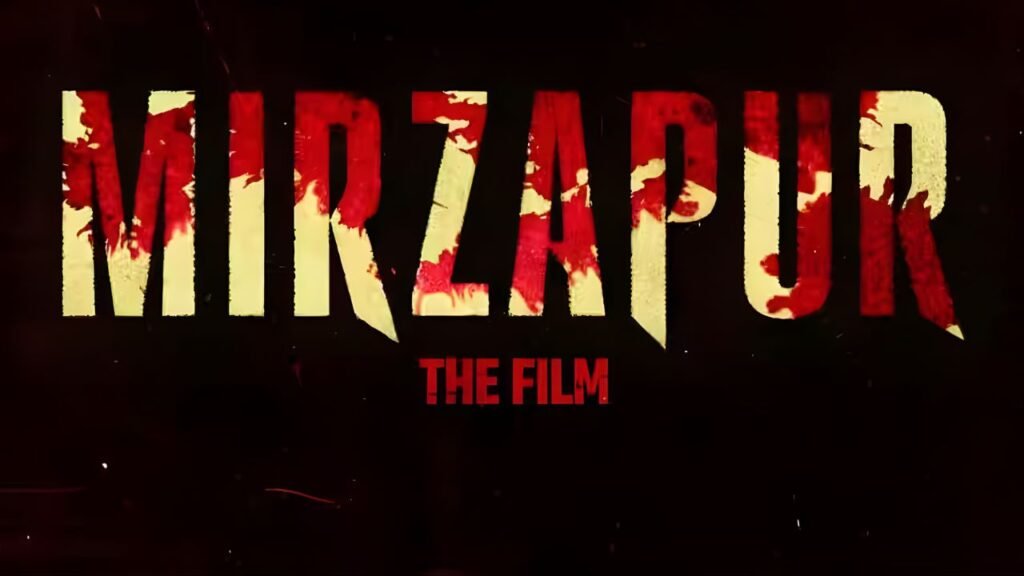

The world of Mirzapur has never been about restraint, and that is precisely why its transition to the big screen feels both inevitable and risky at the same time. With Mirzapur: The Movie now in development, the makers are not just extending a successful franchise but attempting to reshape it into something far more expansive, cinematic, and emotionally intense than what audiences have experienced so far. The gritty universe that once thrived in episodic storytelling is now being reimagined for theatres, where every frame must carry weight and every moment must leave an impact strong enough to justify its scale.
A Larger Canvas With Deeper Shadows
What makes this transition particularly compelling is the intention behind it, as industry conversations suggest that the film is being designed not as a continuation alone but as a significant expansion of the Mirzapur universe, one that embraces a darker tone, more layered storytelling, and a cinematic depth that goes beyond the limitations of streaming formats. The narrative is expected to evolve into something more intense, where the emotional conflicts are sharper, the violence more immersive, and the stakes far higher than before, creating an experience that feels less like a series extension and more like a standalone cinematic event that demands attention on a larger scale.
Expanding a World That Already Felt Complete
The challenge with adapting a show like Mirzapur into a film lies in the fact that its world already feels complete, with its complex characters, unpredictable power dynamics, and deeply rooted conflicts forming a narrative ecosystem that thrives on time and gradual development. Translating that into a film format requires not just condensing the story but elevating it, ensuring that the emotional depth and narrative complexity are not lost in the process. This is where the film’s ambition becomes evident, as it aims to retain the raw essence of the series while amplifying its intensity, allowing the story to unfold in a way that feels both familiar and entirely new.

Familiar Faces, But Not the Same Game
While much of the plot remains under wraps, the presence of returning characters ensures that the emotional continuity of the story remains intact, giving audiences a sense of connection and anticipation as they revisit personalities they have invested in over time. At the same time, the introduction of new characters is expected to disrupt the existing balance of power, adding layers of unpredictability that could redefine alliances and rivalries in ways that feel organic yet surprising. In a world like Mirzapur, where loyalty is fragile and ambition often outweighs morality, even the smallest shift can trigger consequences that ripple across the entire narrative.
Violence That Defines, Not Just Shocks
One of the defining aspects of Mirzapur has always been its portrayal of violence, which, despite its intensity, has rarely felt unnecessary because it was deeply rooted in character motivations and narrative progression. As the story moves to the big screen, the scale of this violence is expected to increase significantly, supported by a larger budget and more cinematic execution, but the real question lies in whether it will continue to serve the story with the same purpose and precision. The difference between impactful storytelling and mere spectacle often lies in intent, and maintaining that balance will be crucial for the film’s success.
The High-Stakes Leap From OTT to Theatres
The transition from a streaming platform to cinemas is not just a technical shift but a creative one, as it requires a fundamental rethinking of pacing, structure, and audience engagement. While web series allow stories to breathe and unfold gradually, films demand immediacy and impact, making it essential for Mirzapur to adapt its storytelling approach without losing its identity. This leap represents more than just a format change; it is a test of whether a narrative built for long-form storytelling can transform into a compact yet powerful cinematic experience that resonates just as strongly.
A Visual and Emotional Upgrade
With the move to theatres, Mirzapur: The Movie is expected to embrace a more visually immersive style, where cinematography, production design, and action choreography play a crucial role in enhancing the storytelling. The scale allows for more detailed world-building, where environments feel richer, conflicts more intense, and emotions more pronounced, creating a viewing experience that goes beyond narrative and becomes sensory. This shift could redefine how audiences perceive the Mirzapur universe, turning it into something that feels grander without losing its grounded essence.
Why Expectations Are Higher Than Ever
What makes this project particularly significant is the weight of expectation it carries, not just from fans but from the industry as well, as it represents a growing trend of adapting successful digital properties into theatrical experiences. Mirzapur already has a loyal audience that is deeply connected to its characters and storylines, and meeting those expectations while also appealing to a broader audience is a challenge that requires careful execution. The film is not just competing with its own legacy but also setting a benchmark for future adaptations.
More Than Just a Film—A Turning Point
In many ways, Mirzapur: The Movie is more than just an extension of a popular series; it is a statement about the evolving nature of storytelling in Indian entertainment, where the boundaries between digital and theatrical formats are becoming increasingly fluid. The success or failure of this project could influence how future stories are developed, marketed, and experienced, making it a pivotal moment not just for the franchise but for the industry as a whole.
Jay-Ho Scoop
Mirzapur has always been about power, ambition, and the consequences of choices made in moments of intensity, and as it steps into cinemas, those themes are expected to become even more pronounced. The promise of a bigger, darker, and more cinematic experience suggests a bold vision that is willing to take risks in order to evolve, but whether those risks translate into success will depend on how well the film balances scale with substance. As anticipation continues to build, one thing remains certain—the world of Mirzapur is about to change, and the impact of that change could be felt far beyond the screen.