











There are voices we listen to, and then there are voices we live with. Asha Bhosle was the latter. Her songs were not just melodies; they were moments, memories, and emotions that quietly found a place in people’s lives and stayed there, often without us even realising how deeply they had become a part of us.
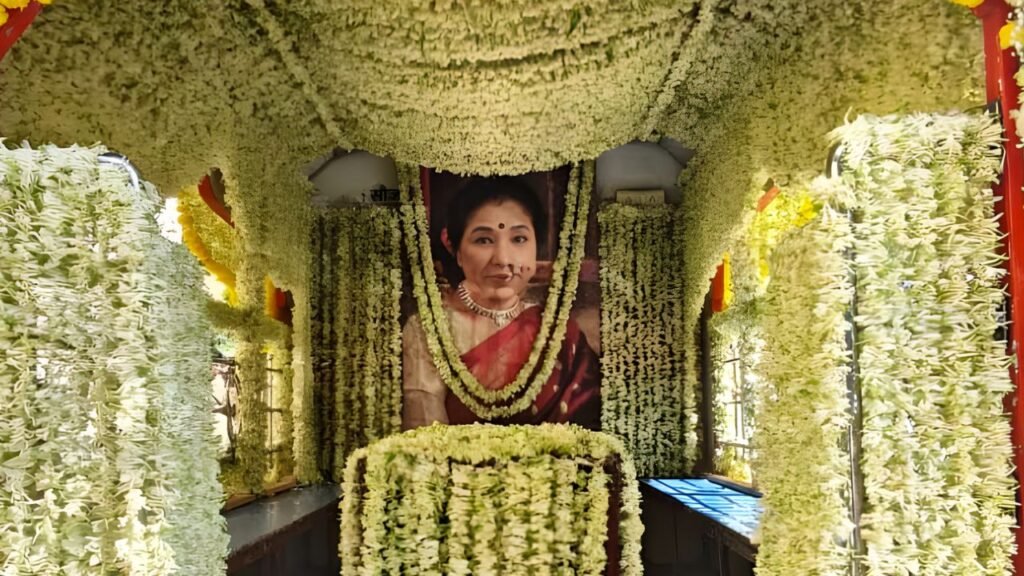
Her passing at the age of 92 does not feel like the end of a career, it feels like the closing of a chapter that had been playing in the background of our lives for decades, sometimes loudly, sometimes softly, but always present, always familiar, always comforting.
The Beginning Was Not Easy, But It Was Honest
Before the applause, before the recognition, before the legacy, there was a young girl trying to find her place in an industry that did not quite know where to put her.
In the late 1940s, when Asha Bhosle recorded her first song, “Chala Chala Nav Bala”, playback singing itself was still evolving, and there was already a certain expectation of what a “perfect voice” should sound like, an expectation that was being beautifully fulfilled by her elder sister, Lata Mangeshkar.
In comparison, Asha’s voice felt different, unpredictable, less contained, and perhaps that is why it took time for the industry to understand her. She was not the obvious choice. She was often the second option. She was given songs others did not want.
But what seemed like rejection was quietly becoming her greatest strength.
The Songs That No One Wanted Became Her Training Ground
Through the 1950s, Asha Bhosle found herself singing cabaret numbers, playful tracks, songs for side characters, the kind of music that rarely carried prestige but demanded adaptability, energy, and character.
And she gave it everything.
In those songs, she experimented, she stretched her voice, she discovered textures and tones that were rarely explored at the time. She did not try to fit into the mould; she slowly began to reshape it.
There is something deeply powerful about artists who are not handed success but build it piece by piece, note by note, rejection by rejection. Asha Bhosle was one of them.

The Turning Point That Changed Everything
When films like Naya Daur came along, the industry began to notice her differently, but the real shift, the moment that truly transformed her journey, came with her collaboration with R. D. Burman.
What they created together was not just music; it was a new sound, a new energy, a new way of experiencing songs.
Tracks like “Dum Maro Dum”, “Piya Tu Ab To Aaja”, “Chura Liya Hai Tumne Jo Dil Ko”, “Yeh Mera Dil”, and “Aaja Aaja Main Hoon Pyar Tera” were not just popular—they were transformative. They brought rhythm, boldness, sensuality, and modernity into Hindi film music in a way that felt fresh and fearless.
Through these songs, Asha Bhosle did something extraordinary—she made change sound beautiful.
A Voice That Could Be Anything, Feel Everything
If one were to trace her most defining songs, it would feel like travelling through emotions rather than time.
From the elegance of “Aaiye Meherbaan” to the mystery of “Yeh Hai Reshmi Zulfon Ka Andhera”, from the playful charm of “Parde Mein Rehne Do” to the restless energy of “Dum Maro Dum”, from the romance of “Chura Liya Hai Tumne Jo Dil Ko” to the haunting depth of “Dil Cheez Kya Hai” and “Mera Kuch Saamaan”, every song carried a different shade of her voice, a different part of her soul.
She did not just sing songs; she became them.
Recognition Came, But It Was Never the Goal
Awards followed her work, as they often do when art refuses to be ignored. Songs like “Dil Cheez Kya Hai” and “Mera Kuch Saamaan” earned her National Film Awards, while countless others brought her recognition, admiration, and respect across the industry.
But if you look closely, her true achievement was never in the trophies. It was in the way her songs lived on.
She recorded over ten thousand songs, in multiple languages, across genres that ranged from classical to pop, from ghazals to cabaret, from film music to independent projects. And yet, what stands out is not the number, but the life within each song.
Beyond Comparisons, Beyond Narratives
Her journey often ran parallel to that of Lata Mangeshkar, and while the world loved to compare, their occasional duets told a different story, one of contrast and complement rather than competition.
Lata’s voice felt like still water, pure and calm. Asha’s voice felt like a river, flowing, unpredictable, full of movement.
When they came together, it was not about who was better. It was about how beautifully different they were.
Reinvention: The Secret Behind Her Timelessness
As decades passed and music changed, Asha Bhosle did not hold on to the past; she moved with time.
In the 1990s and beyond, she collaborated with A. R. Rahman, embracing new sounds, new arrangements, and a new generation of listeners. She explored independent music, performed across the world, and continued to surprise audiences who thought they had already heard everything she could offer.
Very few artists manage to stay relevant. Even fewer manage to evolve. Asha Bhosle did both, effortlessly.
A Voice That Became a Memory
There is no final song that defines her goodbye, and perhaps that is because her voice never really leaves. It lingers. It returns. It finds you in unexpected moments.
In a car ride, in an old radio station, in a wedding, in a quiet night when a familiar melody suddenly plays and brings back something you thought you had forgotten.
That is what her voice became—not just music, but memory.
She Didn’t Just Sing, She Changed How We Feel Music
If Lata Mangeshkar represented the purity of melody, then Asha Bhosle represented its evolution, its courage to experiment, to feel differently, to sound different.
She entered an industry that did not quite understand her, and she left it transformed.
Her story is not just about success. It is about resilience, about finding your voice when the world is unsure of it, and about turning that uncertainty into something timeless.
Asha Bhosle may no longer be here, but her voice continues to live in every note she ever sang, reminding us that some artists do not fade away—they simply become a part of us.