









Some revenge dramas rely entirely on twists.
Satrangi: Badle Ka Khel relies on anger.
Not the glossy, cinematic kind built for whistle-worthy hero moments, but quieter anger — humiliation buried over years, caste wounds that never heal properly and the exhaustion of people trapped inside rigid social structures they cannot escape.
Directed by Jai Basantu Singh, the Zee5 series uses the familiar framework of revenge but grounds it inside the politically charged villages of eastern Uttar Pradesh. And while the storytelling occasionally stumbles under its own weight, the world itself feels textured enough to keep viewers emotionally invested.
That authenticity becomes the show’s biggest strength.
A Revenge Thriller Drenched In Humiliation And Power Games
At its core, Satrangi: Badle Ka Khel is less interested in revenge as spectacle and more interested in what humiliation does to people over time.
The story moves between the villages of Dera and Kotwa, where caste politics and old rivalries quietly dictate everyday life. Kumud Mishra plays Sona Singh, a dominant Thakur leader preparing for elections, while Bhagwan Pandey controls Kotwa with equal influence.
Peace between the two sides appears possible at first.
But in worlds shaped by pride and public insult, peace rarely survives for long.
Things spiral after Diamond, played by Atul Kusum Singh, misbehaves with Aarti during an event, reopening tensions that were never fully buried. From there, the series slowly descends into cycles of revenge, political manipulation and emotional damage.
The plot itself is not particularly groundbreaking.
But the emotional environment around it feels real enough to matter.
The Launda Naach Setting Gives The Series Emotional Weight
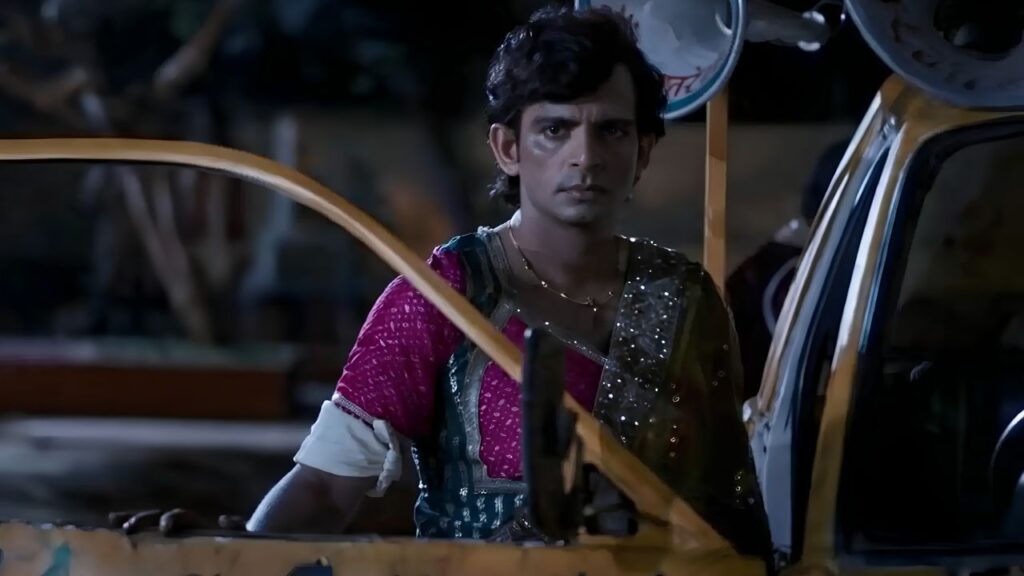
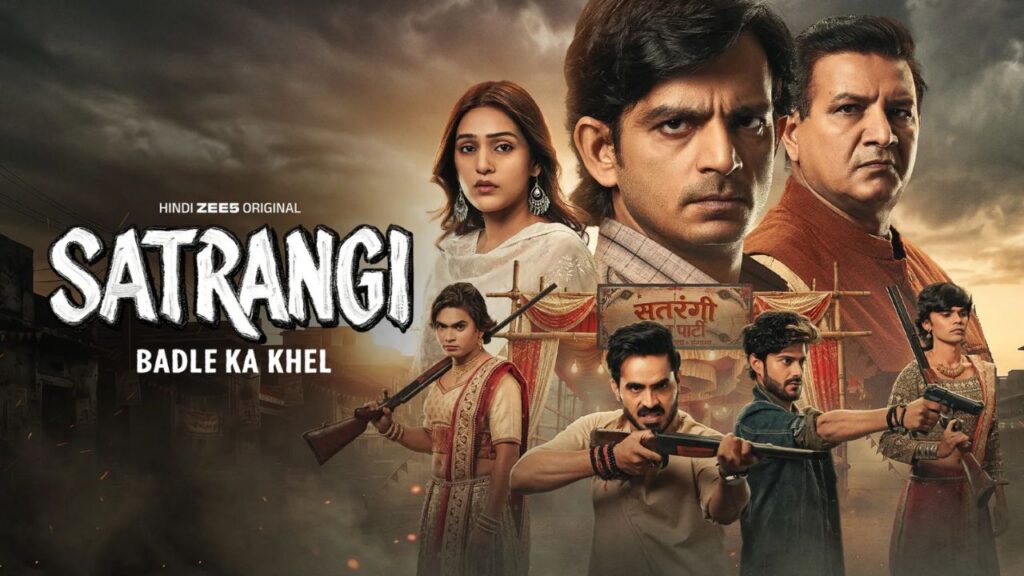
What separates Satrangi from more routine rural thrillers is its focus on Launda Naach performers and the social humiliation attached to that identity.
That layer adds complexity to the storytelling.
The show repeatedly explores how performance, masculinity and social hierarchy collide inside these villages. Characters are not simply fighting for survival or political dominance — they are also fighting against public shame and inherited prejudice.
And the series deserves credit for staying rooted inside that discomfort instead of treating it as decorative realism.
The atmosphere remains tense throughout. Dirt-covered roads, political meetings, drunken celebrations and simmering violence all blend into a world where danger constantly feels close.
Even when scenes stretch longer than necessary, the environment itself keeps the narrative alive.
Performances Keep The Emotional Tension Grounded
Anshumaan Pushkar delivers one of the more emotionally layered performances in the series. His character carries visible emotional fatigue beneath the rage, which prevents the revenge arc from becoming one-dimensional.
Meanwhile, Kumud Mishra once again proves how effective he can be in morally complex rural characters. He does not play Sona Singh like a loud cinematic villain. Instead, the menace comes through restraint, silence and political calculation.
That grounded approach helps the series significantly.
RJ Mahvash also leaves a sincere impression despite the screenplay not fully developing her emotional journey.
Across the board, the cast understands the tone of the show better than the writing sometimes does.
The Writing Weakens When The Drama Turns Too Familiar
The biggest issue with Satrangi: Badle Ka Khel is inconsistency in its writing.
Whenever the series focuses on social tension, caste pride or emotional humiliation, it feels compelling and sharply observed. But several revenge-driven turns begin slipping toward familiar OTT thriller territory.
Some dramatic confrontations feel stretched. Certain emotional beats repeat themselves without adding much progression. And there are moments where the show appears uncertain whether it wants to remain a grounded social drama or become a more commercial revenge entertainer.
That tonal fluctuation weakens the impact.
Still, the series rarely becomes unwatchable because the setting itself remains emotionally immersive.
Why The Show Feels Different From Typical OTT Crime Dramas
In recent years, Indian OTT platforms have become crowded with rural crime thrillers filled with violence, politics and dark atmospheres.
But many of them increasingly resemble each other.
Satrangi manages to stand apart because it pays attention to cultural texture rather than relying only on brutality. The Launda Naach backdrop gives the story emotional specificity, while the eastern UP setting feels lived-in instead of artificially stylised.
The series understands that revenge is often born not from one shocking event, but from years of humiliation accumulating silently.
That emotional observation gives the show its strongest moments.
Uneven Writing, But A World Worth Entering
Satrangi: Badle Ka Khel does not reinvent the revenge thriller genre.
Its writing loses focus in parts, and some dramatic stretches feel overly familiar. But the rawness of the setting, grounded performances and exploration of caste-driven humiliation give the series enough emotional substance to remain engaging.
This is a show carried less by plot twists and more by atmosphere.
And sometimes, atmosphere is enough.
Rating: 3/5
Jay-Ho Catch-Up
Satrangi: Badle Ka Khel reflects a growing trend in Indian OTT storytelling where rural realism, caste politics and local cultural identities are becoming central to mainstream thrillers. What makes the series engaging is not simply its revenge plot, but the way humiliation, performance culture and power structures quietly shape every character’s choices.
Stay connected with Jay-Ho for the latest from Bollywood, OTT, music, and pop culture,promote, or book event tickets with Jay-Ho Events — from ticket sales to media coverage, all in one place.