










Set against the politically tense atmosphere of 1991 Ramanathapuram during the Iraq–United States war, Kara attempts to blend emotional realism, social commentary, and gritty heist storytelling into a grounded rural thriller. Directed by Vignesh Raja, the film stars Dhanush in one of his most restrained and emotionally layered performances in recent years.
At first glance, Kara appears to be a conventional robbery drama, but beneath the surface lies a story deeply rooted in survival, guilt, class exploitation, and emotional rage. Through the journey of Karasaami, the film explores how poverty and systemic injustice can slowly push ordinary people toward morally dangerous choices.
While the film has received praise for its performances, atmosphere, and gripping first half, reactions remain divided over its emotionally conventional climax and slower pacing in the latter portions.
The Story Of A Man Pulled Back Into Crime
The story follows Karasaami, also known as Kara, a small-time thief living in Ramanathapuram. After a failed robbery attempt brings him under the radar of DSP Bharathan, Kara manages to escape and decides to leave his criminal life behind.
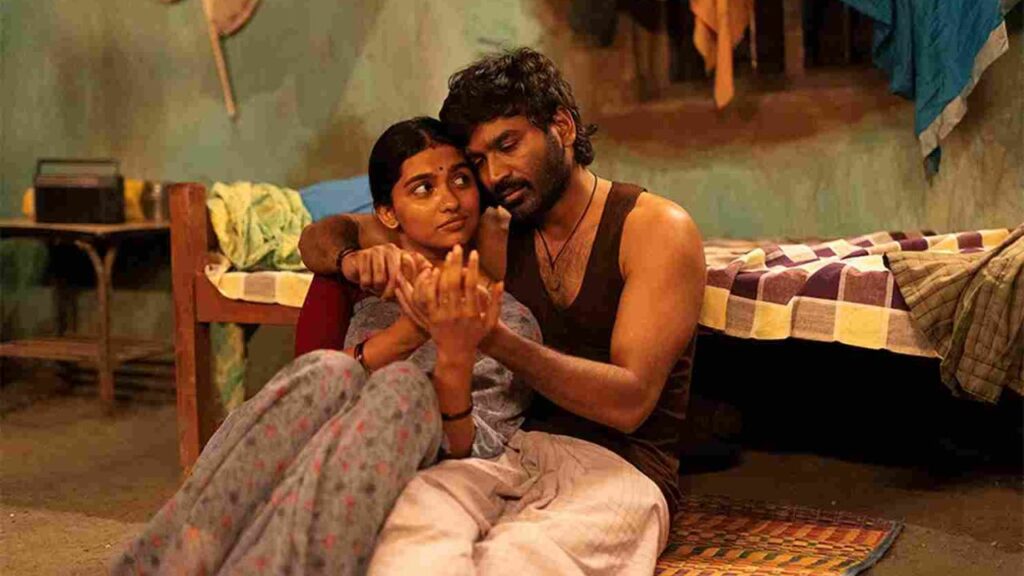
Hoping for a peaceful future, he starts a modest mess business with his wife Selli and attempts to rebuild his life honestly. However, financial difficulties eventually force him back to his native village, where he hopes to retrieve important land documents that could help him secure a bank loan and stabilize his situation.
What Kara discovers upon returning home changes everything.
His father, Kandhasaami, is drowning in debt after taking a tractor loan, while corrupt local systems continue exploiting struggling villagers. When the bank threatens to seize their ancestral land, Kandhasaami dies heartbroken under emotional pressure and humiliation.
The tragedy becomes even more painful when the family is denied permission to bury him on their own land.
This moment becomes the emotional turning point of the film.
Consumed by anger and helplessness, Kara decides to retaliate against the corrupt banking system and the ruthless bank manager Muthu Selvan, whose greed has devastated countless families.
A Heist Narrative Driven By Emotion Rather Than Greed
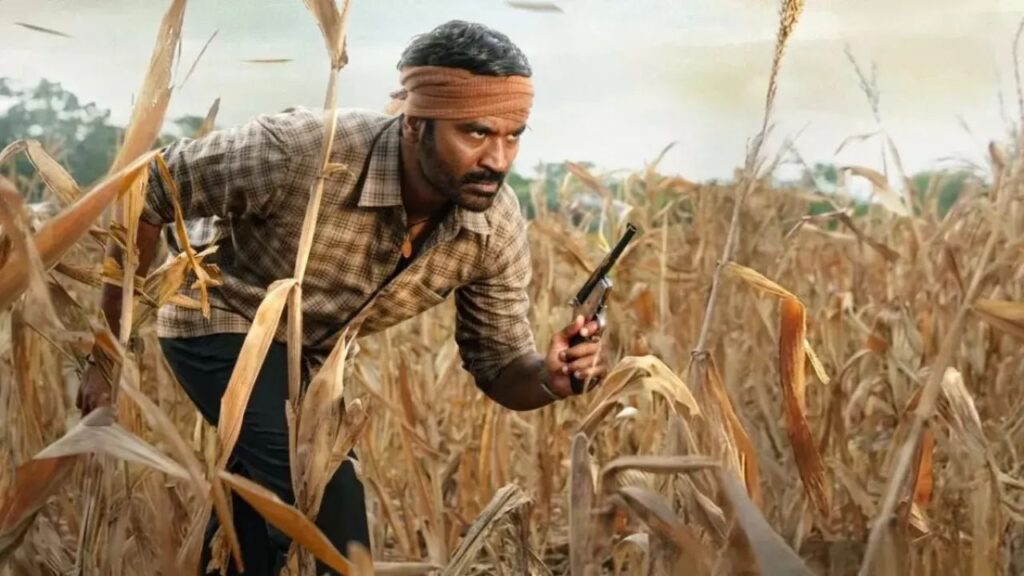
Unlike typical robbery thrillers driven purely by money or ambition, Kara frames theft as an emotional and political act.
With the help of Murugesan and Kasi, Kara begins targeting banks to recover money and land documents unfairly taken from poor villagers through manipulation and exploitation.
As the robberies continue, Kara slowly transforms from a desperate individual into a symbol of resistance for villagers crushed under systemic corruption.
Director Vignesh Raja repeatedly raises an important moral question throughout the film:
Who is truly more criminal — the poor man stealing to survive, or the powerful institutions exploiting vulnerable communities legally?
This thematic conflict gives the film emotional depth beyond standard commercial thriller storytelling.
Dhanush Carries The Film With Quiet Emotional Intensity
One of the film’s greatest strengths is undoubtedly Dhanush’s performance.
Rather than approaching Kara with exaggerated heroism, the actor plays him with exhaustion, suppressed rage, and emotional heaviness. There is a constant sense that the character is carrying years of humiliation and pain beneath his silence.
Dhanush especially shines during scenes where Kara struggles between:
- revenge and morality
- anger and helplessness
- violence and emotional vulnerability
His restrained acting style helps the character feel painfully human instead of theatrically heroic.
Several critics described this as one of Dhanush’s most emotionally controlled performances, where internal conflict matters more than loud dramatic moments.
Supporting Cast Adds Strength To The Narrative
Suraj Venjaramoodu delivers one of the strongest supporting performances as DSP Bharathan, a patient and intelligent officer slowly connecting the clues behind the robberies.
Instead of portraying the policeman as aggressively heroic, the film allows Bharathan to evolve gradually, making his interactions with Kara more psychologically interesting.
Jayaram also stands out as the manipulative bank manager Muthu Selvan. His performance effectively captures the cold arrogance of institutional corruption hidden behind authority and respectability.
Meanwhile, actors like Mamitha Baiju unfortunately receive limited narrative space despite their strong screen presence.
Many viewers felt her character had the potential for greater emotional impact within the story.
The First Half Delivers Strong Tension And Atmosphere
Much of the praise surrounding Kara comes from its first half, which successfully combines:
- tense robbery sequences
- emotionally grounded writing
- realistic village atmosphere
- suspense-driven storytelling
- strong visual tone
The film avoids flashy commercial exaggeration during heist scenes and instead relies on emotional stakes and careful execution to build tension.
The cinematography by Theni Eswar captures the dry, emotionally heavy landscape of Ramanathapuram beautifully, helping the environment itself become part of the narrative tension.
GV Prakash Kumar’s music further enhances the emotional mood without overpowering the storytelling.
Where The Film Begins To Lose Momentum
Despite its gripping setup, many critics believe Kara struggles to maintain its intensity during the final portions.
The film gradually shifts from a morally complex heist thriller into a more conventional redemption-driven emotional drama. While the emotional intentions remain sincere, some viewers felt the screenplay becomes less sharp and more predictable toward the climax.
The pacing also slows considerably in the second half, causing certain emotional stretches to feel repetitive.
Several reviewers noted that the film’s strongest idea — morally ambiguous resistance against systemic corruption — deserved a more daring and unpredictable conclusion.
Instead, the narrative eventually settles into familiar emotional territory.
Kara’s Emotional Ending Explained
Toward the end of the film, Muthu Selvan finally confesses to his crimes before dying, exposing the corruption that destroyed multiple families.
DSP Bharathan eventually realizes that Kara’s robberies were not driven by greed but by injustice and desperation.
In the film’s final emotional moment, Kara fulfills his father’s final wish by burying him on their ancestral land — reclaiming both dignity and belonging after years of humiliation.
The ending also symbolizes Kara’s decision to abandon crime permanently and embrace farming as a path toward healing and rebuilding his life.
While some viewers appreciated the emotional closure, others felt the climax became too sentimental compared to the morally complex tone established earlier.
Themes Of Poverty, Power And Survival
At its core, Kara is less about robbery and more about survival within broken systems.
The film explores:
- institutional exploitation
- debt-driven poverty
- emotional humiliation
- land ownership struggles
- class inequality
- moral compromise
It also highlights how ordinary people are often forced into impossible choices when systems designed to support them instead become tools of exploitation.
This social relevance is one of the key reasons the film continues generating discussion despite criticism surrounding its pacing and climax.
Jay-Ho Catch-Up
Kara may not fully sustain the brilliance of its initial setup, but it remains a compelling and emotionally grounded thriller powered heavily by Dhanush’s layered performance.
Vignesh Raja successfully creates a realistic world filled with pain, anger, and moral conflict, even if the screenplay occasionally loses momentum during its later portions.
For viewers who enjoy realistic crime dramas, emotionally conflicted protagonists, and socially conscious storytelling, Kara offers enough emotional depth and intensity to remain engaging throughout most of its runtime.
Rating: 3.5/5
Stay connected with Jay-Ho for more movie reviews, South cinema updates, OTT news, box office coverage, and entertainment.