










Mythological adventures have always held a special place in Indian cinema. They offer filmmakers an opportunity to blend ancient legends with modern filmmaking technology, creating larger-than-life spectacles for audiences. Nagabandham arrives with exactly that ambition. Mounted on a reported budget exceeding ₹110 crore, the Telugu fantasy adventure is among the biggest original productions in recent years despite not featuring an established superstar.
Directed on a lavish scale, Nagabandham attempts to transport viewers into a mystical world filled with sacred relics, ancient prophecies, hidden treasures and powerful warriors. While the film succeeds in creating an impressive visual experience, it ultimately struggles where it matters most—its storytelling.
Story: A Treasure Hunt Rooted In Mythology
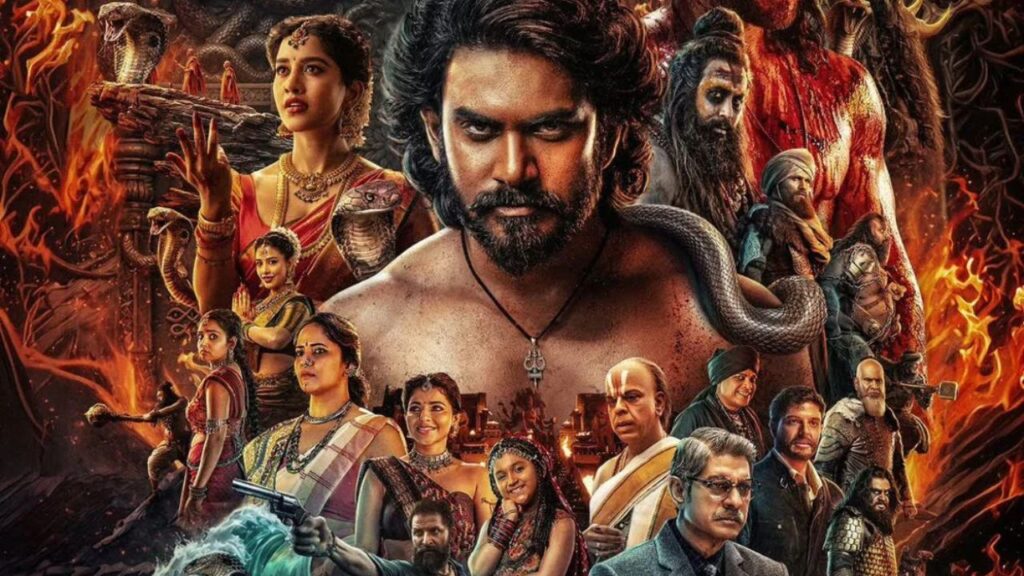
The story revolves around Abdali (Rishabh Sawhney), a ruthless and power-hungry antagonist determined to unlock the legendary Nagabandham, a mystical gateway believed to hide an immeasurable treasure.
To achieve his goal, Abdali must obtain two sacred relics:
- The divine Brahmakamalam flower
- An ancient manuscript believed to contain the secret of opening Nagabandham
The sacred flower is protected inside the revered Srirangapuram Ranganathaswamy Temple, making Abdali’s mission far from easy.
Standing in his path is Rudra (Virat Karrna), a fearless protector entrusted with safeguarding these sacred relics from falling into the wrong hands. As their journeys collide, an epic battle unfolds between good and evil, faith and greed, destiny and destruction.
The film attempts to weave mythology, Sanatana Dharma, fantasy, action and treasure-hunt elements into one grand cinematic experience.
A Stunning Visual Spectacle
There is absolutely no denying the scale of Nagabandham.
Every frame reflects the enormous investment made by the filmmakers.
From gigantic temple sets and mystical caves to elaborate costumes and massive action sequences, the production design is consistently impressive.
The VFX work largely succeeds in creating a believable fantasy world, while the cinematography beautifully captures the grandeur of ancient India.
Several sequences—especially those involving temples, divine relics and large-scale action—are visually breathtaking.
The background score further elevates many scenes, giving them the larger-than-life feel expected from a mythological adventure.
For audiences who enjoy fantasy spectacles, Nagabandham certainly delivers eye-catching visuals.
Where The Film Falls Short
Unfortunately, visuals alone cannot sustain a film that runs for more than three hours.
The biggest issue lies in the screenplay.
Despite its fascinating premise, Nagabandham never generates the level of excitement its story promises.
The treasure hunt follows a predictable path, with very few genuine surprises along the way.
Several plot developments feel familiar, borrowing heavily from previously seen mythological adventure films.
Rather than building suspense around the ancient relics and divine mysteries, the screenplay frequently slows down with repetitive conversations and exposition.
The pacing becomes particularly problematic during the second half, where the narrative loses momentum.
Instead of making audiences eager to discover what lies behind the Nagabandham, the film often feels more interested in showcasing visual spectacle than telling an emotionally engaging story.
Emotional Connection Remains Missing
One of the biggest drawbacks of Nagabandham is its lack of emotional depth.
For a film centered around protecting sacred relics and preserving ancient traditions, the characters rarely feel emotionally compelling.
Rudra’s motivations remain largely surface-level, while the supporting characters receive limited development.
Without strong emotional stakes, many of the action sequences feel visually exciting but emotionally hollow.
The film desperately needed stronger personal conflicts to complement its grand mythology.
Virat Karrna Delivers A Committed Performance
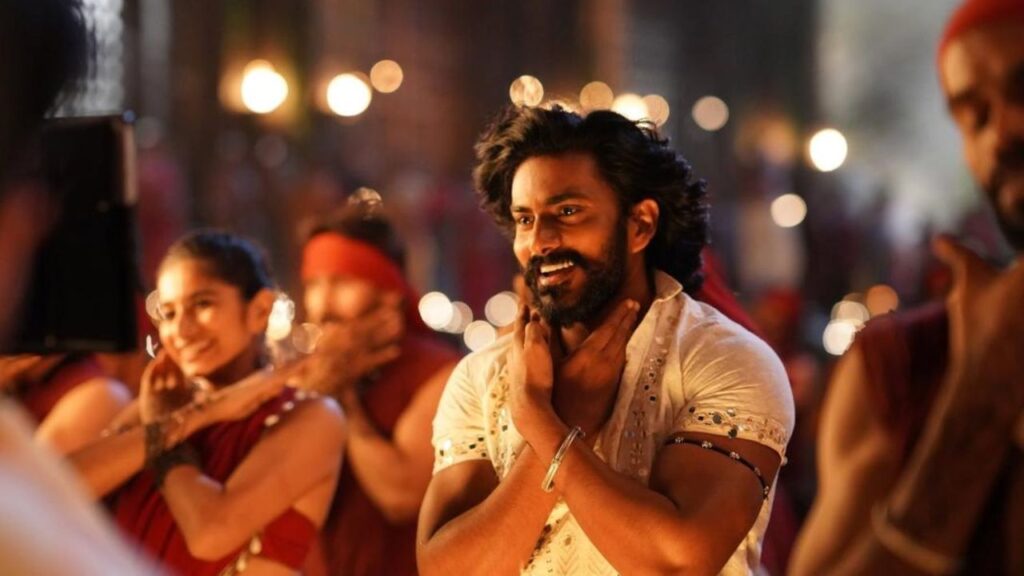
Virat Karrna shoulders a demanding role, portraying both Rudra and a Naga Sadhu.
He approaches both characters with sincerity and confidence.
His physical transformation deserves appreciation, especially during the action-heavy portions of the film.
Although the screenplay doesn’t always support his performance, Virat does everything possible to make his character believable.
His screen presence continues to improve with each major sequence.
Rishabh Sawhney Steals The Show
If there’s one actor who consistently keeps the audience invested, it is Rishabh Sawhney.
After leaving a strong impression in Fighter, he once again proves his ability to play intimidating antagonists.
As Abdali, he brings menace, intensity and authority.
Every time he appears on screen, the narrative instantly gains energy.
His performance is easily among the strongest aspects of the film.
Nabha Natesh Gets Limited Scope
Nabha Natesh looks graceful throughout the film and performs her role sincerely.
However, the screenplay offers very little room for her character to leave a lasting impact.
Like several supporting characters, she becomes more of a narrative device than a fully developed personality.
Supporting Cast Remains Underutilized
The film features numerous supporting actors, many of whom appear briefly before disappearing from the story.
Several characters have interesting introductions but receive very little payoff later.
Given the expansive runtime, audiences may expect richer character arcs, but the screenplay largely focuses only on its central conflict.
Technical Department Impresses
Technically, Nagabandham is a polished production.
Cinematography
The camera work beautifully captures the majestic landscapes, temples and action sequences.
Visual Effects
The VFX are largely convincing and significantly enhance the mythical atmosphere.
Production Design
One of the film’s biggest strengths.
Every location feels carefully designed and richly detailed.
Background Score
The music effectively supports the larger-than-life tone without becoming overpowering.
Length Becomes A Major Challenge
At over three hours, Nagabandham feels unnecessarily stretched.
Several scenes could have been trimmed without affecting the overall narrative.
The lengthy runtime causes the pacing to dip considerably during the second half.
A tighter edit would have resulted in a much more engaging viewing experience.
What Works
- Stunning production design
- Grand visual scale
- Excellent cinematography
- Impressive VFX
- Strong villain performance by Rishabh Sawhney
- Virat Karrna’s sincere performance
- Ambitious mythological concept
What Doesn’t Work
- Predictable screenplay
- Weak emotional core
- Overlong runtime
- Underdeveloped supporting characters
- Slow pacing in the second half
- Familiar treasure-hunt narrative
Final Verdict
Nagabandham deserves appreciation for attempting something ambitious in Telugu cinema. Few filmmakers are willing to mount original mythological fantasy adventures on such a grand scale without relying on an established superstar.
Its breathtaking visuals, massive production values and technical excellence make it worth experiencing on the big screen.
However, beneath all the spectacle lies a screenplay that never fully capitalizes on its fascinating premise. The emotional engagement remains limited, the pacing frequently drags, and the story ultimately feels far more predictable than epic.
Had the writing matched the scale of its visuals, Nagabandham could have become one of the defining fantasy adventures of recent years. Instead, it remains an ambitious but uneven spectacle that impresses the eyes more than the heart.