







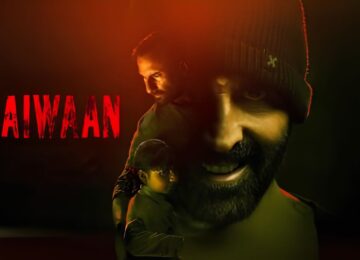





Neeru Sharma’s Bandra Boy has achieved a remarkable milestone on the global stage, earning recognition at two prestigious international film festivals in New York. The Hindi thriller, which marks Neeru Sharma’s debut as a filmmaker, has been selected as a Semi-Finalist at the Frames of New York Film Festival while also receiving an award at the New York International Women Festival. For a first-time director, securing recognition at two respected international platforms is a significant accomplishment that highlights both the film’s storytelling strength and Sharma’s transition from entertainment journalism to filmmaking.
For more than two decades, Neeru Sharma built her career by reporting on Bollywood and the entertainment industry, bringing stories of actors, filmmakers and cinema to audiences across the country. Today, she finds herself at the center of a success story of her own. With Neeru Sharma’s Bandra Boy, she has successfully transformed years of observation, industry experience and journalistic insight into a compelling cinematic narrative that is now receiving appreciation beyond India’s borders.
Neeru Sharma’s Bandra Boy Explores the Thin Line Between Truth and Public Perception
Unlike conventional thrillers that rely solely on suspense and unexpected twists, Neeru Sharma’s Bandra Boy delves into a socially relevant subject that resonates in today’s media-driven world. The 21-minute Hindi thriller examines how narratives are shaped, how public opinion often influences judgment and whether society is too quick to declare someone guilty or innocent before the complete truth emerges.
At its core, the film raises thought-provoking questions about media influence, perception and accountability. Rather than presenting straightforward answers, the narrative encourages viewers to reflect on how quickly assumptions are formed in an era dominated by headlines, social media discussions and public scrutiny. This layered storytelling is one of the reasons the film has attracted attention at international festivals, where socially relevant cinema continues to find appreciation.
Years of Journalism Inspired Neeru Sharma’s First Film
The foundation of Neeru Sharma’s Bandra Boy lies in the filmmaker’s extensive career as an entertainment journalist. Having spent over twenty years covering Bollywood, celebrity culture and countless real-life incidents within the film industry, Sharma witnessed stories that often revealed the complexities hidden behind public narratives.
Those experiences eventually inspired her to move beyond reporting and tell stories through cinema. Instead of documenting events as a journalist, she chose filmmaking as a medium to explore deeper emotional and social questions. Her directorial debut reflects years of observation and an understanding of how public perception can sometimes overshadow reality, making the film both personal and universally relevant.
This transition from journalism to direction represents a natural creative evolution, demonstrating how real-world experiences can become powerful cinematic storytelling when viewed through a filmmaker’s lens.
International Recognition Validates an Inspiring Creative Journey
The success of Neeru Sharma’s Bandra Boy carries special significance because it comes with her very first directorial venture. Receiving recognition at the Frames of New York Film Festival and the New York International Women Festival is not only a personal achievement but also an encouraging sign for emerging Indian independent filmmakers seeking global audiences.
Speaking about the film’s recognition, Neeru Sharma expressed her gratitude and described the international appreciation as deeply motivating. She shared that Bandra Boy was born from years of observing the media and entertainment industry while asking questions about truth, perception and responsibility. According to Sharma, this recognition inspires her to continue creating meaningful, socially relevant stories that encourage audiences to think beyond surface-level narratives.
Her success illustrates that authentic storytelling often resonates universally, regardless of geographical or cultural boundaries.
Formal Training Helped Shape Neeru Sharma’s Filmmaking Vision
Before directing Neeru Sharma’s Bandra Boy, Sharma strengthened her creative foundation by studying direction at Whistling Woods International, the renowned film institute established by veteran filmmaker Subhash Ghai. The formal training complemented her years of practical industry experience, allowing her to develop both the technical and artistic skills required for filmmaking.
Her journey serves as an inspiring example of lifelong learning and professional reinvention. After spending decades reporting on cinema, Sharma embraced the challenge of creating it herself, proving that passion and experience can successfully come together to produce impactful storytelling.

Strong Performances Support Bandra Boy’s Powerful Narrative
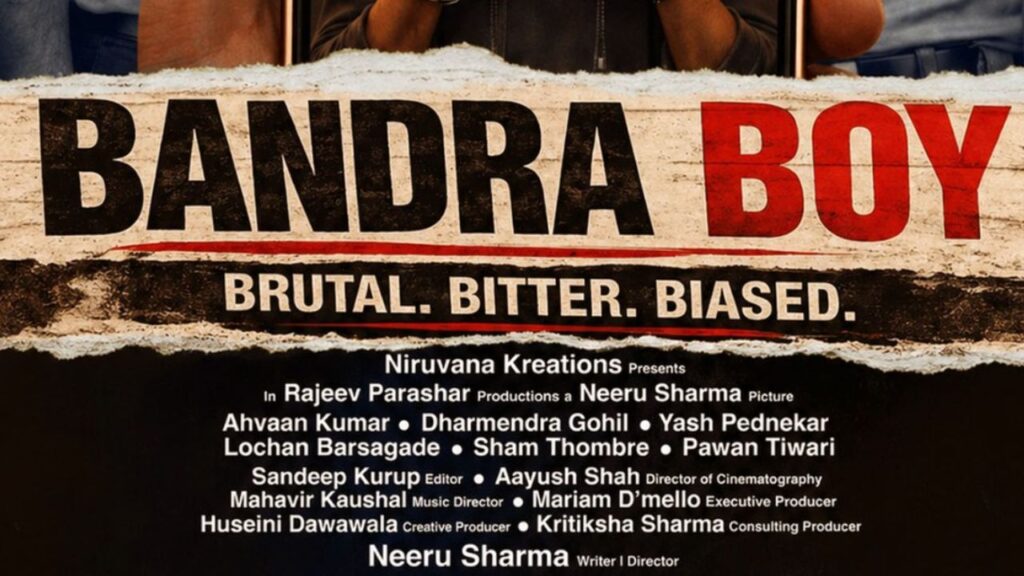
Alongside its compelling subject matter, Neeru Sharma’s Bandra Boy features a talented ensemble cast that brings authenticity and emotional depth to the story. Ahwaan Kumar leads the film, supported by acclaimed Gujarati and Marathi actor Dharmendra Gohil, who plays a pivotal role in the narrative.
The cast also includes Lochan Barsagade, Yash Pednekar, Shyam Thombre, Pawan Tiwari, Aishwarya Manohar, Himanshi Mandalia and Nandini Sharma, each contributing to the film’s grounded performances and realistic storytelling. Their collective work helps elevate the emotional intensity of the thriller while maintaining the film’s focus on its central themes.
Experienced Technical Team Elevates the Film
The production values of Neeru Sharma’s Bandra Boy are strengthened by an accomplished technical crew. The film is produced by Rajeev Parashar, while editing has been handled by Sandeep Kurup, whose previous credits include Mubarakan, Sadak 2 and Crakk. His editing ensures that the 21-minute narrative maintains a tight, engaging pace without sacrificing emotional impact.
The cinematography by Ayush Shah enhances the film’s visual storytelling, creating an atmosphere that complements the thriller’s themes of uncertainty and hidden truths. Meanwhile, the background score composed by Kaushal Mahavir reinforces the film’s tension while supporting its emotional moments without overwhelming the narrative.
Together, the creative team delivers a polished production that reflects the growing quality and ambition of India’s independent filmmaking landscape.
Why Bandra Boy’s Success Matters for Indian Independent Cinema
The international recognition earned by Neeru Sharma’s Bandra Boy extends beyond one filmmaker’s personal achievement. It also highlights the increasing global visibility of Indian independent cinema, where smaller productions are finding appreciation through strong storytelling rather than large budgets or commercial spectacle.
Films like Bandra Boy demonstrate that local narratives rooted in Indian experiences can resonate with audiences around the world when they explore universal themes such as truth, justice, media influence and human psychology. The success of Sharma’s debut reinforces the growing confidence of Indian independent filmmakers who are increasingly using cinema to tell meaningful stories capable of connecting with international viewers.
Final Verdict
Neeru Sharma’s Bandra Boy represents an inspiring milestone for both its creator and Indian independent cinema. Transitioning from an accomplished entertainment journalist to an internationally recognised filmmaker, Neeru Sharma has demonstrated that years of observing real-life stories can evolve into powerful cinematic storytelling. By earning a Semi-Finalist selection at the Frames of New York Film Festival and an award at the New York International Women Festival, her debut Hindi thriller has announced itself on the global stage with remarkable confidence. Supported by an impressive cast, experienced technical team and a socially relevant narrative exploring truth, media and public perception, Bandra Boy signals the arrival of a promising filmmaker whose voice is already resonating far beyond Indian borders. As the film continues its festival journey, it stands as a proud example of how compelling storytelling can transcend languages, cultures and geographical boundaries.