











Climbing Mount Kilimanjaro (5,895m / 19,341 ft) via the Lemosho Route takes 7–8 days and is considered one of the most scenic, high-success paths to Uhuru Peak, Africa’s highest point. This first-hand guest diary walks through every stage of a real 2026 summit expedition — from Houston to Uhuru Peak — including packing lessons, altitude challenges, and what it actually feels like to reach “The Roof of Africa.”
A Bucket-List Dream Becomes Reality
Some journeys start with a spreadsheet. Ours started with a promise — my wife Swapna wanted to summit Mount Kilimanjaro before turning 50, and once she set her mind to it, there was no turning back. What followed was months of training hikes across Austin, Huntsville, and Denver, guided by our patient “Hiking Guru,” Kunal Mehta, and eventually, a life-changing 8-day trek to the highest free-standing mountain in the world.
This guest post shares our full day-by-day experience climbing Kilimanjaro via the Lemosho Route with Altezza Travel — the good, the exhausting, and the unforgettable — for anyone researching how to prepare for their own Kilimanjaro adventure.
Why We Chose the Lemosho Route
If you’re comparing Kilimanjaro routes, the Lemosho Route consistently ranks among the best for first-time high-altitude trekkers because it offers:
- Longer acclimatization time, which significantly improves summit success rates
- Diverse scenery — rainforest, moorland, alpine desert, and glacial summit zones
- Lower crowds compared to routes like Marangu or Machame
- A gradual, well-paced ascent profile that gives your body time to adjust
For us, the extra acclimatization days made a real difference in how we felt heading into summit night.
Day-by-Day Kilimanjaro Trek Itinerary
Departure Day: Houston to Kilimanjaro
We flew via Turkish Airlines (a Star Alliance partner), landing in Tanzania around 2am. Between airport visa lines and a very sleepy immigration officer, the adventure began before we even left the airport.
Acclimatization & Prep Days in Moshi
We spent two days settling in at the Chanya Lodge and Aishi Machame Hotel, getting our gear inspected, meeting our Altezza Travel guides, and — crucially — going through the notorious duffel bag weigh-in (spoiler: pack lighter than you think you need to).
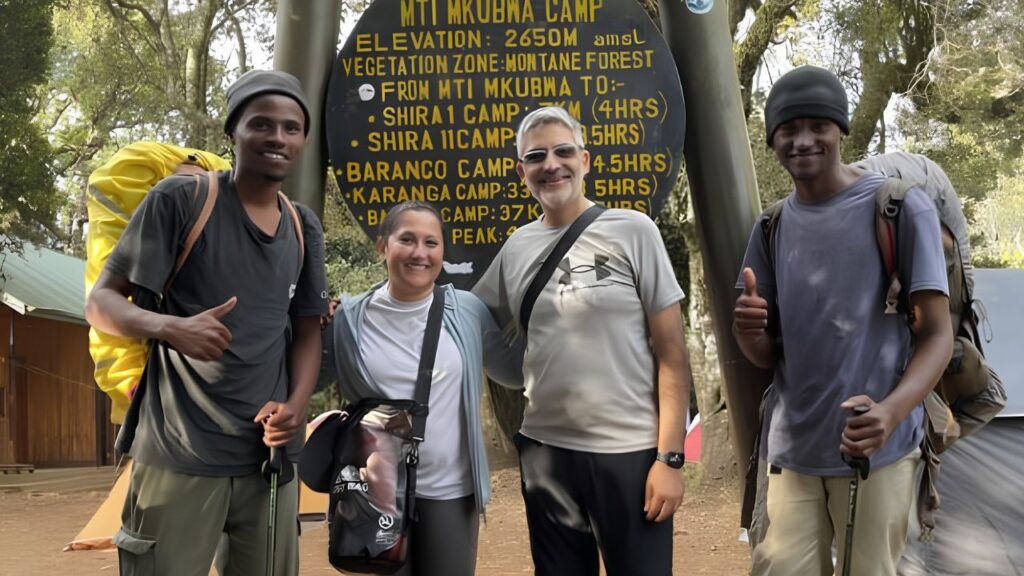
Day 1 – Londorossi Gate to Mti Mkubwa Camp
A lush rainforest hike of roughly 7km set the tone: humid, green, and full of first-day excitement.
Day 2 – Onto Shira 1 Camp
The terrain opened into moorland, and we got our first full, unobstructed view of Kilimanjaro’s summit — a genuinely emotional moment after months of preparation.
Day 3 – Shira 2 Camp (Acclimatization Day)
A shorter, flatter day that still tested us with dust, sun, and altitude. This is also where we witnessed something unexpectedly moving: our 62-person Altezza support crew singing, dancing, and sharing what the climb means to their livelihoods — a powerful reminder of the human side of mountain tourism.
Day 4 – Shira 2 to Barranco Camp
A demanding 7-mile day climbing past the dramatic Lava Tower (4,600m), testing altitude tolerance before descending to Barranco Camp for the night.
Day 5 – The Barranco Wall to Karanga Camp
Nicknamed simply “The Wall,” this technical scramble requires hands-on climbing (no trekking poles!) and rewards hikers with sweeping views of Mount Meru.
Day 6 – Karanga Camp to Barafu Base Camp
The final approach to base camp, followed by a short acclimatization hike and an early dinner before attempting the summit push.
Day 7 – Summit Night: Barafu Camp to Uhuru Peak
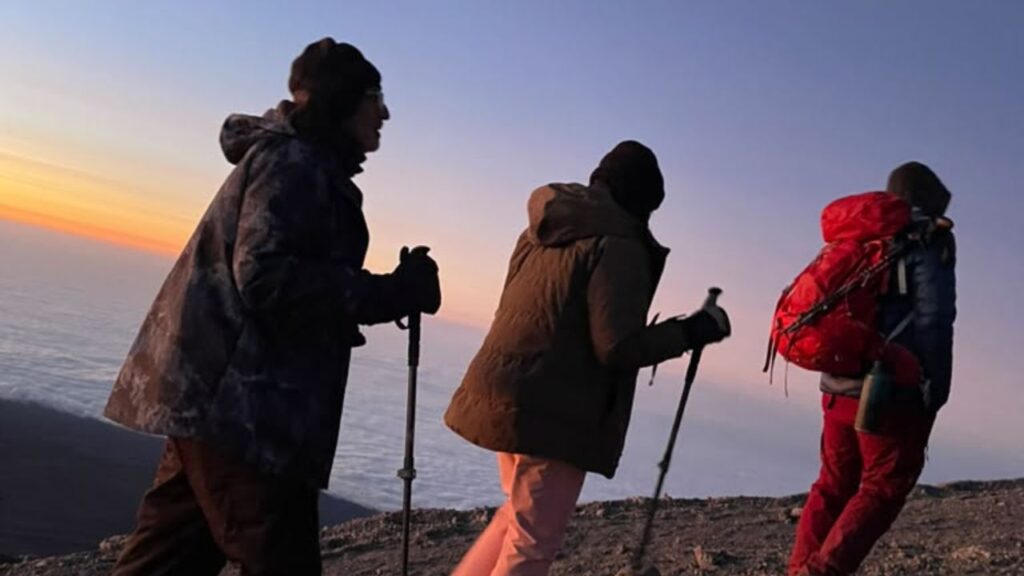
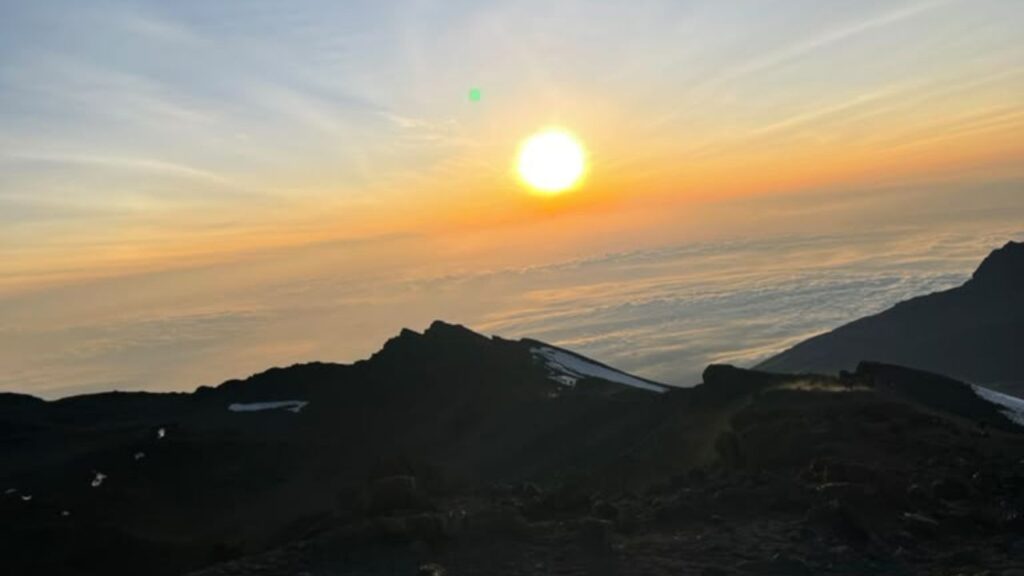
We departed camp at 10:30pm for the final ascent — a slow, cold, headlamp-lit climb through the night. Watching sunrise break over Stella Point and the glacier fields was, without exaggeration, one of the most awe-inspiring moments of our lives.
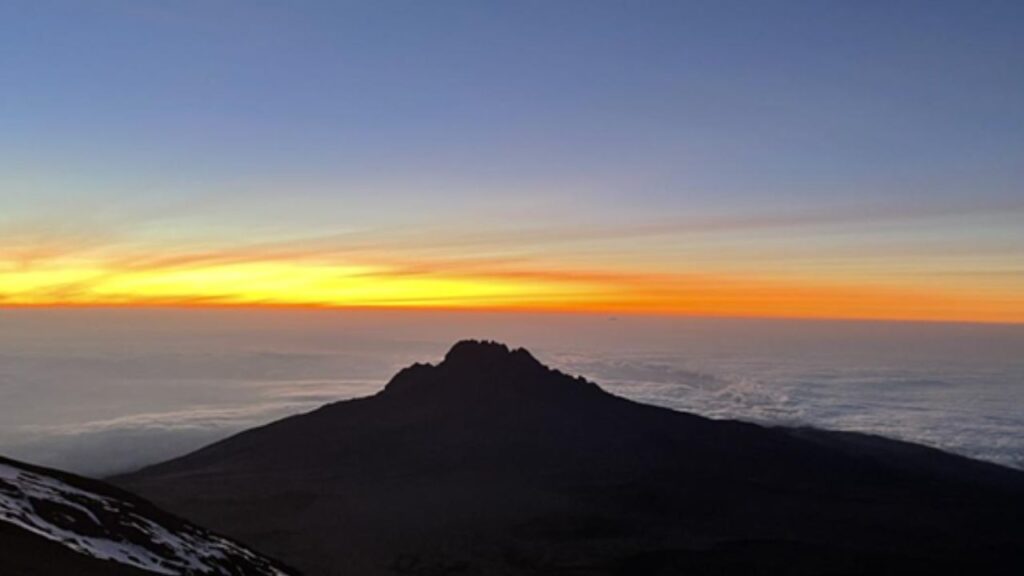
We reached Uhuru Peak (5,895m) at 7:20am.
Key Takeaways for First-Time Kilimanjaro Climbers
- Train specifically for multi-day endurance, not just single hikes
- Pack light — duffel weight limits are strictly enforced (ours was 15kg per bag)
- Diamox and hydration matter — expect frequent nighttime bathroom trips
- Trust your guide team — experienced guides make the difference between a good and great summit attempt
- Emotional highs and physical lows both happen — take it one day, and one step, at a time
Final Thoughts
Standing at Uhuru Peak wasn’t just about reaching Africa’s highest point — it was about proving to ourselves that we could push through discomfort, uncertainty, and exhaustion to achieve something extraordinary. If you’re considering Kilimanjaro, know this: it’s tough, it’s humbling, and it’s absolutely worth it.
— Bobby Juttey & Swapna Jutley
Frequently Asked Questions
How long does it take to climb Kilimanjaro via the Lemosho Route?
Most itineraries run 7–8 days, allowing extra time for altitude acclimatization compared to shorter routes.
Is the Lemosho Route good for beginners?
Yes — its gradual ascent profile and longer acclimatization schedule make it one of the more beginner-friendly options for reaching Uhuru Peak.
What is the hardest part of the Kilimanjaro climb?
Most climbers agree it’s summit night — a steep, cold overnight ascent from Barafu Camp, often covering the toughest terrain while fatigued and at high altitude.
Do you need a tour operator to climb Kilimanjaro?
Yes, all Kilimanjaro climbs require a licensed guide and support crew, arranged through a registered operator.