









The Partition of India in 1947 remains one of the most painful chapters in the subcontinent’s history.
Decades later, its impact continues to appear in cinema through stories of displacement, fractured families, forbidden love, communal violence and memories that refuse to disappear.
From deeply personal dramas to larger-than-life romances, filmmakers have explored Partition from several perspectives.
Some films focus on the political and social consequences, while others examine how ordinary people struggled to rebuild their lives after being separated from their homes and loved ones.
Here are nine films that capture different aspects of the trauma and human cost of Partition, from Main Vaapas Aaunga to Pinjar.
1. Main Vaapas Aaunga
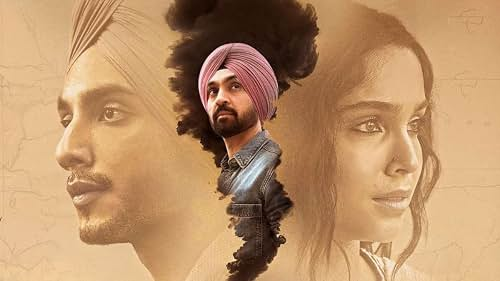
Main Vaapas Aaunga tells a deeply emotional story of love separated by Partition.
The film follows Keenu, a college-going student from a Sikh family, who falls in love with Jiya, a Muslim girl.
Their relationship begins during a period of growing uncertainty, as political developments are rapidly changing the lives of people across the region.
As Keenu and Jiya plan to get married, the announcement of the Partition of India and Pakistan changes everything.
The story moves across multiple timelines and explores how the separation continues to affect Keenu decades later.
Even after 78 years, Keenu still longs to meet Jiya, and as he approaches the end of his life, he carries one final wish: to say goodbye to the woman he loved.
The film uses their relationship to explore how Partition could separate people not only geographically but emotionally for generations.
2. Pinjar
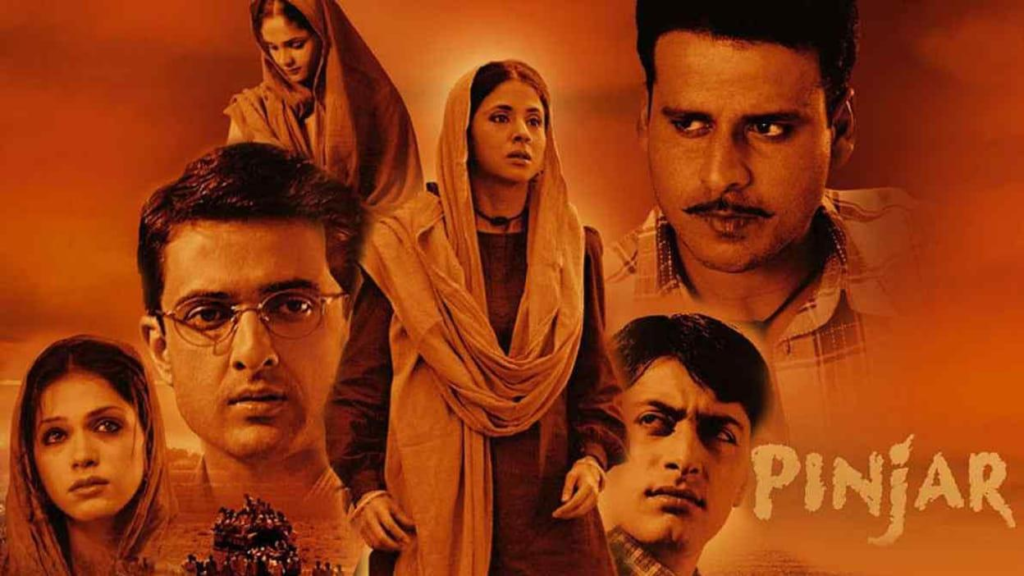
Chandraprakash Dwivedi’s Pinjar is one of the films that most directly explores the suffering faced by women during Partition.
The story follows Puro, played by Urmila Matondkar, whose life changes dramatically after she is abducted by Rashid, played by Manoj Bajpayee, amid growing communal tensions.
Separated from her family, Puro is forced to confront a reality she never imagined for herself.
The film goes beyond the larger political events of Partition and focuses on the devastating impact of violence on women, families and personal identity.
Through Puro’s journey, Pinjar explores questions of dignity, survival, belonging and the difficult choices forced upon people during one of history’s darkest periods.
3. Mammo
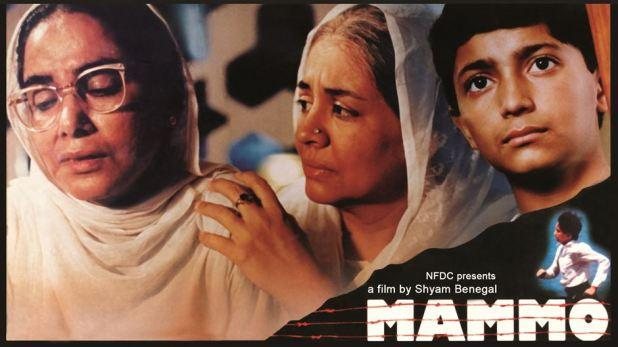
Mammo, starring Farida Jalal in the titular role, offers a quieter and more intimate look at the long-term consequences of Partition.
The film follows a Pakistani woman who travels to Mumbai to stay with her relatives.
Although several decades have passed since Partition, her identity and citizenship continue to complicate her relationship with the country she once considered home.
Rather than focusing on the violence of 1947 itself, Mammo examines what happened to people long after the borders were drawn.
Through Mammo’s relationship with her family, the film explores displacement, belonging and the emotional complications created by a political division that continued to affect ordinary lives.
4. Partition
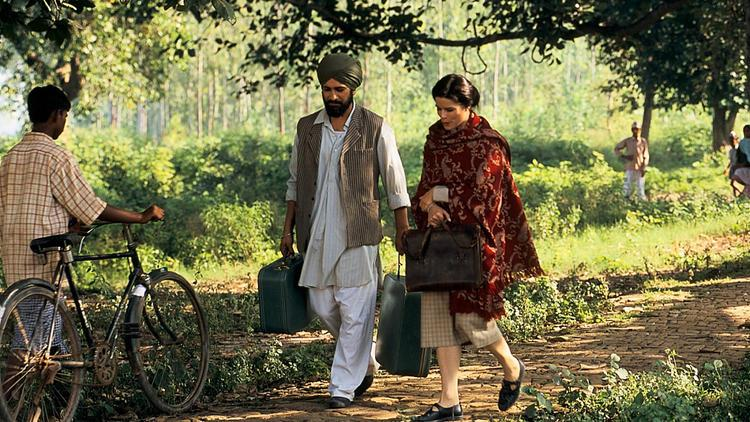
Partition (2007) explores love against the backdrop of the divisions created by Partition.
The film follows a former Sikh soldier who develops a relationship with Naseem, a Muslim woman played by Kristin Kreuk.
Their bond grows despite the religious divisions and social tensions surrounding them.
The film examines how Partition created barriers between communities while also showing how personal relationships could challenge those divisions.
At its core, the story is about love attempting to survive in an environment shaped by fear, separation and the trauma of 1947.
5. Khamosh Pani
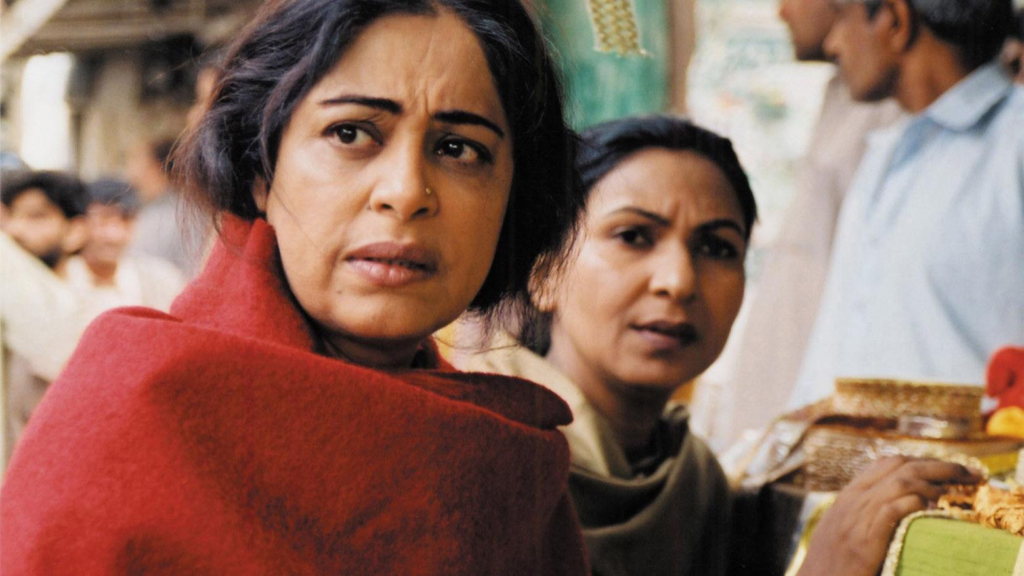
Directed by Sabiha Sumar, Khamosh Pani explores how the wounds of Partition can remain buried for years before resurfacing.
Kirron Kher plays Ayesha, a widow living a quiet life in Pakistan with her teenage son, Saleem.
Her seemingly peaceful existence begins to change as religious tensions and extremism enter the community.
A painful secret from Ayesha’s past gradually comes to light, revealing how deeply Partition shaped her life.
The film is particularly powerful because it examines Partition not simply as a historical event but as a trauma passed through generations.
It shows that the consequences of 1947 did not disappear when the borders were established.
6. Earth
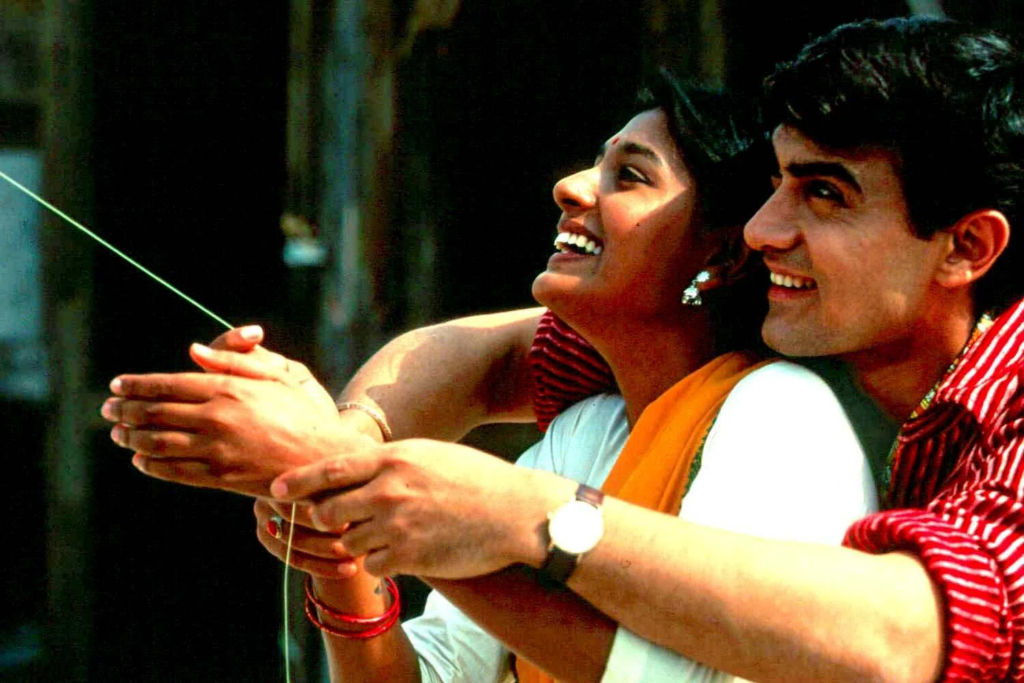
Deepa Mehta’s Earth tells the story of Partition through the eyes of a young Parsi girl named Lenny, played by Maia Sethna.
Set in Lahore, the film follows Lenny’s relationships with a group of adults belonging to different religious communities.
At first, their friendships exist beyond religious boundaries.
However, as Partition approaches, political tensions begin to destroy the trust that holds their relationships together.
Aamir Khan, Nandita Das, Rahul Khanna and Maithili Rao feature in the film.
Through Lenny’s perspective, Earth shows how quickly friendships and communities can fracture when fear, hatred and communal violence take over.
7. Train to Pakistan
Based on Khushwant Singh’s celebrated novel, Train to Pakistan is set in a fictional village near the India-Pakistan border.
The village initially represents a rare space where Hindus, Sikhs and Muslims live together peacefully.
That harmony begins to collapse as rumours and violence surrounding Partition reach the community.
At the centre of the story is Jugga, a local criminal who becomes involved in an attempt to protect Muslim villagers from a massacre.
The film examines how ordinary people are forced to make extraordinary moral choices when communal violence threatens to consume their community.
8. Bhaag Milkha Bhaag
Rakeysh Omprakash Mehra’s Bhaag Milkha Bhaag is primarily a biographical sports drama about legendary Indian athlete Milkha Singh.
Farhan Akhtar plays Milkha in the film, which chronicles his journey from a young boy in Punjab to one of India’s greatest sprinters.
However, Partition is an important part of Milkha’s origin story.
The film depicts the violence he witnesses as a child and the devastating separation from his family that follows.
Milkha is forced to flee to India, carrying the trauma of those experiences into his later life.
The film therefore presents Partition through the personal story of a young survivor whose extraordinary sporting career emerged after an unimaginably difficult childhood.
9. Gadar: Ek Prem Katha
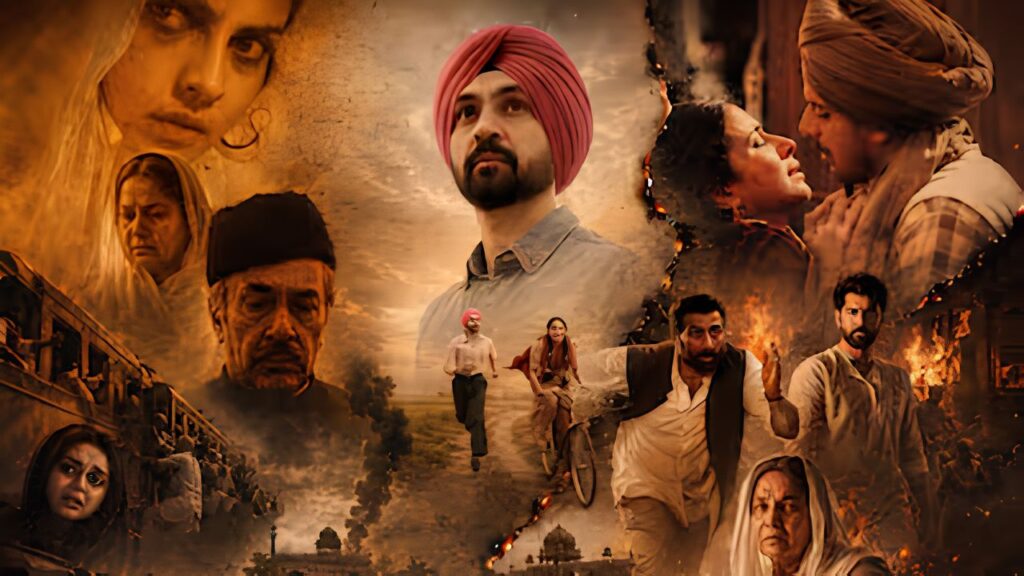
Gadar: Ek Prem Katha uses Partition as the foundation for a larger-than-life story of love, family and separation.
Sunny Deol plays Tara Singh, a Sikh truck driver who falls in love with Sakina, a Muslim woman played by Ameesha Patel.
Their relationship develops during the violence and upheaval surrounding Partition.
When Sakina becomes separated from Tara and ends up in Pakistan, Tara crosses the border to bring her back.
Unlike more restrained Partition dramas, Gadar presents the historical backdrop through action, romance and heightened emotion.
Its larger-than-life treatment turned the India-Pakistan divide into the central obstacle in a story about a man determined to reunite with his family.
Why Partition Cinema Still Matters
Partition films continue to resonate because they transform a historical event into deeply personal stories.
The experiences of people who lost homes, families, relationships and identities remain at the heart of these narratives.
Films such as Pinjar and Khamosh Pani focus on the trauma faced by women, while Earth and Train to Pakistan examine the collapse of communities.
Mammo looks at the long-term questions of identity and belonging, while Gadar: Ek Prem Katha and Main Vaapas Aaunga explore how Partition changed the course of love stories.
Bhaag Milkha Bhaag, meanwhile, demonstrates how the consequences of Partition could shape an individual’s entire life.
Together, these films show that the story of 1947 cannot be reduced to borders and political decisions.
It is also a story of ordinary people who were forced to rebuild their lives after losing almost everything.
Final Take
The best Partition films do more than recreate a historical period. They make audiences understand the human cost behind one of the biggest political upheavals of the 20th century.
From Main Vaapas Aaunga and Gadar: Ek Prem Katha to Pinjar, Earth and Mammo, these movies approach Partition through different genres and perspectives.
Yet they share one central idea: the borders may have been drawn in 1947, but the emotional consequences lasted for generations.
FAQ
What are the best films about the Partition of India?
Some notable Partition films include Pinjar, Mammo, Earth, Train to Pakistan, Khamosh Pani, Gadar: Ek Prem Katha, Bhaag Milkha Bhaag, Partition and Main Vaapas Aaunga.
Which movie shows the impact of Partition on women?
Pinjar and Khamosh Pani are particularly focused on the experiences and suffering of women affected by Partition.
Which Partition movie is based on Khushwant Singh’s novel?
Train to Pakistan is based on Khushwant Singh’s celebrated novel of the same name.
Which film shows Milkha Singh’s childhood during Partition?
Bhaag Milkha Bhaag portrays Milkha Singh’s childhood experiences during Partition and the violence that forced him to flee to India.
Which movie tells a love story against the backdrop of Partition?
Several films explore love during Partition, including Gadar: Ek Prem Katha, Partition and Main Vaapas Aaunga.
Why are Partition films still relevant today?
Partition films remain relevant because they explore displacement, communal violence, family separation, identity and trauma that continued to affect generations after 1947.