








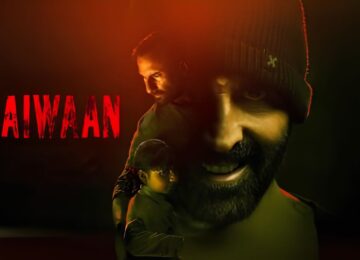



Udta Teer Movie Review: Akash A Kaushik’s Udta Teer, starring Ayushmann Khurrana and Sara Ali Khan, attempts to combine espionage, satire and comedy into an unconventional entertainer. However, despite a premise that offers plenty of scope for humour and unpredictability, the film struggles to find a consistent tone. It delivers a few chuckles but rarely builds them into genuinely memorable comic moments.
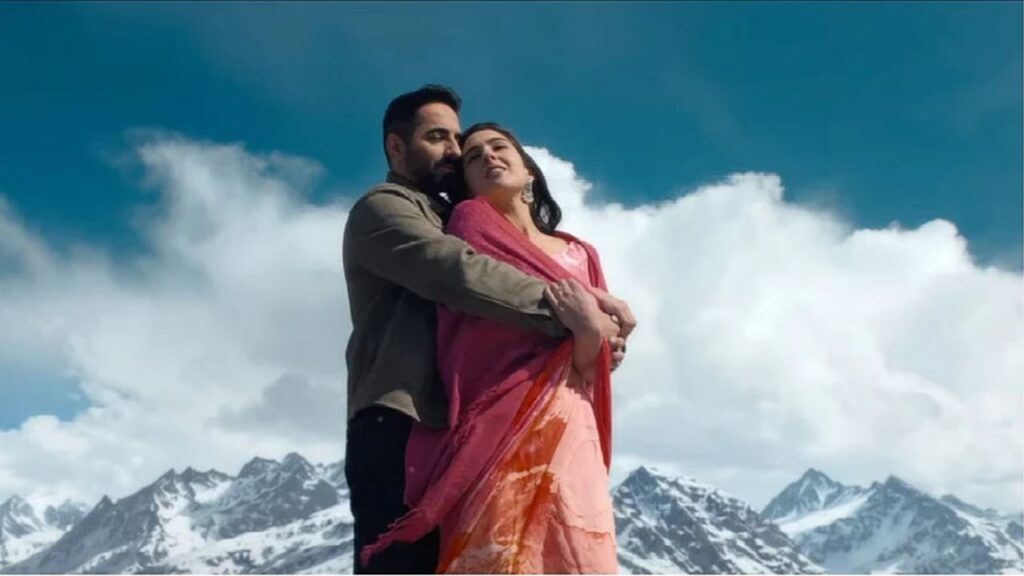
The film’s biggest weakness is not its disregard for logic. Spy comedies can thrive on absurd situations, exaggerated characters and implausible twists. The problem arises when Udta Teer appears uncertain about the kind of story it wants to tell. What begins as an irreverent comic caper gradually shifts towards a more nationalistic narrative, with a romantic song and a patriotic track interrupting the momentum.
On paper, this combination of genres might sound entertaining. On screen, however, the transitions feel uneven, leaving the film caught between satire, sentiment and conventional spy-thriller territory.
Udta Teer Plot: A Spy’s Identity Crisis Fuels the Chaos
The film opens in Mudirka, Pakistan, where terrorist Azhar Maqsood plans retaliation against India following Operation Sindoor. Now hiding in Delhi, he is also occupied with finding his ideal partner through a Muslim dating app called Hinder. Accompanied by a track titled “Azerbaijaan”, the sequence establishes the film’s irreverent sense of humour and briefly suggests that the story could deliver an unusual take on the spy-comedy genre.
Running parallel to this storyline is that of Pakistani military agent Bilal Ahmed, who operates in India’s Counter Terrorism Squad under the identity of Vikrant Thapar. Having lost his parents in cross-border firing, Vikrant views his assignment as an opportunity to avenge their deaths. He works alongside Dhruv, another Pakistani agent operating under the identity of Ashfaq.
The situation takes a turn when their superior, Burman, discovers their real identities. A confrontation inside a car leads to an accident that leaves Burman in a vegetative state. Vikrant suffers memory loss and begins to believe that he is a patriotic Indian agent working for the country rather than a Pakistani operative.
This identity crisis becomes the foundation for a series of missions filled with misunderstandings, confusion and comic complications. The premise has the ingredients for an entertaining farce, but the execution struggles to maintain the energy needed to make the increasingly chaotic situations work.

A Spy Comedy That Cannot Decide on Its Tone
The central issue with Udta Teer is its inconsistent approach to humour. The opening establishes an irreverent atmosphere, suggesting that the film intends to poke fun at familiar spy-movie conventions. Yet the narrative gradually moves towards more conventional patriotic territory, weakening the satirical edge that initially makes the story interesting.
A film does not necessarily need to remain within a single genre. Comedy can coexist with action, romance and political themes, provided the transitions feel natural. Here, the shifts often appear imposed rather than organically connected to the characters or the plot.
The romantic song and patriotic number further interrupt the narrative flow. Instead of deepening the emotional stakes or strengthening the central conflict, these sequences make the film feel longer and less focused. The result is a spy comedy that introduces several tonal possibilities without fully committing to any of them.
The Marriage Subplot Adds Little to the Story
Vikrant’s personal life introduces another source of conflict. His marriage to Yamini, who works at the Indian Defence Ministry, is on the verge of collapse, with the couple heading towards divorce.
In theory, this subplot could offer a more personal dimension to Vikrant’s identity crisis. His confusion about his professional life might have been complemented by the instability of his marriage, creating a meaningful connection between the two storylines.
Instead, the marital conflict feels largely disconnected from the central espionage plot. Its presence interrupts the film’s forward movement without adding enough emotional depth or narrative consequence. Yamini receives additional screen time, but the subplot does little to strengthen the main story.
Does Udta Teer Deliver as a Comedy?
The film does produce occasional laughs, particularly when it embraces the absurdity of its premise. The idea of an undercover agent losing his memory and sincerely believing in the identity he has been pretending to inhabit offers considerable comic potential.
However, isolated amusing moments cannot compensate for a screenplay that struggles to build a sustained rhythm. The humour rarely develops into the kind of escalating comic situations that could make the premise genuinely engaging. Linear storytelling and a lacklustre cinematic treatment further limit the film’s impact.
The larger problem is that Udta Teer seems to mistake the presence of multiple genres for a compelling blend of them. Rather than allowing espionage, satire and personal drama to reinforce one another, the film frequently moves between them without creating a cohesive whole.
Udta Teer Movie Review: Final Verdict
Udta Teer begins with an intriguing idea: a spy comedy built around mistaken identity, memory loss and the absurdities of covert operations. Unfortunately, the film struggles to translate that premise into a consistently entertaining experience.
Its occasional comic moments show what the concept could have achieved, but tonal inconsistency, an underdeveloped personal subplot and interruptions to the central narrative hold it back. The film attempts to balance irreverent humour with patriotic drama, yet the combination rarely feels seamless.
For viewers expecting a tightly written spy comedy, Udta Teer may prove underwhelming. Its premise promises more than the storytelling ultimately delivers.