











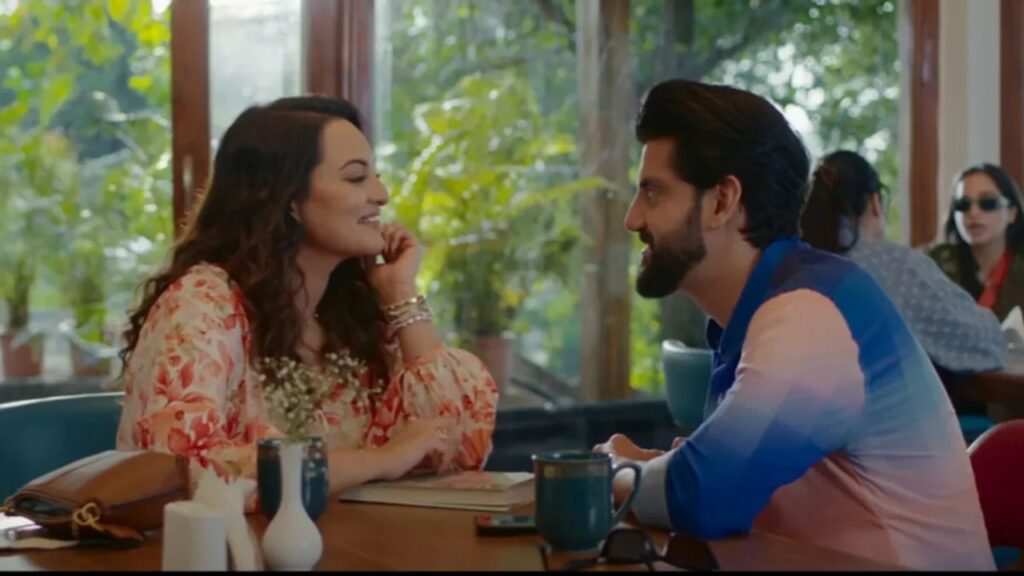

Tu Hai Meri Kiran Movie Review: Sonakshi Sinha and Zaheer Iqbal’s psychological thriller arrives with an intriguing premise but struggles to turn it into a compelling cinematic experience. Written and directed by Karan Rawal, the film explores obsession, a mysterious connection between two timelines and the unsettling consequences of allowing the past to influence the future. Unfortunately, weak writing and underwhelming technical execution prevent the story from reaching its potential.
There is an interesting film somewhere inside Tu Hai Meri Kiran. The concept invites questions about love, control, identity and the possibility of changing events across time. Yet the execution feels insufficiently developed, as though the film needed more time in the writing room and pre-production before making its way to theatres.
The result is an experience that becomes unsettling for reasons beyond its psychological premise. Instead of building tension through atmosphere and character development, the film often struggles with its own presentation.
Tu Hai Meri Kiran Plot: A Mysterious Phone Connects Two Timelines
The story follows Kiran, played by Sonakshi Sinha, a wealthy bestselling author searching for inspiration for her next novel. Her life takes an unexpected turn when she discovers a mysterious phone in her new home. While attempting to identify its owner, she establishes a connection with Samar, played by Zaheer Iqbal, a man living in 2016 while she exists in 2026.
The decade-long gap between their timelines becomes the foundation of the film’s central mystery. Kiran begins sharing details about herself and the future with Samar, who is struggling to establish himself financially. He recognises an opportunity in their unusual connection and starts using the information to his advantage.
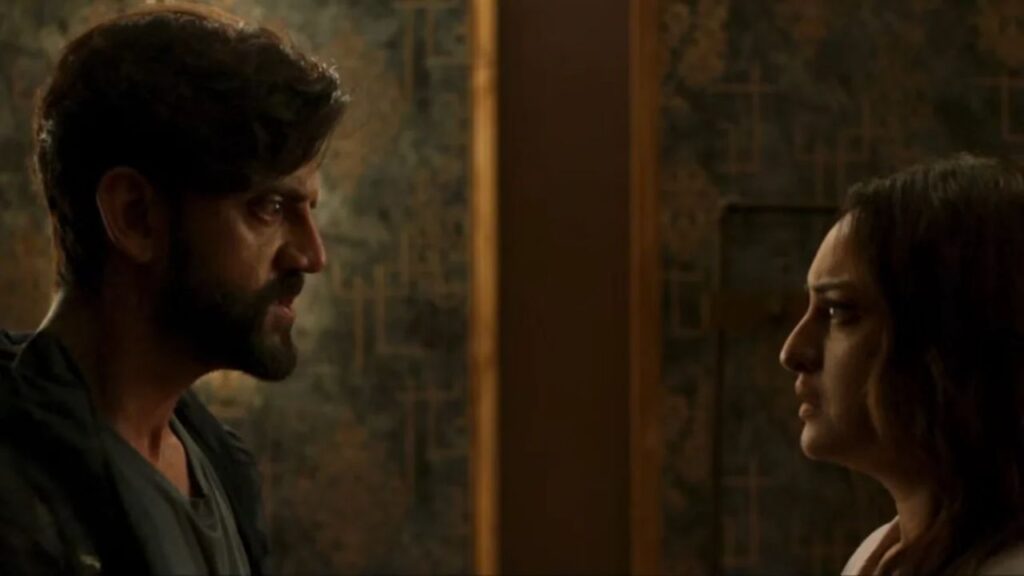
However, their relationship gradually becomes more troubling. Samar develops an intense attachment to Kiran, particularly because she listens to him and makes him feel understood. What begins as an unusual friendship evolves into an obsession that threatens to extend beyond the boundaries of time.
Kiran is already married to Riyaan, played by Ankit Gupta, but her attempts to distance herself from Samar only complicate matters. The possibility that events in 2016 could alter Kiran’s life in 2026 gives the story its psychological dimension. Samar’s ability to influence the future, including Kiran’s younger self, creates the potential for a tense and unpredictable thriller.
It is an effective starting point. The problem is that an intriguing premise needs equally strong writing to sustain its possibilities.
A Promising Concept Undermined by the Writing
The biggest disappointment with Tu Hai Meri Kiran is the gap between its central idea and its execution. The connection between two people living a decade apart offers several opportunities to explore emotional dependency, manipulation and the consequences of information travelling across time.
Instead, the narrative struggles to develop these ideas into a consistently engaging story. Samar’s growing obsession should form the emotional and psychological core of the film, but the screenplay does not always give the relationship enough depth to make its escalation convincing.
Kiran’s decisions and her changing relationship with Samar also need greater emotional grounding. Without a sufficiently developed character arc, the tension risks feeling like a series of plot developments rather than the inevitable result of two people becoming entangled in an increasingly dangerous situation.
The film does generate curiosity during its first half. The mysterious phone and the connection between 2016 and 2026 provide enough intrigue to keep the central question alive. However, curiosity alone cannot carry a psychological thriller when the character motivations and narrative consequences remain underdeveloped.
Visuals and Cinematography Fail to Build the Right Atmosphere
A psychological thriller depends heavily on its visual language. Lighting, framing, colour and production design can create unease long before the characters acknowledge that something is wrong. In Tu Hai Meri Kiran, however, the visual treatment frequently feels distracting rather than immersive.
The presentation of Kiran’s 2026 world lacks the visual subtlety needed to support the story. Instead of establishing a distinct atmosphere, some scenes have an overly polished, advertisement-like appearance. The overall visual texture can feel unusually uniform, reducing the sense of depth that could have made the setting more convincing.
This matters because the film’s premise relies on the audience becoming absorbed in its unusual circumstances. A more deliberate visual approach could have helped distinguish the two timelines and reinforce the growing psychological tension.
Technical shortcomings become more noticeable when the writing itself is struggling. Rather than complementing the mystery, the presentation often draws attention to the filmmaking, making it harder to become fully invested in the characters.
The Second Half Loses Its Grip on the Story
Although the first half establishes an intriguing mystery, the film becomes less effective as it progresses. The second half struggles to maintain the momentum created by the initial connection between Kiran and Samar, and the narrative does not build towards its conclusion with the required precision.
The climax is particularly disappointing. Without revealing spoilers, the ending feels insufficiently earned, leaving the impression that the story is reaching a conclusion because it has run out of road rather than because its central conflict has been meaningfully resolved.
An open ending can be an effective choice for a psychological thriller. It can encourage audiences to reconsider earlier scenes, question a character’s motives or debate what might happen next. But ambiguity works only when the journey towards it feels coherent.
In Tu Hai Meri Kiran, the conclusion lacks the narrative groundwork needed to make its uncertainty satisfying. Instead of leaving the audience with compelling questions, it risks leaving them frustrated by the film’s unresolved storytelling.
Sonakshi Sinha and Zaheer Iqbal’s Performances
Sonakshi Sinha plays Kiran, a successful author whose unusual connection with Samar begins to interfere with her personal life. The role requires a balance of curiosity, vulnerability and growing apprehension as the relationship becomes increasingly disturbing.
However, her performance feels uneven in the more vulnerable moments. Kiran’s emotional responses do not always convey the intensity the situation demands, making parts of her character’s journey less convincing. Her friendship with the character played by her best friend also lacks the natural chemistry needed to make their interactions feel spontaneous.
Zaheer Iqbal makes a more noticeable attempt to capture Samar’s obsessive tendencies. He brings energy to a character whose attachment to Kiran gradually becomes unsettling, and some moments suggest how effectively the role might have worked with a more fully developed screenplay.
Nevertheless, the character’s potential is limited by the writing. Samar needs to be more than an increasingly obsessive man; the film must also establish the psychological progression behind his behaviour. Without that depth, even an engaged performance has limited room to make the character fully convincing.
Tu Hai Meri Kiran Movie Review: Final Verdict
Tu Hai Meri Kiran has the foundations of an interesting psychological thriller: a mysterious phone, two timelines separated by a decade and a relationship that gradually turns into an obsession. These elements could have supported a tense, emotionally layered story.
Unfortunately, the film struggles to make the most of them. Uneven character development, an unconvincing visual atmosphere and a second half that loses narrative control weaken the experience. The climax compounds these problems instead of bringing the story to a satisfying conclusion.
Sonakshi Sinha and Zaheer Iqbal have a concept with potential to work with, but the screenplay does not give their characters enough depth to make the psychological conflict consistently effective. Ultimately, Tu Hai Meri Kiran feels like a film that needed more development before reaching theatres.
FAQs
1. What is Tu Hai Meri Kiran about?
Tu Hai Meri Kiran follows Kiran, a bestselling author living in 2026, who discovers a mysterious phone that connects her with Samar, a man living in 2016. Their relationship becomes increasingly complicated as his attachment to her turns into an obsession.
2. Who stars in Tu Hai Meri Kiran?
The supplied material identifies Sonakshi Sinha, Zaheer Iqbal and Ankit Gupta among the cast. Confirm the complete official cast list before publication.
3. Who directed Tu Hai Meri Kiran?
According to the supplied draft, Karan Rawal wrote and directed the film.
4. How is Tu Hai Meri Kiran as a psychological thriller?
This review finds that the film has an intriguing premise but struggles with character development, visual execution and narrative consistency, particularly in the second half.