










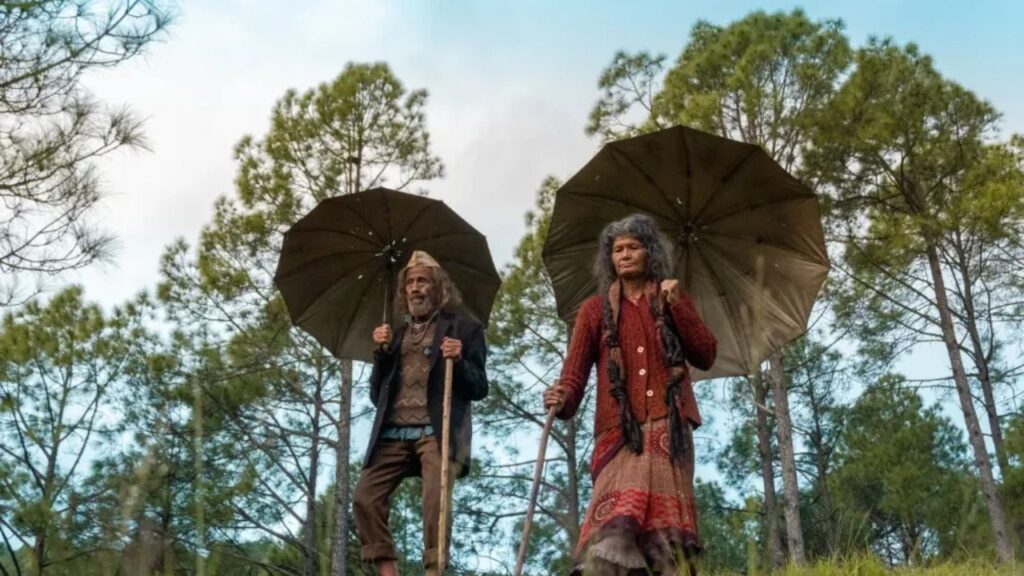

Pyre, directed by Vinod Kapri, is a quiet, deeply human drama about ageing, loneliness and the enduring hope of a family reunion. Set in a remote village in Uttarakhand’s Kumaon region, the film follows an elderly couple waiting for their son, who left for Mumbai decades ago. Padam Singh Kapri and Hira Devi bring striking naturalness to their roles, while the cinematography and music enrich the film’s emotional landscape. Its second half, however, could have benefited from tighter editing.
Pyre Review: Story and Screenplay
The story unfolds in a remote Himalayan village where migration has gradually emptied the streets of younger residents. At the centre are Padam Singh, played by Padam Singh Kapri, and his ailing wife Tulsi, portrayed by Hira Devi. Their daily lives are shaped by the challenges of old age, limited support and the absence of their son, Hariya, who left for Mumbai around 28 years ago.
Their isolation is not merely physical. With their son out of contact for so long, the couple must confront the uncertainty of growing old without knowing whether he will return. Even ordinary tasks become reminders of how difficult life can be when a village loses its people and the support networks that once held the community together.
A few compassionate people help Tulsi access medical care, offering brief moments of relief in an otherwise difficult routine. Then, just as the couple appear to have lost hope, a postman brings a letter with news that changes their outlook: their son intends to return home in a few weeks.
The announcement brings a renewed sense of anticipation into their lives. What follows explores the emotional weight of waiting, the fragile nature of hope and the distance that can grow between parents and children over the years. Rather than relying on conventional dramatic spectacle, Pyre draws much of its strength from the small moments that define the couple’s relationship.
Padam Singh Kapri and Hira Devi Are the Heart of Pyre
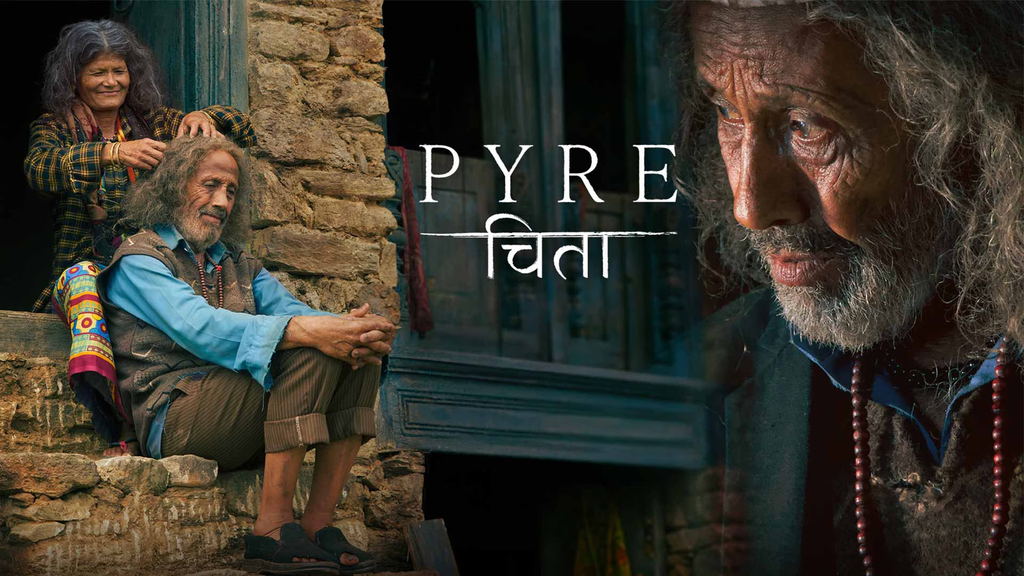
The film belongs to its lead performers. Padam Singh Kapri and Hira Devi bring an unpolished, lived-in quality to their characters, making the couple’s conversations, disagreements and moments of tenderness feel remarkably authentic.
Their performances do not depend on exaggerated expressions or elaborate dramatic gestures. Instead, the actors communicate through everyday behaviour and understated reactions. That natural approach gives the relationship a convincing texture and makes the characters feel like people encountered in real life rather than figures constructed for a film.
Their backgrounds also add context to the performances. The two leads were non-professional actors before taking on the film, and their natural presence is one of Pyre’s most distinctive qualities. Their chemistry allows the story’s emotional moments to emerge without being forced.
The supporting cast, including Subhash Chandra, Shubham Chaudhary and Sadab Khan, contributes effectively to the film’s rural setting and narrative. Their performances help maintain the grounded atmosphere surrounding the central couple.
Vinod Kapri’s Direction Gives the Story Its Emotional Weight
Director Vinod Kapri, known for films including Miss Tanakpur Haazir Ho and Pihu, approaches Pyre with an emphasis on observation rather than melodrama. The film’s central themes of ageing, migration and family separation are rooted in the realities of rural life, where the departure of younger generations can leave older residents increasingly isolated.
The director allows the couple’s everyday experiences to carry much of the narrative. Their conversations and routines gradually reveal the loneliness beneath their familiar domestic exchanges. The film’s title also takes on greater significance as the story progresses, connecting the couple’s circumstances to the difficult questions the narrative raises about ageing, death and who remains when a community disappears.
Pyre’s restrained approach may require patience from viewers accustomed to faster-paced storytelling. However, its strongest moments come when the film trusts its characters and setting to communicate the emotional stakes without spelling everything out.
Cinematography and Music Elevate the Film
Manas Bhattacharyya’s cinematography is one of Pyre’s major strengths. The hills, valleys and remote village surroundings are captured with a sense of scale and tranquillity that complements the story’s intimate focus. The landscape is more than a scenic backdrop: it reinforces the couple’s isolation and the distance between their home and the lives their children have chosen elsewhere.
The visual approach gives the film room to breathe. Its natural surroundings help establish a mood of stillness, while the contrast between the vast landscape and the couple’s modest daily existence deepens the story’s emotional impact.
The music, credited to Mychael Danna and Amritha Vaz, supports that atmosphere without overwhelming the performances. It adds warmth to the film and helps underline its quieter emotional shifts. The combination of cinematography and music allows Pyre to create moments of beauty without losing sight of the difficult realities at its centre.
Editing Could Have Been Tighter in the Second Half
Despite its strengths, Pyre is not entirely successful in maintaining its narrative rhythm. The editing, handled by Patricia Rommel and Subhajit Singha, could have been tighter in the second half, where certain portions feel as though they would benefit from greater precision.
The film’s deliberate pace is part of its identity, but a contemplative story still needs to maintain forward movement. Some scenes could have been shaped more efficiently to preserve the emotional momentum built by the lead performances.
Even so, the film’s overall direction and the authenticity of its central characters help prevent these stretches from undermining the experience completely. Its most effective elements remain strong enough to keep the emotional core intact.
Pyre Review: Final Verdict
Pyre is a heartfelt drama that finds its greatest strength in the natural performances of Padam Singh Kapri and Hira Devi. Their portrayal of an ageing couple waiting for their absent son gives the film an emotional centre that feels intimate and believable.
The beautiful Himalayan cinematography and thoughtful music add considerably to its impact, while Vinod Kapri’s restrained direction allows the themes of ageing, migration and loneliness to emerge gradually. The uneven editing in the second half is a noticeable weakness, but it does not erase the film’s sincerity.
Pyre is best suited to viewers who appreciate character-driven cinema, understated performances and stories that find meaning in ordinary lives. Its most lasting impression comes from the couple at its centre and the difficult question their circumstances raise: what happens to those who remain when everyone else leaves?
JAY-HO! READ
With Pyre, Vinod Kapri turns his attention to an elderly couple whose lives are shaped by separation, uncertainty and the hope of seeing their son again. Padam Singh Kapri and Hira Devi deliver natural performances that anchor the film, while the cinematography and music strengthen its quiet emotional pull. Although the second half could be more tightly edited, the film’s central relationship gives it lasting resonance.
What to Watch Next
Viewers interested in character-driven Indian cinema can explore more film reviews and regional cinema coverage on Jay-Ho!.
Stay tuned to Jay-Ho! for more movie reviews and entertainment updates.
Frequently Asked Questions
1. What is the film Pyre about?
Pyre follows an elderly Kumaoni couple, Padam Singh and Tulsi, who live in a remote village in Uttarakhand and wait for their son, Hariya, who left for Mumbai around 28 years ago.
2. Who directed Pyre?
Pyre is directed by Vinod Kapri, known for films such as Pihu and Miss Tanakpur Haazir Ho.
3. Who are the lead actors in Pyre?
The film stars Padam Singh Kapri as Padam Singh and Hira Devi as Tulsi. Their natural, understated performances are among the film’s major strengths.
4. Who composed the music for Pyre?
The film’s music is credited to Mychael Danna and Amritha Vaz.
5. Who handled the cinematography and editing of Pyre?
Manas Bhattacharyya handled the cinematography, while Patricia Rommel and Subhajit Singha are credited as editors.