










Netflix’s Dead-End Job transforms the financial pressures of young workers into an eight-episode supernatural survival story. Lee Jae-wook leads with convincing comic timing, but inconsistent visual effects and a loosely connected episodic structure prevent the Korean series from fully realising its intriguing premise.
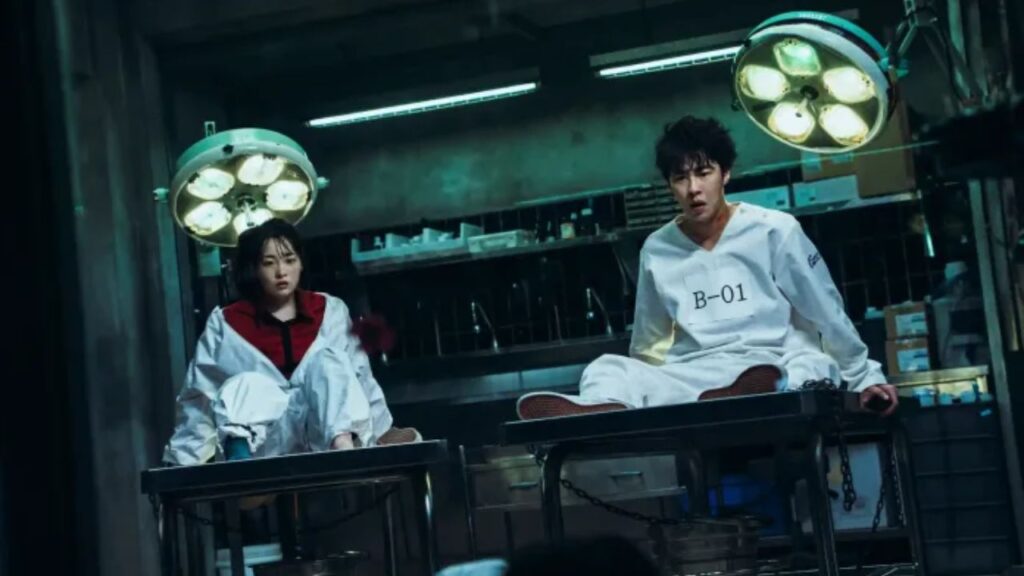
Finding a job that pays well is difficult enough without worrying about whether you will survive the shift. Netflix’s Korean series Dead-End Job takes the familiar anxieties of earning a living, managing debt and dealing with demanding workplaces and gives them a supernatural twist. Its central offer sounds almost unbelievable: part-time assignments paying 50 times the minimum wage. The catch is that employees may not make it through their working hours alive.
Directed by Kim Da-min, the eight-episode horror-comedy combines mystery, workplace satire and supernatural encounters. Its premise is immediately appealing because it turns an everyday concern into an unusual survival challenge. When financial desperation makes an extraordinary salary difficult to refuse, even a dangerous job can begin to look tempting.
Dead-End Job Plot: What Is the Netflix K-Drama About?
The series follows Byeon Hyeok-jun (Lee Jae-wook), a young man struggling to escape mounting financial problems. With his options running out, he discovers an opportunity advertised by the Spyder Human Resource Center, also known as the Spider Staffing Agency.
The agency offers unusually high wages for ordinary-looking part-time assignments. Its mysterious manager, Mr S (Lee Hee-joon), has one important condition: employees must never discuss what happens during their shifts.
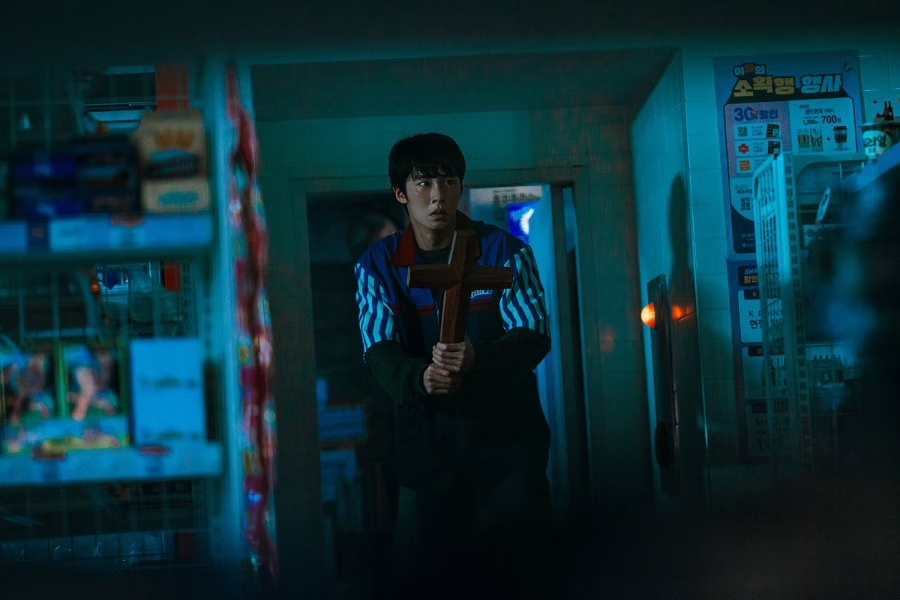
Hyeok-jun soon discovers why the agency pays so generously. What initially appears to be a collection of routine jobs turns into a succession of supernatural encounters, with each workplace presenting a different threat. A convenience store, a delivery assignment and other seemingly familiar environments become settings for increasingly bizarre situations.
Meanwhile, Yeon-ju (Go Min-si), an investigator examining workplace incidents, begins looking into the strange events connected to the agency. Her investigation introduces a second narrative thread, gradually connecting the individual assignments to the larger mystery surrounding the organisation.
The setup gives the show plenty of room to experiment. Each new job brings a different environment, a fresh danger and another opportunity to mix horror with humour.
Direction and Visuals: Everyday Workplaces Become Horror Settings
Kim Da-min builds much of the series’ atmosphere by taking ordinary locations and making them feel threatening. Places that would normally be associated with routine errands or everyday employment become unpredictable spaces where the rules of survival can change without warning.
This approach works particularly well with the show’s central idea. The horror is not confined to an isolated haunted location; it follows workers into the places where they are simply trying to earn money. That connection gives the supernatural situations a relatable foundation.
The series also uses its monsters and workplace situations to comment on the pressure faced by people struggling to make ends meet. The suggestion that employees may have to risk their safety for a better income gives the comedy an uncomfortable edge.
However, the visual execution is inconsistent. Some creature designs and supernatural sequences lack the convincing effects needed to create sustained fear. At times, the CGI looks noticeably artificial, making scenes that should be disturbing feel unintentionally amusing.
The contrast between the inventive premise and the uneven effects is particularly disappointing because the show has several opportunities to create memorable horror moments.
Performances: Lee Jae-wook Brings Energy to the Lead Role
Lee Jae-wook is well suited to Byeon Hyeok-jun, a financially troubled young man who finds himself in increasingly dangerous situations. He conveys the character’s exhaustion and anxiety while maintaining enough comic timing to keep the story entertaining.
His reactions are among the series’ most enjoyable elements. Hyeok-jun is not presented as an invincible action hero who immediately understands how to handle every supernatural threat. His confusion and fear make the strange assignments feel more convincing, while his attempts to survive provide much of the show’s humour.
Go Min-si brings confidence and determination to Yeon-ju. Her investigation gives the story a different rhythm from Hyeok-jun’s increasingly dangerous assignments, although the two narrative strands do not always feel equally developed.
Lee Hee-joon also makes an impression as Mr S. His controlled, almost welcoming manner creates an interesting contrast with the disturbing nature of the agency’s work. The character’s mystery is an important part of the show’s appeal.
Kim Min-ha adds warmth as Hyeok-jun’s younger sister, Ji-yun. Her everyday interactions with her brother provide a welcome emotional connection beyond the supernatural incidents. Their natural chemistry and occasional bickering help make their relationship feel lived-in.
Choi Hyun-wook is another enjoyable presence in his guest appearance as Choi Hee-dong. His screen presence brings a different energy to the episode, making the character memorable despite the limited appearance.
What Works and What Does Not Work in Dead-End Job
The biggest strength of Dead-End Job is its central concept. Turning the pressure of gig work into a supernatural survival challenge gives the series a distinctive identity. The different assignments also prevent the horror from becoming entirely repetitive, as each new workplace introduces another set of rules and dangers.
The dark humour is equally important. Without it, the series could become an unnecessarily bleak account of people being placed in life-threatening situations. The comedy gives the characters room to react to the absurdity around them and helps maintain an entertaining tone.
The main weakness is the execution. The visual effects occasionally undermine the scares, while the episodic structure makes the larger story feel less cohesive than it could have been. Because so much attention goes into Hyeok-jun’s individual assignments, the central mystery surrounding the agency does not always receive enough development.
The result is a series whose individual workplace adventures can be more engaging than the larger explanation connecting them. A stronger balance between the monster-of-the-week format and the overarching mystery would have made the eight episodes feel more tightly connected.
Final Verdict: Is Dead-End Job Worth Watching?
Dead-End Job has an inventive premise, an engaging lead performance and enough dark humour to distinguish it from more conventional Korean horror dramas. Lee Jae-wook handles the combination of comedy and fear effectively, while Go Min-si, Kim Min-ha and Lee Hee-joon add personality to the ensemble.
However, uneven CGI and a somewhat disconnected episodic structure keep the series from reaching its full potential. Its workplace horror is often more imaginative than its execution, and the central mystery could have been developed with greater consistency.
With three stars out of five, Dead-End Job is an entertaining option for viewers who enjoy supernatural mysteries mixed with workplace comedy. Its unusual premise makes it worth considering, even if not every shift delivers the same level of excitement.
Stay tuned to Jay-Ho! for more K-drama reviews and OTT updates.