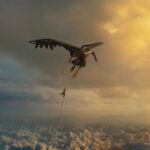






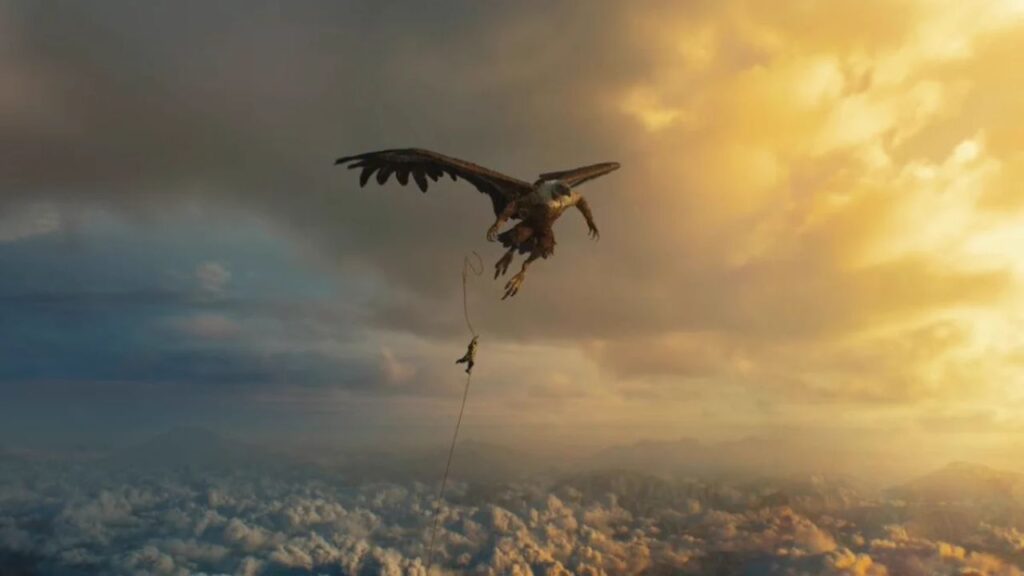

Nitesh Tiwari has revealed the extraordinary amount of time and creative effort that went into creating the Ravana-Jatayu battle sequence in his upcoming epic Ramayana. According to the filmmaker, the sequence took six and a half years to complete, from the initial briefing to the final frame. He also disclosed that the team explored nearly 40 to 50 designs before finalising the look of Ravana’s mythical Pushpak Viman.
The director shared these details during an interaction with Shreyas Media, explaining how the sequence underwent several creative and technical changes during development. His comments offer a glimpse into the scale of visual effects work involved in bringing the epic’s aerial battle to the screen.
Nitesh Tiwari Reveals Six-and-a-Half-Year Timeline for Ravana-Jatayu Fight
Speaking about the time required to complete the sequence, Tiwari explained that the process began years before the final version was ready. He highlighted the contribution of the artists and technicians who worked on the sequence through multiple stages.
“You know how much time it has taken for us to finish the Ravana and Jatayu fight? From the time I briefed the previous artist to the time we finished the whole thing, six and a half years. One action sequence. I can go on and on about it for an hour just to tell you how much e…” the filmmaker said.
The director’s account suggests that the battle required an extended development process rather than being created during the film’s final production stages. The sequence’s changing visual requirements also played a role in the time taken to complete it.
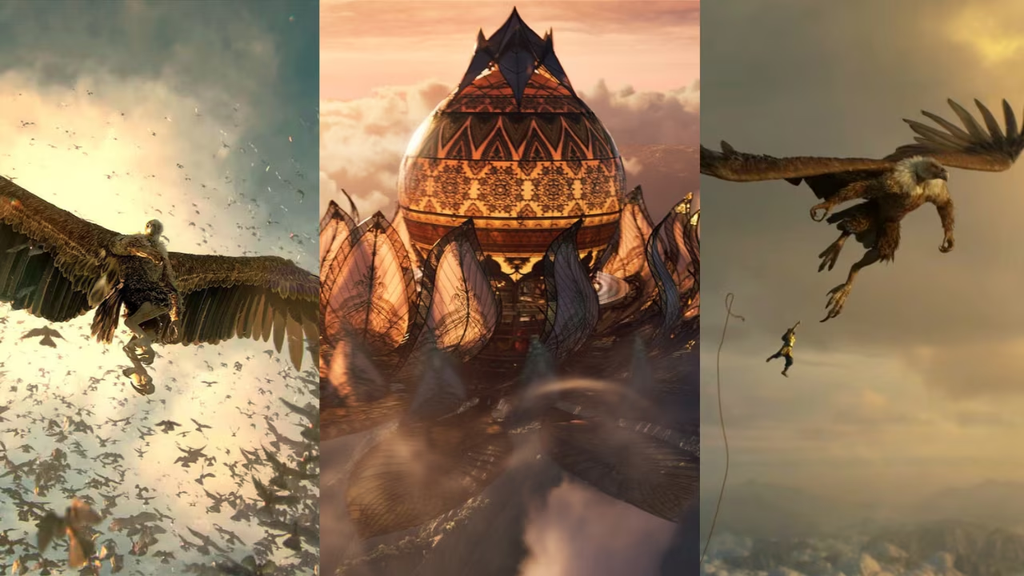
40 to 50 Pushpak Viman Designs Considered Before Finalisation
Tiwari also revealed that the design of Pushpak Viman, the mythical flying vehicle associated with Ravana, took nearly two years to finalise. The initial concept underwent several revisions, which affected the way the team approached the larger Ravana-Jatayu sequence.
Explaining the connection between the vehicle’s design and the battle, he said, “We took close to two years to arrive at that. And then a lot of things changed, which is why it took us so long to shape the Ravana and Jatayu fight. Because previously, we assumed the design of Pushpak Viman would be something like that, and we shaped the sequence around it.”
The filmmaker further disclosed that the team created approximately 40 to 50 designs before selecting the version featured in the film.
“We created some 40-50 designs for Pushpak Viman before finalising the one you see in the film. We didn’t want something that did look like it could fly, we wanted some kind of science to go into it. Because I believe, we all believe there was science behind everything that happened that time,” he explained.
His comments highlight the level of design exploration involved in creating the mythical vehicle and integrating it into the film’s aerial action.
Ranbir Kapoor Defends the Work of VFX Artists
Ranbir Kapoor, who plays Lord Rama in Ramayana, also spoke about the effort involved in creating visual effects for large-scale films. Addressing the criticism that some cinematic visuals are labelled as AI-generated, the actor highlighted the work of the artists and technicians behind individual frames.
“You know, one really feels bad when someone releases something and people call it AI. Actually there are thousands of people tirelessly working for days and hours to get one frame right. There is a lot of hard work that goes into bringing the finesse in the CGI,” Ranbir said.
The actor’s comments draw attention to the extensive work that goes into computer-generated imagery, from creating visual assets to refining individual frames for the finished film.
Ramayana Cast and Release Details
Directed by Nitesh Tiwari and produced by Namit Malhotra, Ramayana features Ranbir Kapoor as Lord Rama, Sai Pallavi as Sita and Yash as Ravana. Sunny Deol plays Lord Hanuman, while Ravie Dubey portrays Lakshman.
The film is planned as a two-part cinematic adaptation, with the first instalment scheduled for a worldwide theatrical release on November 5, 2026. The second part is slated for a Diwali 2027 release.
With Tiwari’s latest revelations, the Ravana-Jatayu battle has emerged as one of the most technically demanding sequences discussed ahead of the film’s release. The director’s account of the six-and-a-half-year process and the numerous Pushpak Viman designs offers a closer look at the creative work behind the epic’s visual world.
Frequently Asked Questions
1. How long did the Ravana-Jatayu fight sequence in Ramayana take to create?
Director Nitesh Tiwari revealed that the Ravana-Jatayu fight sequence took approximately six and a half years, from the initial briefing to the final frame.
2. Why did the Ravana-Jatayu sequence take so long?
The sequence involved an extensive creative and technical process, including visual development, design decisions and detailed VFX work.
3. How long did it take to finalise the Pushpak Viman design?
3. How long did it take to finalise the Pushpak Viman design?
4. How many Pushpak Viman designs were considered?
The team reportedly explored around 40 to 50 different designs before selecting the final version.
.