








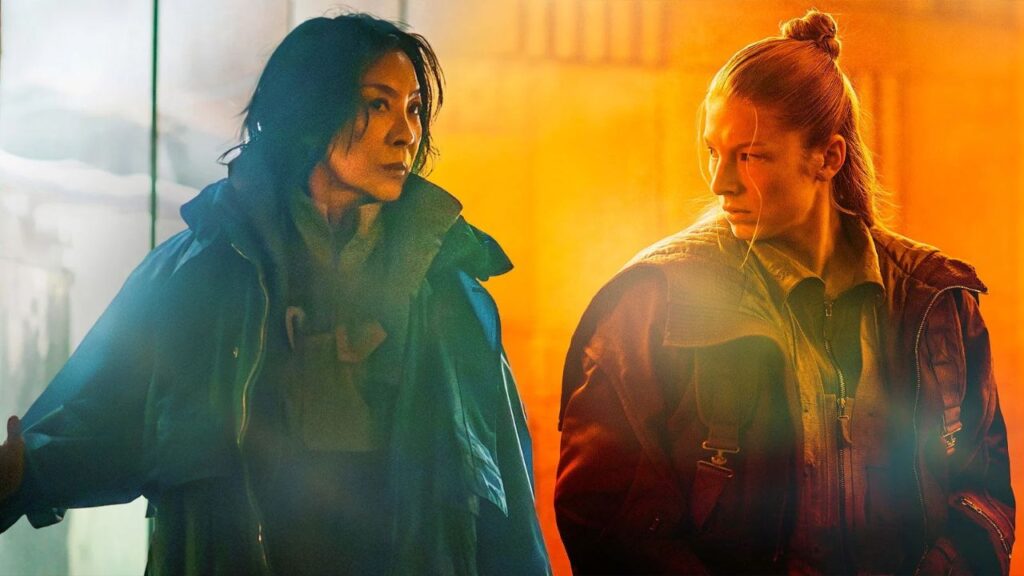

Michelle Yeoh and Hunter Schafer anchor Prime Video’s ambitious return to the Blade Runner universe. The eight-episode sci-fi series delivers a striking dystopian setting and explores mortality, identity and oppression, but its measured pace and uneven character development keep the story from reaching its full potential.
Quick Verdict
Blade Runner 2099 is a visually impressive but uneven addition to the science-fiction franchise. Michelle Yeoh brings quiet emotional weight to Olwen, while Hunter Schafer gives Cora an engaging mix of vulnerability and determination. Its atmospheric production design and score strengthen the experience, although leisurely pacing and underdeveloped supporting characters weaken the narrative.
Blade Runner 2099 Review: A Familiar World With a New Power Structure
When machines inherit the world, one might expect them to run it better. Blade Runner 2099 offers little comfort in that possibility. Set in 2099, decades after the events of Blade Runner 2049, the eight-part series imagines a Los Angeles where replicants have taken control and humans occupy a subordinate position in society.
The shift reverses the familiar power dynamic of the franchise. Replicants, once created and controlled by humans, now serve as the authority, while human survivors must navigate a society in which their freedom and identity are under threat. The premise gives the series an opportunity to revisit the franchise’s central questions about what separates manufactured beings from their creators.
At the centre of the story are Olwen, played by Michelle Yeoh, and Cora, portrayed by Hunter Schafer. Olwen is a replicant Blade Runner approaching the end of her predetermined lifespan. Cora, meanwhile, is a human fugitive who assumes a false identity to infiltrate the Blade Runner ranks.
Their paths converge as they investigate a missing replicant and pursue an object connected to a larger mystery. What begins as a search gradually draws the two women into a web of secrets, conflicting loyalties and questions about survival.
The premise is compelling, particularly because both characters have different reasons to question the society they inhabit. However, the narrative does not always make the most of its ideas. Some stretches feel more interested in extending the atmosphere than moving the story forward, while certain revelations lack the emotional impact needed to make them memorable.
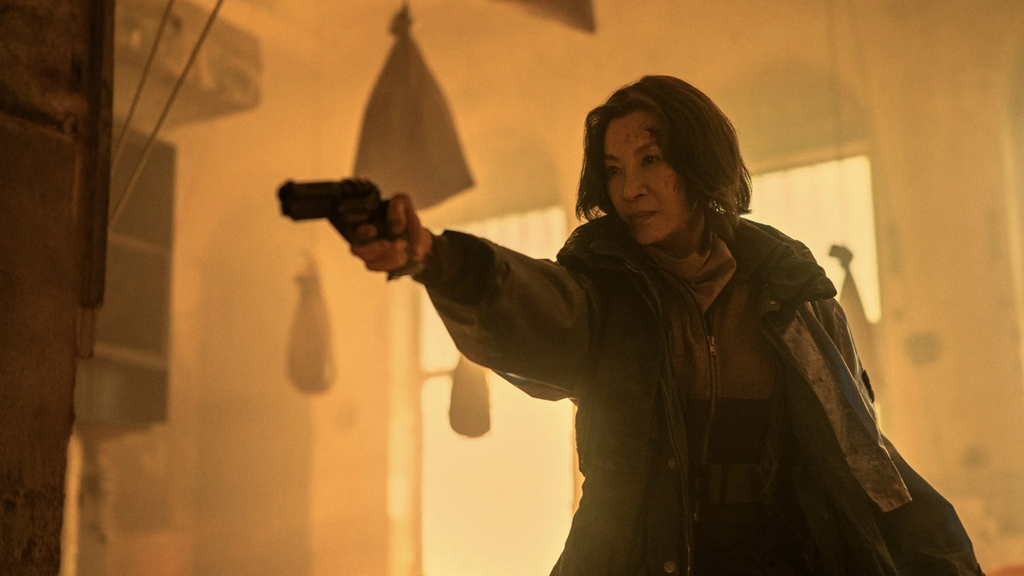
Actors’ Performance: Michelle Yeoh and Hunter Schafer Lead the Series
Michelle Yeoh gives Olwen a restrained vulnerability that often communicates more through expression than dialogue. Her character’s awareness of her approaching end gives the performance an underlying melancholy, and Yeoh handles that emotional tension without relying on exaggerated gestures.
Hunter Schafer brings a different energy to Cora. Her performance captures the character’s guarded desperation, survival instincts and discomfort with the identity she has adopted. Cora’s concealed past makes her an intriguing counterpoint to Olwen, and Schafer effectively conveys the pressure of living under a constant threat of exposure.
The two performances complement each other, giving the series a strong emotional centre even when the screenplay struggles to provide sufficient psychological depth. Their relationship is among the more engaging aspects of the story, but the writing does not consistently explore the full potential of their contrasting experiences.
The supporting characters help expand the world, although several feel more functional than fully developed. Their presence often serves the progression of the central mystery rather than creating independent emotional arcs.
Music and Aesthetics: A Dystopian World That Looks Lived-In
The strongest achievement of Blade Runner 2099 is its visual atmosphere. Rain-soaked streets, towering skylines, deteriorating interiors and harsher landscapes create a future that feels worn down by history rather than constructed solely for spectacle.
The production design draws on the visual language established by the earlier films while giving the series room to build its own version of Los Angeles. Its locations and environments reinforce the unequal society at the heart of the story, making the setting an important part of the narrative rather than a decorative backdrop.
The visual effects largely sustain this world, although occasional inconsistencies and less convincing action sequences interrupt the immersion. These moments are noticeable because the series otherwise places considerable emphasis on its visual detail.
Leopold Ross’s score complements the imagery with electronic textures and orchestral melancholy. It supports the series’ reflective mood without constantly competing with the performances. The music is particularly effective when the story slows down to explore the characters’ isolation and uncertainty.
Storytelling and Pacing: When Atmosphere Takes Priority
Blade Runner 2099 is built around ideas that deserve room to breathe. Mortality, artificial identity, political oppression and the meaning of humanity are natural extensions of the franchise’s long-standing interests.
The difficulty is maintaining narrative momentum across eight episodes. The deliberate pacing occasionally becomes repetitive, and the central investigation does not always develop with the urgency its stakes suggest. Some character motivations also remain underexplored, leaving important developments with less emotional weight than they could have carried.
The series is at its most effective when it allows Yeoh and Schafer to bring the larger philosophical questions down to a personal level. Their performances give the conflict a human dimension, even as the screenplay sometimes struggles to connect individual stories with its wider ideas.
This imbalance prevents the series from becoming as emotionally involving as its premise promises. Its world is compelling, but the storytelling does not always give that world enough dramatic purpose.
Final Verdict: Is Blade Runner 2099 Worth Watching?
Blade Runner 2099 is worth considering for viewers invested in the franchise’s dystopian universe and its questions about identity, mortality and artificial life. Michelle Yeoh and Hunter Schafer provide compelling performances, while the production design and atmospheric score create a distinctive viewing experience.
However, viewers expecting a consistently gripping science-fiction thriller may find the measured storytelling frustrating. The series has ambitious ideas and an impressive visual identity, but its uneven pacing and underdeveloped supporting characters prevent it from fully realising its potential.
Jay-Ho! Verdict: A visually striking sci-fi saga elevated by two strong lead performances, but held back by uneven storytelling.