








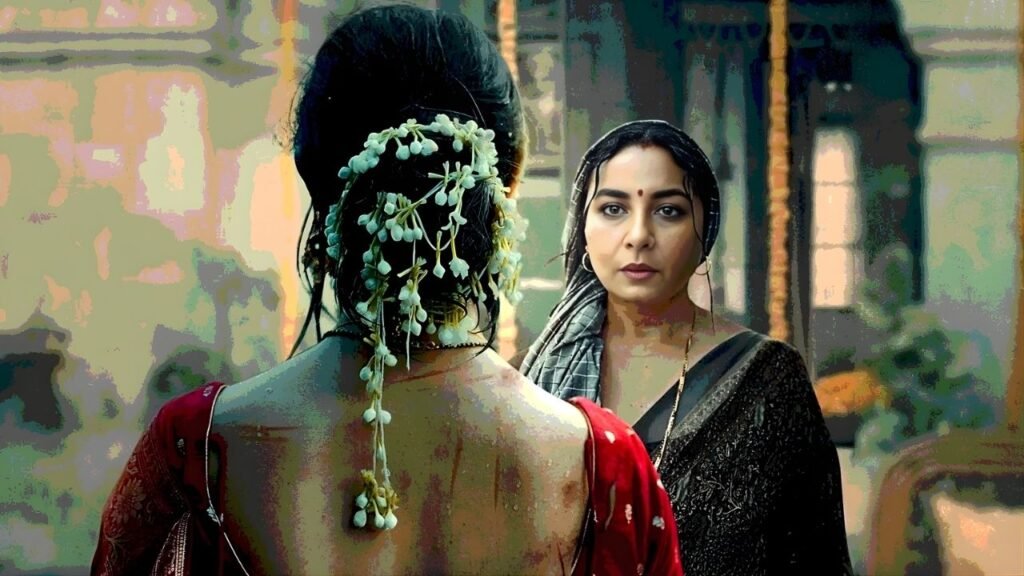

Chiraiya review verdict is clear — this is one of the most courageous Indian OTT dramas in recent memory. Set in a joint family in Lucknow, the series tackles marital rape and domestic abuse with a restrained, rooted honesty that makes its impact genuinely lasting. Starring Divya Dutta, Prasanna Bisht, Sanjay Mishra, and Siddharth Shaw, the show arrives as a rare piece of mainstream Indian content willing to name one of society’s most protected silences. Early responses confirm the series has left audiences disturbed, moved, and thinking.
Chiraiya Review: What the Series Is About
The Chiraiya review begins with the story itself — and the story is deceptively ordinary on its surface.
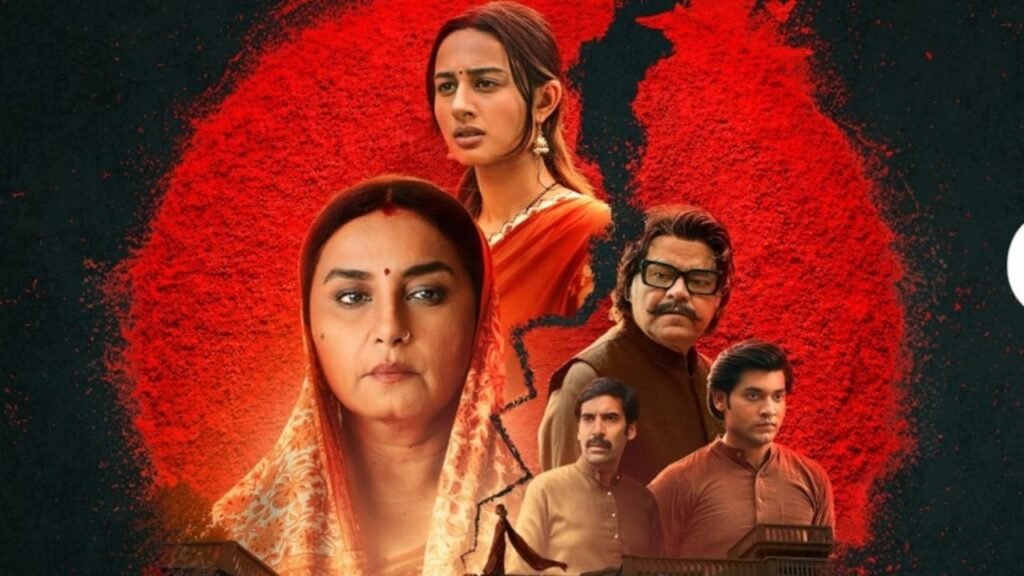
The Bhramar family of Lucknow appears functional, even warm. Patriarch Sukumar Bhramar, played by Sanjay Mishra, commands quiet respect. His daughter-in-law Kamlesh, played by Divya Dutta, shares a bond with him that feels almost parental. Kamlesh has raised her brother-in-law Arun — played by Siddharth Shaw — as her own son, confident in the values she has given him.
Then Arun marries Pooja, played by Prasanna Bisht. On their wedding night, despite Pooja’s request to wait due to ill health, Arun forces himself on her. The abuse continues. Pooja’s condition deteriorates. And Kamlesh — slowly, painfully — begins to understand what is happening inside the home she thought she knew.
What follows is a careful, emotionally precise unravelling of one family’s complicity in silence.
Why This Matters: A Subject Indian OTT Rarely Addresses Directly
The significance of Chiraiya extends well beyond its quality as a drama series.
Marital rape remains unrecognised as a criminal offence under Indian law — a legal gap that the series addresses directly and without flinching. Industry experts believe that mainstream OTT content engaging seriously with this subject carries genuine cultural weight, particularly when it reaches the scale of audience that streaming platforms command.
Reports suggest the series has been deliberately structured to avoid easy villains. Rather than presenting Arun as a monster, Chiraiya questions the system and upbringing that shaped him — the patriarchal assumptions absorbed over generations that treat marriage as ownership. This choice makes the series more uncomfortable and more honest than a simpler narrative would have been.
Confirmed sources indicate the legal dimension of the story — showing the challenges Pooja faces when attempting to report the abuse — reflects documented real-world barriers that survivors encounter within India’s current legal framework.
Performances: Divya Dutta and Prasanna Bisht Carry the Show
The performances are where Chiraiya earns its most unqualified praise.
Divya Dutta is exceptional as Kamlesh — a woman whose entire identity is built around family and home, and who must dismantle her own beliefs to see the truth in front of her. Her shift from protective mother-figure to reluctant witness to active ally is handled with extraordinary subtlety. It is among the finest work of her career.
Prasanna Bisht as Pooja is equally compelling — portraying both devastating vulnerability and quiet, persistent resistance without tipping into melodrama. Her portrayal of desperation when the system fails her is the series’ most emotionally difficult sequence.
Siddharth Shaw as Arun is the weakest link — adequate but rarely unsettling in the way the role demands. His scenes with Pooja lack the tension the narrative requires. Sanjay Mishra is precisely cast as a man who appears progressive but carries deep regressive assumptions — a performance built on what is not said.
Hidden Details: Where Chiraiya Succeeds and Where It Slips
For most of its runtime, Chiraiya maintains an admirable restraint — choosing observation over declaration, and character over message.
The series earns its emotional impact through accumulated detail rather than dramatic peaks. The Lucknow joint family setting is rendered with genuine texture — the rhythms of shared domestic space, the hierarchies of affection, the specific ways silence is maintained and enforced.
Where Chiraiya falters is in its final stretch. A sequence in which Kamlesh attempts to cut herself with a blade — to physically understand Pooja’s pain — crosses from symbolic into forced. It is the kind of moment that undermines the series’ earned credibility by reaching for an effect the writing had not sufficiently prepared.
What Comes Next: The Conversation Chiraiya Starts
Chiraiya’s most lasting achievement may not be as a piece of entertainment — it may be as a conversation starter.
The series arrives at a moment when legal debates around marital rape in India are live and contested. A mainstream OTT drama that names the issue directly, portrays its legal invisibility honestly, and centres the survivor’s experience without sensationalism is a meaningful cultural contribution.
Whether Chiraiya receives the wider audience attention it deserves will depend significantly on platform promotion and word-of-mouth. The subject matter means it will not be a casual viewing choice — but for those who engage with it, its impact is likely to be lasting.
KEY TAKEAWAYS BOX
- Chiraiya is a drama series set in a Lucknow joint family tackling marital rape and domestic abuse
- Stars Divya Dutta, Prasanna Bisht, Sanjay Mishra, and Siddharth Shaw
- Divya Dutta and Prasanna Bisht deliver exceptional, nuanced performances
- Series questions patriarchal upbringing rather than simply presenting individual villainy
- Addresses legal challenges survivors face in reporting marital abuse in India
- Final stretch weakens with a forced symbolic sequence — but overall impact remains strong
- Jay-Ho verdict: Brave, affecting, and necessary — with minor flaws that do not undermine its power
Jay-Ho Scoop
Chiraiya does something rare in Indian mainstream content — it refuses to make its subject comfortable. It does not offer resolution where none exists in reality. It does not punish its villain with the satisfaction of cinematic justice. It simply shows, with uncomfortable clarity, how abuse survives within families that have convinced themselves they are good.
Divya Dutta’s Kamlesh is the series’ moral centre — and her journey from complicity to clarity is the most honest portrayal of how ordinary people enable extraordinary harm. That the series stumbles in its final moments does not erase what the preceding episodes achieved.
Chiraiya is not easy viewing. It is important viewing — and that distinction matters.