








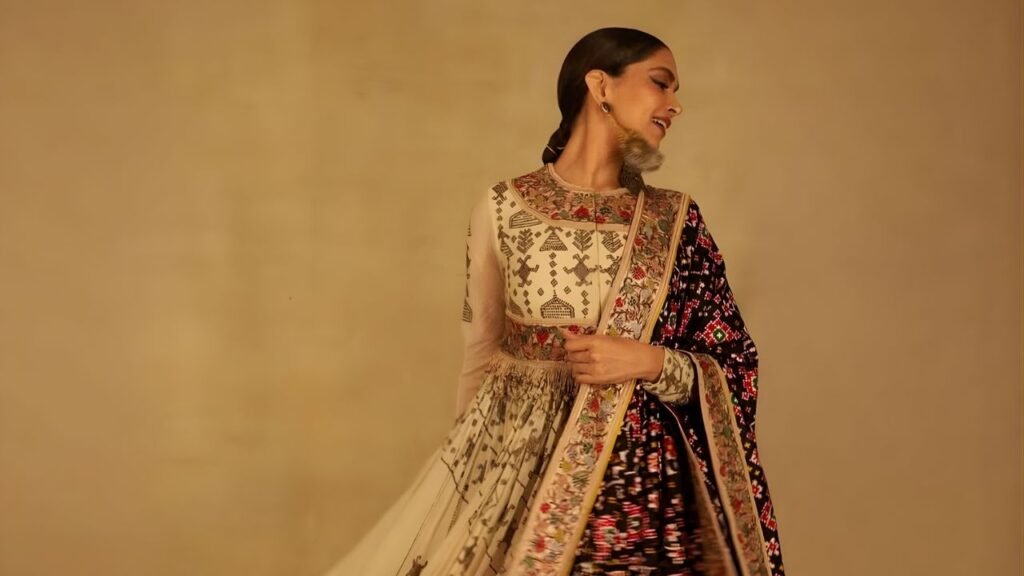

Some appearances transcend fashion—they become stories. At the Swadesh event, Deepika Padukone stepped out in an ensemble that felt less like clothing and more like a living tribute to India’s textile heritage. In a world where fashion increasingly searches for depth and meaning, her look served as a reminder that tradition isn’t frozen in time; it adapts, innovates, and evolves through every artisan who carries its legacy forward.
A Patola Reinvented for the Present
At the heart of Deepika’s look was a handwoven Navratan Patan Patola, crafted by master weaver Bhavar Singh—a textile renowned for its mathematical precision, dyed threads, and centuries-old technique.
Designer Anamika Khanna reimagined this historic weave through a contemporary lens. Rather than treating the patola as a museum treasure, she softened its symmetry by introducing mulmul florals—bringing an unexpected lightness and fluidity to the garment.
The result was an interplay of geometry and grace.
The patola celebrated tradition; the mulmul florals added freshness; Khanna’s vision unified both into a harmonious modern narrative.
A handcrafted Banaras border completed the silhouette, adding structure, richness, and a grounded elegance. On Deepika, the detailing felt intentional—a respectful nod to multiple craft traditions woven into one holistic story.
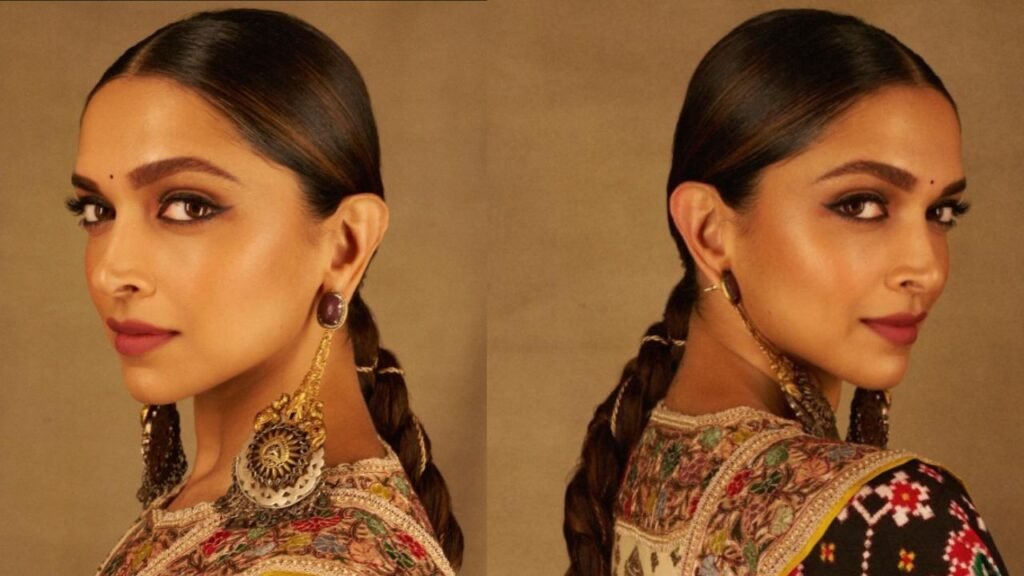
Styling That Let the Craft Speak
Deepika’s braided hair, elongated statement earrings, and minimal styling echoed the philosophy behind the look: let the fabric be the protagonist. Nothing overshadowed the intricacy of the weave or the artistry involved.
The restraint was deliberate—allowing the craft, not the cosmetics, to carry the moment.
A Look That Celebrates the Hands Behind the Heritage
What made this appearance extraordinary wasn’t extravagance but reverence. At a time when fashion is driven by speed and fleeting trends, Deepika championed the ethos of slow craft—slow weaving, slow beauty, slow storytelling.
Her ensemble highlighted the true luxury of India:
not sequins, not glamour, but the hands of artisans who preserve ancient skills through generations, often without recognition.
Deepika’s look was a celebration of evolution, not nostalgia. A patola reborn through mulmul, framed by Banaras, envisioned for the modern woman—a tapestry of history worn boldly into the future.
Jay-Ho Glam
Deepika Padukone’s appearance wasn’t just sartorial; it was symbolic. By wearing a thoughtfully reimagined patola, she spotlighted the unmatched artistry of India’s craftspeople and reaffirmed that heritage finds its fullest meaning when it continues to grow. Her look stood as a beautiful reminder that tradition and innovation aren’t opposites—they are collaborators.