








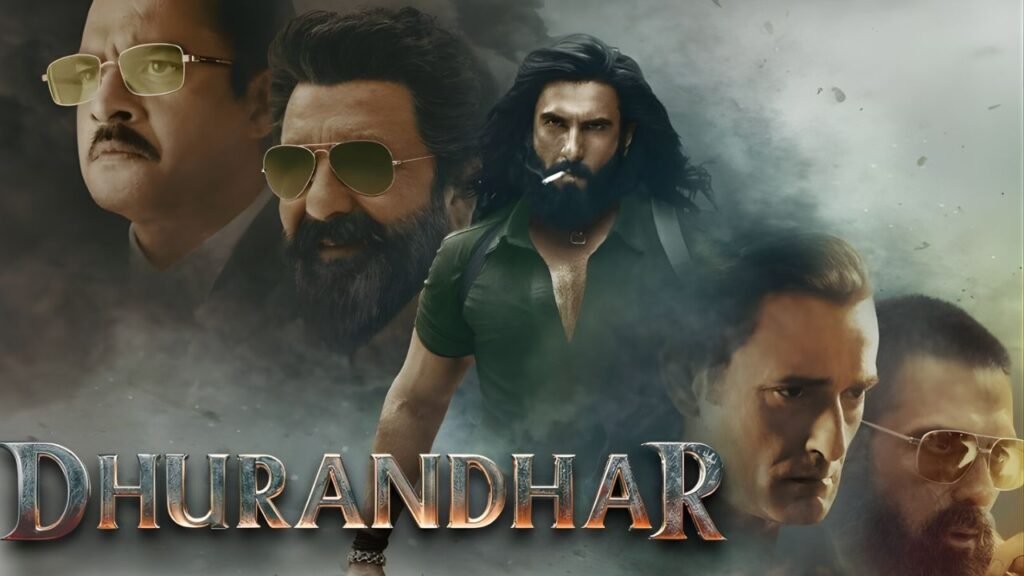

Dhurandhar is an intense, unflinching dive into Karachi’s crime-infested underbelly—a world filled with danger, paranoia, and silent brutality. The film builds slowly, sometimes painfully so, but rewards patient viewers with a deeply atmospheric and grounded narrative. Though its heavy runtime and indulgent pacing can be overwhelming, the film’s raw portrayal of extremism, the mafia ecosystem, and cross-border intelligence operations offers an undeniably gripping experience.
A Demanding Yet Immersive World-Building
The story begins by plunging viewers into a covert Intelligence Bureau mission where one undercover asset must infiltrate a sprawling Pakistani mafia network tied to state forces and the ISI. Director Aditya Dhar doesn’t rush; he spends a significant amount of time building the environment, characters, and geopolitical tension.
This slow-burn approach may test your patience, but it also creates an unsettlingly realistic atmosphere. By the time the narrative fully unfolds, you’re deeply entrenched in the dark, complicated world the film explores—one that mirrors terror hubs and power structures few films dare to depict.
Inside the Undercover Mission: Ranveer Singh at His Sharpest
The core of the story follows Hamza Ali (Ranveer Singh), an IB operative tasked with infiltrating Pakistan’s most dangerous criminal empire. Guided by IB chief Ajay Sanyal (R. Madhavan), Hamza begins his mission in Afghanistan, entering Pakistan through bribed checkpoints before finally making his way to Karachi.
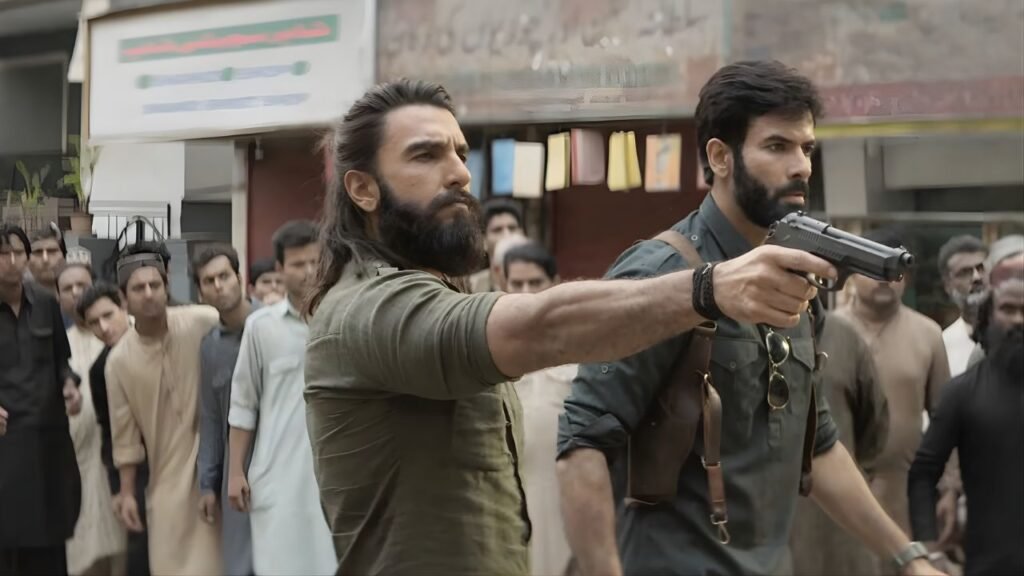
There, he connects with his handler—an unassuming tea and juice stall owner—and patiently strategizes his entry into the world of Rahman Dacait (Akshaye Khanna), a ruthless mafia lord with deep ISI ties. Hamza’s breakthrough comes when he fearlessly saves Dacait’s son during a staged shootout, earning the gangster’s trust and slowly climbing up the ranks of his criminal empire.
Ranveer Singh delivers one of his most restrained and mature performances—quiet, calculated, and simmering with internal conflict. His transformation into a man constantly living on borrowed time is both riveting and believable.
Performances That Elevate the Narrative
While Ranveer Singh anchors the film with remarkable restraint, the supporting cast significantly enhances the emotional and narrative weight. R. Madhavan brings gravitas as the sharp, composed IB chief whose moral dilemmas slip through the cracks of his otherwise stoic personality. Akshaye Khanna, as Rahman Dacait, delivers a chilling performance marked by unpredictability—his calm exterior often pierced by violent outbursts. Even secondary characters, including Hamza’s handler and members of the mafia network, feel authentic thanks to thoughtful writing and layered performances. Their presence contributes to the lived-in feel of Karachi’s underworld, grounding the story in harsh realism.
A Technically Strong Yet Overlong Thriller
Technically, Dhurandhar excels. The atmospheric cinematography captures Karachi’s claustrophobic alleys, dimly lit warehouses, and bustling markets with gritty precision. The sound design intensifies the paranoia of undercover life—every footstep, coded whisper, and muffled gunshot adds to the tension. However, the film’s biggest drawback remains its pacing. Several sequences linger longer than necessary, slowing down momentum during crucial stretches. While this allows audiences to steep in the environment, trimming 20–30 minutes could have made the film tighter and more impactful. Even so, the craftsmanship and scale make Dhurandhar a bold, ambitious addition to India’s espionage-action genre.