








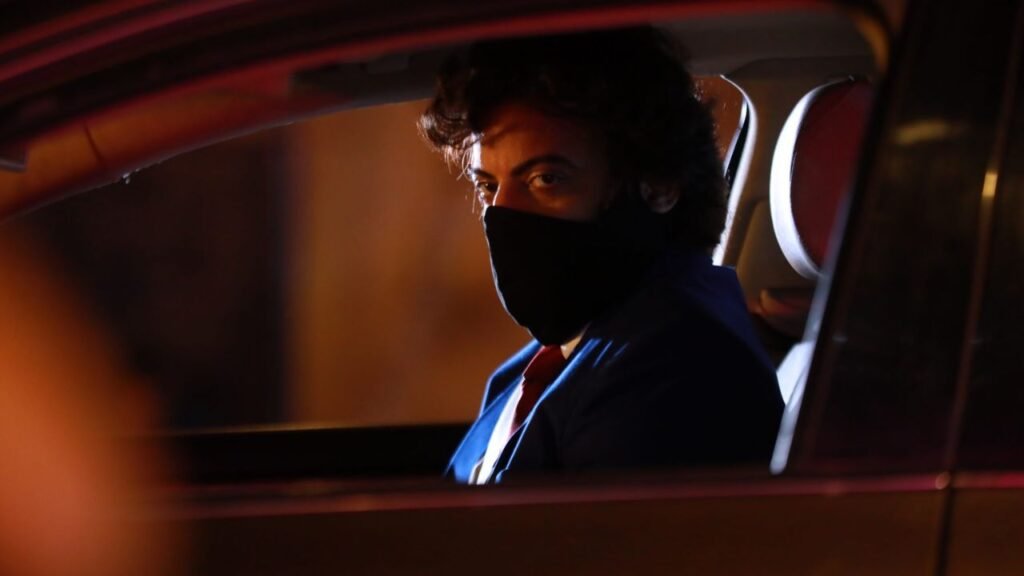

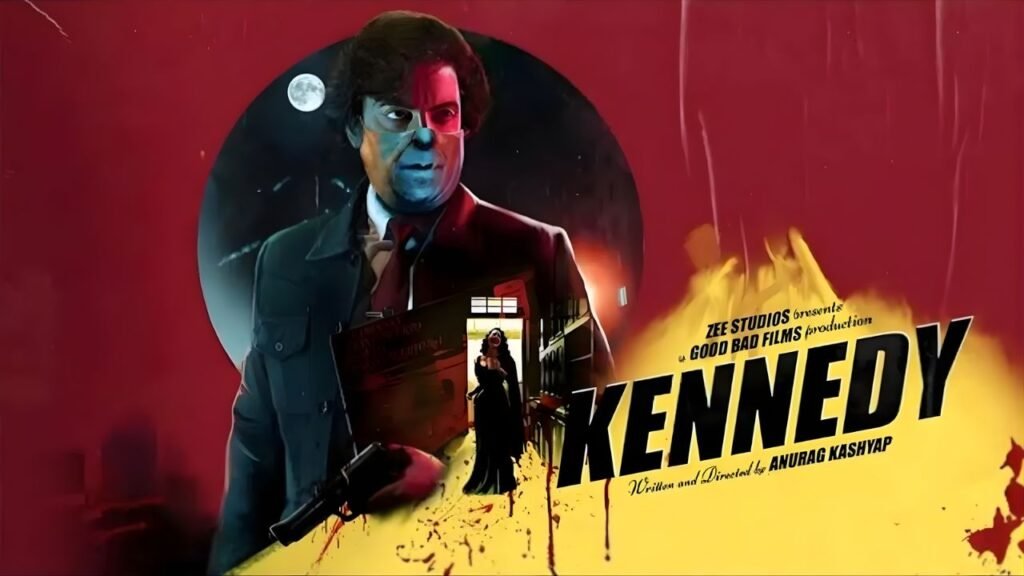
Kennedy, directed by Anurag Kashyap, is a brooding crime drama that refuses to soften its edges. Dark, controlled, and emotionally heavy, the film signals a return to the filmmaker’s raw and grounded storytelling — a style that once defined his most celebrated work. Instead of relying on spectacle or conventional thrills, Kennedy chooses moral ambiguity and psychological depth, making for a demanding yet compelling watch.
Back to Bleak Storytelling
At its core, Kennedy focuses on a man trapped inside a corrupt system that quietly consumes him. The narrative follows Kennedy, also known as Uday Shetty, played with restrained intensity by Rahul Bhat. Officially declared dead, Kennedy is secretly kept alive by powerful figures within the police force to carry out illegal operations that must never be documented.
The scheme is orchestrated by Mumbai Police Commissioner Rasheed Khan, portrayed by Mohit Takalkar. Months away from retirement and determined to secure his financial future, Khan uses Kennedy for off-the-record assignments involving extortion and blackmail. Sub-Inspector Abhijit Kaale acts as the intermediary, ensuring Kennedy remains invisible yet indispensable.
Set during the COVID-19 pandemic, the film uses the lockdown-era isolation to intensify its themes of moral decay and loneliness. Kennedy, once hailed as a “hero” under the previous regime, becomes a disposable tool under the new order. Beyond the corruption and violence, the film quietly explores his emotional disconnect from his estranged wife and daughter — a reminder that the consequences of systemic rot are deeply personal.
A City That Mirrors the Man
Mumbai is not merely a backdrop but a psychological extension of Kennedy himself. The city appears dimly lit, distant, and emotionally vacant. The pandemic setting enhances this isolation without overpowering the story. Kashyap resists melodrama; instead, he allows silence and space to speak.
The camera maintains a deliberate observational distance, reinforcing Kennedy’s detachment from his surroundings. The background score remains restrained, surfacing only when necessary. In one striking early sequence, a murder unfolds against music by Pyotr Ilyich Tchaikovsky — a creative choice that underscores Kashyap’s flair for tonal contrast.
Cinematographer Sylvester Fonseca deserves special mention. His framing and lighting create a visually arresting atmosphere that amplifies the film’s moral bleakness. Shadows dominate the screen, and the visual language mirrors the protagonist’s fractured psyche.
Pacing and Narrative Control
The pacing of Kennedy is measured, occasionally uneven, particularly in its middle act. Some scenes linger longer than necessary, prioritizing mood over momentum. Viewers expecting a high-speed thriller may find the deliberate tempo challenging.
However, this slow-burn structure gives the film a distinctive identity. Kashyap is less interested in plot twists and more invested in psychological erosion. The narrative unfolds gradually, revealing the layers of corruption and complicity that bind its characters together.
Jay-Ho Verdict
Kennedy is not designed for mass appeal, nor does it attempt to be. It is a morally unsettling character study that demands patience and introspection. Anchored by Rahul Bhat’s controlled performance and elevated by Sylvester Fonseca’s striking cinematography, the film marks a confident return to Anurag Kashyap’s uncompromising storytelling voice.