








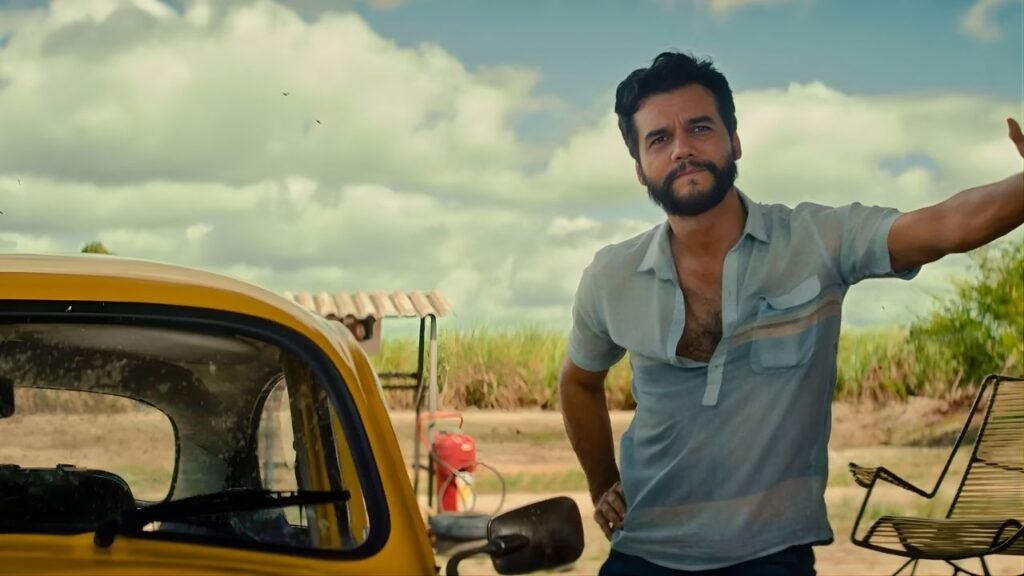

Directed by Kleber Mendonca Filho, The Secret Agent is not a conventional espionage thriller. Released in theatres on 27 February, the film unfolds as a deeply human political drama anchored by a restrained yet powerful performance from Wagner Moura. Also starring Tania Maria, Carlos Francisco, Roberio Diogenes, Udo Kier, and Maria Fernanda Candido, the film uses personal struggle to illuminate the suffocating atmosphere of authoritarian rule.
Rather than glamourising espionage, the film examines survival under surveillance — where fear becomes routine and silence becomes strategy.
A City of Colour and Fear
Set in 1977 Recife, during Brazil’s military dictatorship, the story situates itself in a coastal city alive with Carnival’s colour and rhythm. Yet beneath the celebration lies an unmistakable tension. Public festivity contrasts sharply with private dread. Conversations are cautious, glances linger too long, and ordinary routines carry hidden risks.
The city is not just a backdrop; it is an active force. The crowded plazas, humid air, and tight alleyways mirror the emotional claustrophobia of the characters. Carnival sequences are particularly striking — vibrant, kinetic, and ironically suffocating. The chaos of celebration heightens the danger rather than diffusing it.
Importantly, the film avoids melodrama. Its tension builds through atmosphere, stillness, and implication. Every pause feels deliberate. Every silence suggests something unspoken.
A Man Trying to Escape His Past
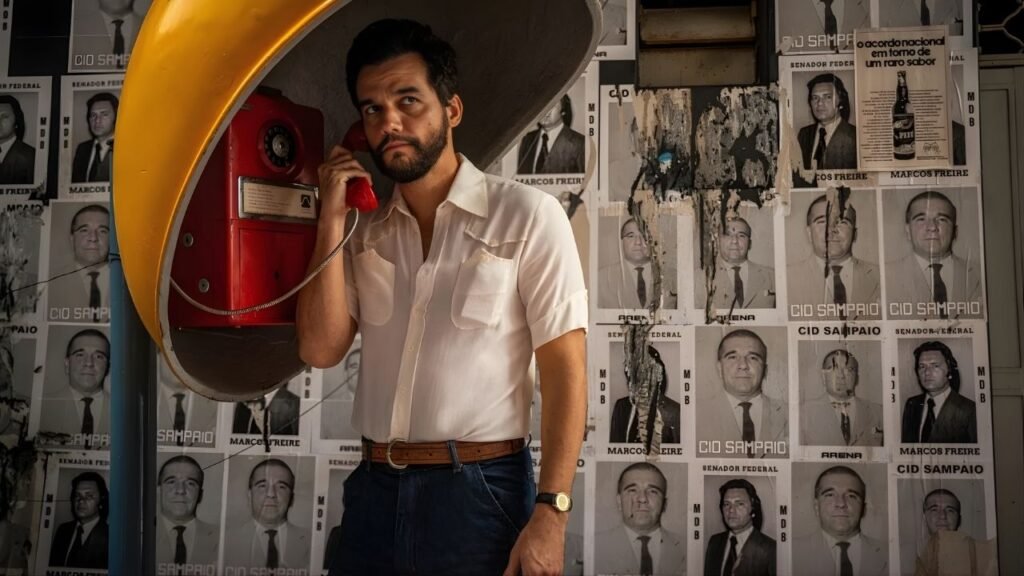
Moura plays Marcelo, a technology professor in his early forties who returns to his hometown with a single objective: leave the country with his young son, Fernando. Marcelo has been in hiding, pursued by forces connected to the regime after angering powerful figures.
His return is quiet but heavy with risk. Staying with relatives and revisiting familiar streets, Marcelo attempts to blend nostalgia with urgency. Meanwhile, two hired men track his movements — their pursuit marked by incompetence but also desperation.
The narrative moves deliberately, allowing tension to accumulate rather than explode. Moments of dark humour briefly puncture the fear, making the dread feel more grounded. During Carnival, the stakes intensify. As pressure mounts, the story shifts toward an inevitable confrontation that erupts into chaos.
A significant time jump in the final act reflects on memory and institutional erasure — how history can be rewritten, and how personal truths disappear in official records. It is a sobering reminder that authoritarianism does not only control the present; it manipulates the past.
Politics Without Preaching
At over 150 minutes, the pacing is patient but purposeful. Mendonça Filho resists overt political speeches. Instead, he shows how fear infiltrates domestic spaces, friendships, and family bonds. Authoritarian control is depicted not through spectacle but through routine intimidation.
The film’s power lies in observation. Surveillance is implied more than displayed. Danger lurks in ordinary gestures — a knock at the door, a suspicious glance, a delayed response. This subtlety strengthens the political commentary, making it feel lived-in rather than imposed.
Wagner Moura’s Controlled Brilliance
Wagner Moura delivers one of his most internalised performances. Marcelo is not a fiery revolutionary; he is a cautious father trying to protect his child while carrying invisible trauma.
Moura communicates anxiety through restraint — a pause before speaking, tightened shoulders, a guarded gaze. His control is the performance’s defining feature. Yet beneath that control, cracks slowly emerge. In moments with his son, vulnerability surfaces, revealing the emotional cost of constant vigilance.
The supporting cast enhances the film’s emotional weight. Tânia Maria’s portrayal of Dona Sebastiana is grounded and authentic, embodying both familial warmth and quiet exhaustion. Each secondary character reflects a different response to life under dictatorship — loyalty, fear, denial, or quiet resistance.
Jay-Ho Verdict
The Secret Agent is a thoughtful, layered political drama that privileges atmosphere over spectacle and humanity over heroism. It challenges expectations set by its title, offering neither glamorous espionage nor explosive action. Instead, it delivers something more enduring — an intimate study of fear, memory, and resilience.
Grounded by Wagner Moura’s restrained performance and Kleber Mendonça Filho’s meticulous direction, the film stands as a powerful reminder that the most dangerous battles are often fought in silence.