











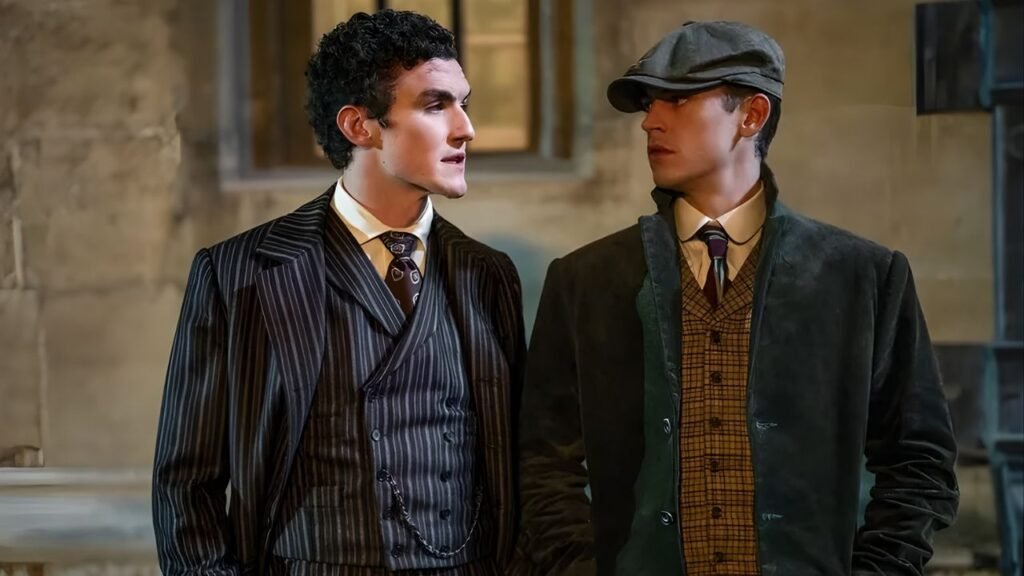

Revisiting an iconic literary figure is always a creative risk. With Young Sherlock, the makers attempt to reimagine Sherlock Holmes not as the composed, calculating detective the world recognises, but as a restless 19-year-old still discovering the scale — and consequences — of his brilliance.
Set in Victorian England, the series frames Sherlock as intellectually gifted yet impulsive, driven by curiosity but untempered by experience. From its opening episode, it is clear this is not a retelling of familiar cases. Instead, it explores the formative years of a mind in chaos — sharp, ambitious and dangerously unrefined. The storytelling moves at a brisk pace, mirroring the intensity of Sherlock’s racing thoughts and the volatile world around him.
A Deadly Beginning
The narrative opens at Oxford University, where Sherlock Holmes (Hero Fiennes Tiffin) is a gifted yet reckless student. His life spirals when he is falsely accused of murdering a professor during an event organised by Bucephalus Hodge (Colin Firth) to inaugurate a new academic centre.
Forced into action to clear his name, Sherlock begins investigating the crime — a decision that pulls him into a web of conspiracies, power struggles and academic rivalries. Along the way, he encounters James Moriarty (Donal Finn), a charismatic yet enigmatic presence whose intellect rivals Sherlock’s. Their early exchanges hint at a rivalry destined to define both their futures.
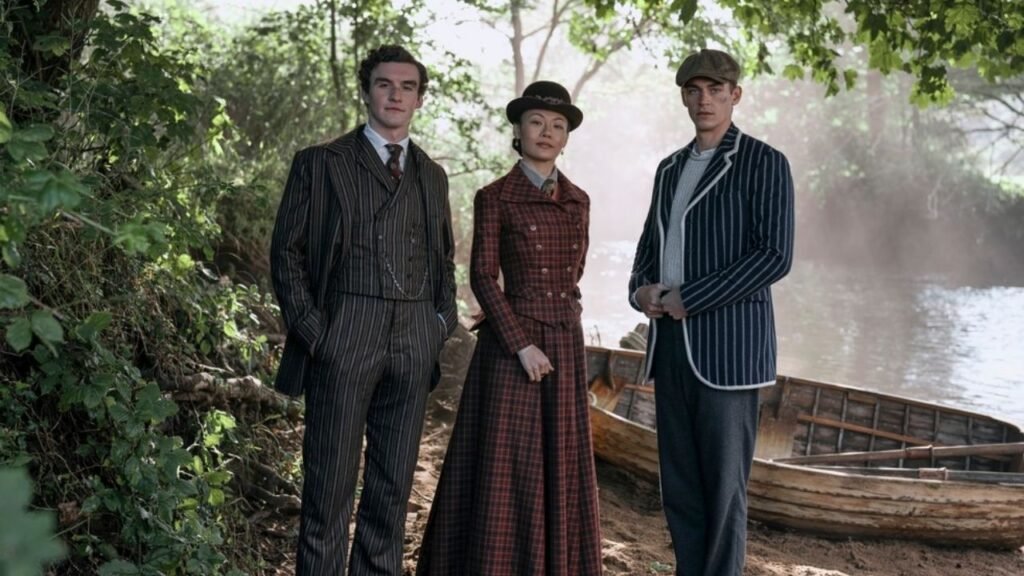
The mystery deepens when more professors are targeted, raising the stakes beyond personal survival. Sherlock’s family becomes entangled in the unfolding drama, adding emotional gravity to the investigation. At Oxford, he also forms a connection with Shou’an (Zine Tseng), a student from a powerful Chinese lineage, further complicating alliances and loyalties.
The series thrives on momentum. It rarely pauses, propelling viewers from one revelation to the next with near-thriller intensity. This high-energy approach keeps the narrative gripping, though at times emotional beats feel compressed, leaving certain relationships underexplored.
Performances Elevate The Narrative
Hero Fiennes Tiffin captures Sherlock’s restless intellect convincingly. His portrayal balances arrogance with vulnerability, showcasing a young man grappling with abilities he cannot yet fully control. There is a rawness to his performance that distinguishes this interpretation from more polished versions of the detective.
Donal Finn’s Moriarty exudes magnetic duality — charming yet faintly menacing. Even in limited screen time, he establishes a psychological presence that lingers.
The supporting ensemble, including Joseph Fiennes and Natascha McElhone, anchors the emotional stakes, ensuring that the intellectual chess matches remain connected to human consequences.
A Fresh Identity In A Crowded Legacy
What ultimately distinguishes Young Sherlock is its refusal to imitate previous adaptations. Instead of presenting a fully formed genius, it focuses on the cost of brilliance — the isolation, recklessness and moral grey areas that shape Sherlock’s evolution.
The show successfully crafts an origin story that feels contemporary while remaining rooted in period authenticity. It portrays Sherlock Holmes as both extraordinary and deeply human — a prodigy learning that intellect alone cannot shield him from danger.
Jay -Ho Verdict
Young Sherlock is not without flaws. Its rapid pacing occasionally sacrifices nuance, and some character arcs could benefit from deeper exploration. Yet its ambition, energy and character-driven tension make it a compelling addition to the Holmes canon.
For viewers seeking a dynamic, suspense-laden reinterpretation of one of literature’s most enduring figures, Young Sherlock delivers an engaging and often insightful experience — one that suggests the legend was forged in chaos long before it was defined by control.