





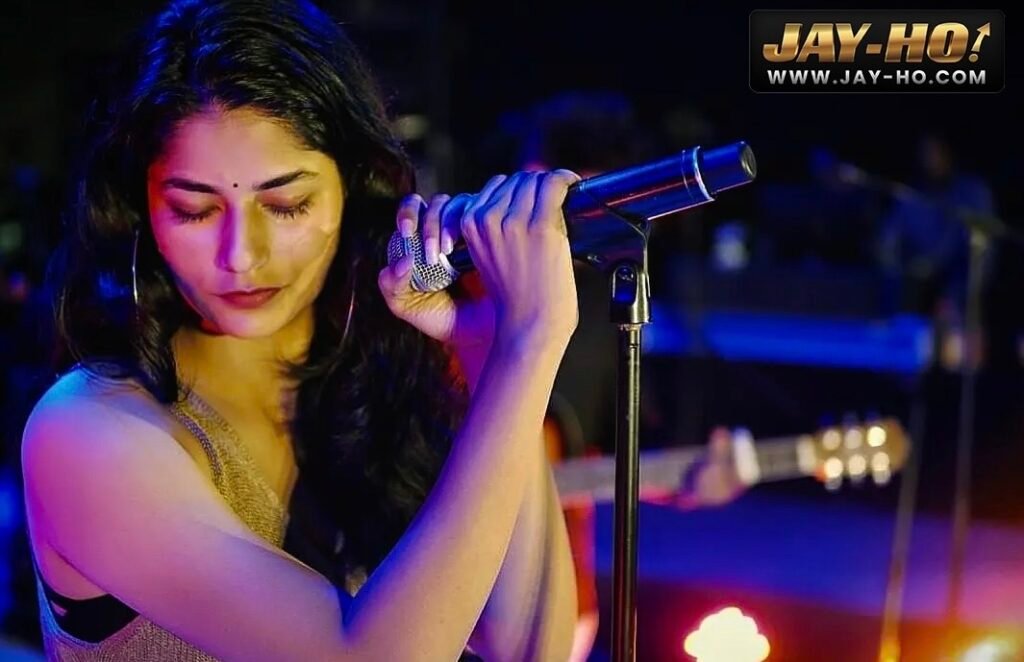

Poet, performer, storyteller, and now a musical voice — Vaishnavi Sharma continues to captivate audiences with her depth, grace, and artistic versatility.
At Jay-Ho, we have always believed that celebrating women in art is not about entering endless debates around gender. It is about recognizing the strength they bring to expression, the dignity they carry in their voice, and the emotional softness that gives art its humanity.
Vaishnavi Sharma represents that balance beautifully.
Over the past few years, she has steadily built a respected presence across poetry recitations, dramatic interpretations, and musical performances. Her work reflects a rare artistic blend where literature, mythology, performance, and music come together naturally.
One of the most striking examples of this artistic sensibility can be experienced in her rendition of “Tum Apna Ranj-o-Gham.”
A Song That Found a New Voice
In July 2025, Vaishnavi Sharma released “Tum Apna Ranj-o-Gham | Cover by Vaishnavi Sharma | PanchtantraOne Music,” offering a rendition that feels both respectful and refreshingly intimate.
Instead of turning the piece into a vocal showcase, she approaches the song with restraint and emotional sensitivity. Her voice allows the poetry to unfold gently, inviting the listener into the emotional world of the composition rather than overwhelming it with technical display.
The musical arrangement supporting her voice is equally thoughtful. Devendra Bharti’s tabla provides a steady rhythmic foundation, Deven Pandya adds subtle side rhythm and percussions, M. Rashid’s violin introduces a delicate melodic warmth, and Ajay Mishra’s guitar ties the entire arrangement together with understated elegance.
Together, the musicians create a soundscape that allows Vaishnavi’s voice and the poetry to remain at the center of the experience.
The result is a rendition that feels less like a performance and more like a quiet emotional conversation with the listener.
Discovering the Song Twice
When Vaishnavi Sharma’s rendition first appeared online, it was encountered without prior knowledge of the song’s cinematic origins. For quite some time, her version felt like the original composition itself.
The thought often crossed the mind:
Why is such a beautiful song so underrated?
Only later, when paying closer attention and when YouTube began suggesting earlier recordings, the discovery happened.
The song carried a remarkable legacy. Written by the legendary lyricist Sahir Ludhianvi, composed by Khayyam, and originally sung by Jagjit Kaur for the 1964 film Shagoon, the song stands as one of the most delicate expressions of empathy and emotional companionship in Hindi cinema.
Learning about this legacy deepened the appreciation for the song even further.
Yet even after discovering the original version and its rich musical history, Vaishnavi Sharma’s rendition continues to remain a personal favorite.
Saying that, of course, is not meant to diminish the brilliance of the original composition or the legendary artists who created it. Their work remains timeless and deeply respected. But every generation sometimes discovers a classic through a new voice. And in this case, that voice happened to be Vaishnavi Sharma.
A Legacy Rooted in Literature
Vaishnavi Sharma’s connection with poetry runs deep. She is the daughter of respected Hindi poet and Army officer Satish Srijan, whose literary work has inspired many poetry lovers and performers. Growing up in such an environment naturally shaped her relationship with language, poetry, and storytelling.
For Vaishnavi, poetry has never been simply something to recite — it is something to internalize, understand, and express with emotional sincerity. That literary upbringing becomes clearly visible in the way she approaches both poetry and music today.
Kupit Yagyasaini: When Draupadi’s Voice Echoed Again
Among Vaishnavi Sharma’s most powerful and widely appreciated works is “Kupit Yagyasaini.” Written by Satish Srijan and inspired by Draupadi’s voice in the Mahabharata, the poem explores themes of dignity, anger, and justice.
Vaishnavi’s interpretation transformed the poem into a dramatic experience. Through expressive delivery and strong voice modulation, she brought Draupadi’s emotions vividly to life.
The performance resonated deeply with audiences because it presented mythology not as distant history but as a timeless reflection of human strength and resilience. At Jay-Ho, such portrayals are particularly meaningful because they highlight the strength of women in literature and culture while preserving emotional nuance and humanity.
Spiritual and Musical Explorations
While poetry remains central to her artistic identity, Vaishnavi Sharma has also explored devotional and musical storytelling.
Her participation in projects such as “Radhe Radhe” from Krishna Kafe’s original musical creation reflects her ability to move fluidly between poetry, spirituality, and musical expression.
These projects combine devotion, literature, and performance into a unified artistic experience, demonstrating Vaishnavi’s versatility and artistic curiosity.
A Conversation on Jay-Ho!
Vaishnavi Sharma also appeared on Jay-Ho! The Jay Kumar Show, where she spoke about poetry, mythology, and artistic expression.
The conversation revealed an artist who approaches performance not merely as entertainment but as a continuation of cultural storytelling traditions.
Her reflections on literature and mythology demonstrated the depth behind her work and the sincerity with which she approaches her craft.
From the Author
I first interviewed Vaishnavi Sharma for The Jay Kumar Show sometime in early September 2025. At that time, I must confess, I knew very little about her work. It was one of those interviews where curiosity guided the conversation more than preparation.
Only later did I discover her rendition of “Tum Apna Ranj-o-Gham.”
When I first heard the song on YouTube, I genuinely believed that the version I was listening to was the original composition itself. The thought kept coming to mind:
Why is such a beautiful song so underrated?
For quite some time, I continued listening to Vaishnavi’s version without realizing the song’s earlier cinematic history.
Then one day, as YouTube often does, it started suggesting older recordings of the same song. That was when I finally discovered the original version and the beautiful legacy behind it.
Yet even after discovering the original and its history, I must honestly say that Vaishnavi Sharma’s rendition remains my personal favorite.
Saying that does not in any way diminish the brilliance of the original composition or the legendary artists who created it. Their work remains timeless and deeply respected.
But sometimes a new voice becomes the doorway through which we discover a classic.
And for me, that doorway happened to be Vaishnavi Sharma.
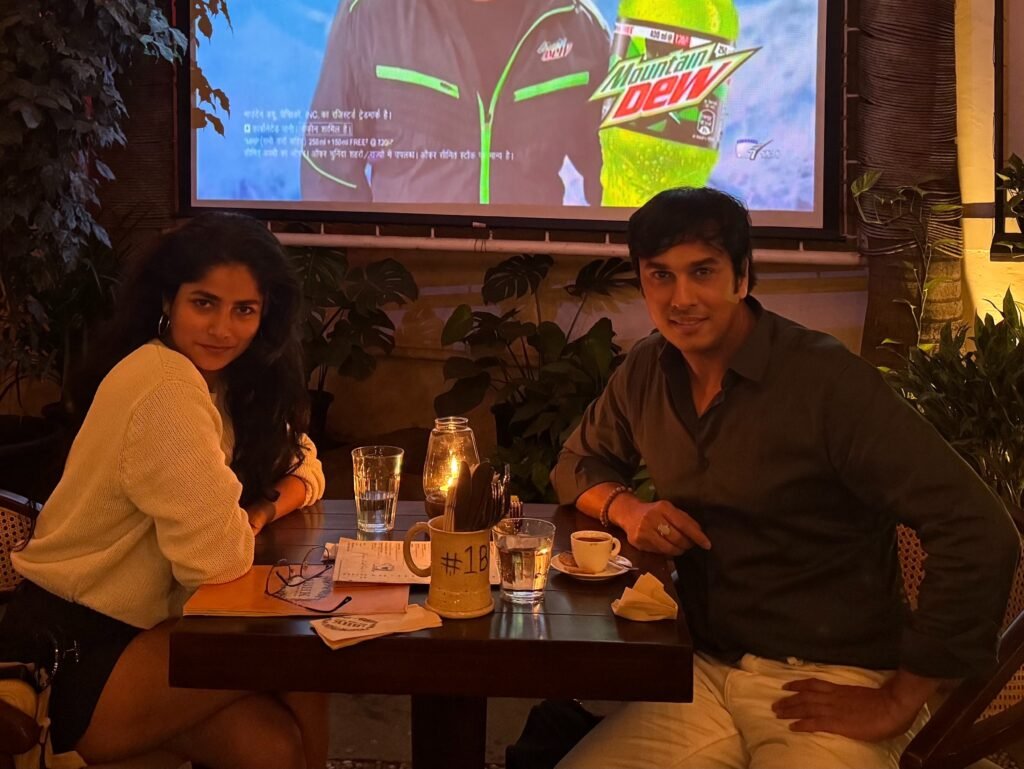
I met Vaishnavi again last week in Mumbai.
After our meeting, she very graciously ensured that I reached back safely to my place. I must admit that Mumbai is still a city I am slowly getting to know. Most of my visits here have been brief and largely connected with Jay-Ho related work, so in many ways the city still feels new to me.
During the drive she was softly humming something.
Naturally, I asked if she could sing “Tum Apna Ranj-o-Gham.”
She smiled and said something simple but touching:
“Of course… I don’t know when I will meet you again.”
But sometimes life leaves certain moments incomplete.
For one reason or another, she was not able to sing the song during the drive, and before we realized it, we had already reached my destination.
So for me, the song still remains exactly where I first discovered it — on YouTube.
Yet somehow that unfinished moment made the memory even more meaningful.
As we drove through Mumbai’s busy streets, a couplet quietly came to mind:
“मैं देखूँ तो सही, दुनिया तुम्हें कैसे सताती है
कोई दिन के लिये, अपनी निगहबानी मुझे दे दो।”
What remained after that evening was not just admiration for the artist, but appreciation for the person.
Because sometimes the true measure of an artist is not only their performance on stage — but their grace away from it.
The Star and the Superstar
Today, Vaishnavi Sharma is already a recognized face and a star in the world of poetry and performance.
Her artistic journey reflects a rare balance — strength and sensitivity, literary depth and emotional warmth.
With her expressive presence, thoughtful artistry, and natural charisma, it would not be surprising if the coming years see her rise even further. Because sometimes the world does not create stars. It simply discovers the ones who were already shining. And celebrating such journeys — where art, sincerity, and inspiration come together — is what the Jay-Ho has always stood for.