






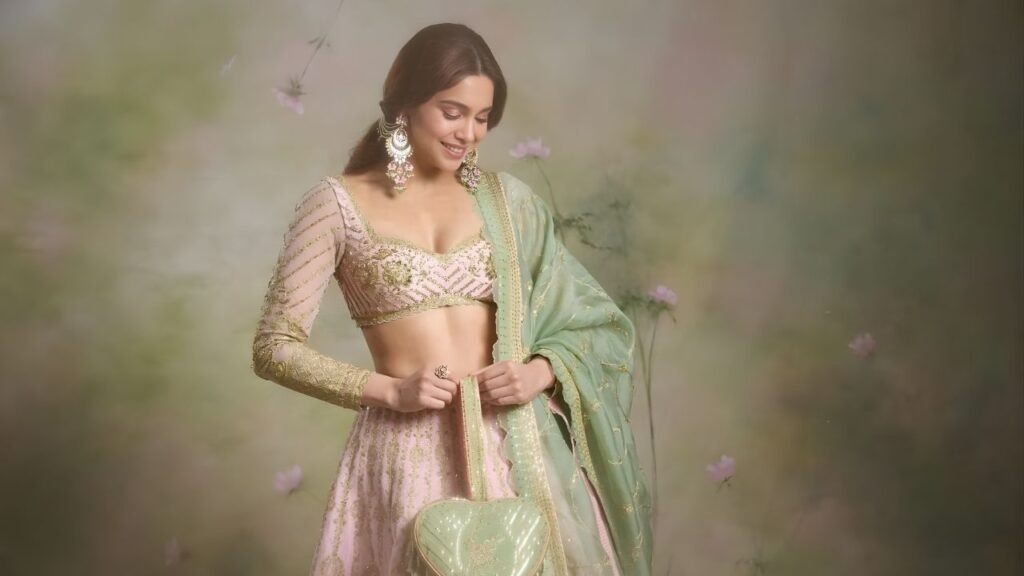

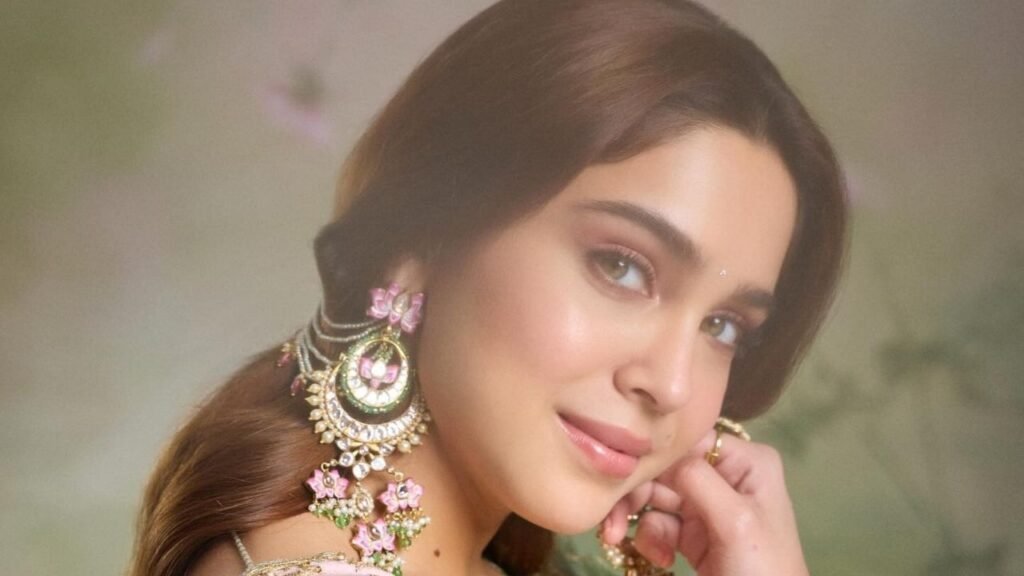
Actor Sharvari made a striking appearance at the wedding reception of Sooraj Barjatya’s daughter, Eesha Barjatya, in Mumbai, captivating fashion enthusiasts with an ensemble that blended heritage craftsmanship with poetic storytelling. The actor, who is preparing for her upcoming film with Imtiaz Ali titled Main Vapas Aaunga, exuded royal elegance in a custom lehenga created by celebrated designer Karan Torani.
Styled by renowned celebrity stylist Tanya Ghavri, Sharvari’s look stood out as one of the most memorable fashion moments of the evening. The bespoke ensemble by the designer label Torani was a masterclass in storytelling through couture, drawing inspiration from the timeless mythological and cultural imagery of the divine love story between Radha and Krishna.
A Vision Rooted in Raas Leela
Designer Karan Torani revealed that the inspiration behind the lehenga was drawn from the poetic imagery of Raas Leela, the legendary dance that symbolises the divine love between Radha and Krishna.
Speaking about the creative concept, Torani described how he envisioned Radha standing quietly along the banks of the sacred Yamuna River in Vrindavan, surrounded by blooming gardens, dancing peacocks and the enchanting sound of Krishna’s flute.
The designer explained that the outfit was imagined as a tribute to the romantic and spiritual landscape of Vrindavan — a place deeply rooted in Indian mythology and cultural storytelling.
“This look is a quiet tribute to the gardens of Vrindavan — where peacocks dance, lotus flowers bloom, and love stories have been sung for centuries,” Torani shared while describing the vision behind the ensemble.
A Couture Piece Crafted Over 2000 Hours
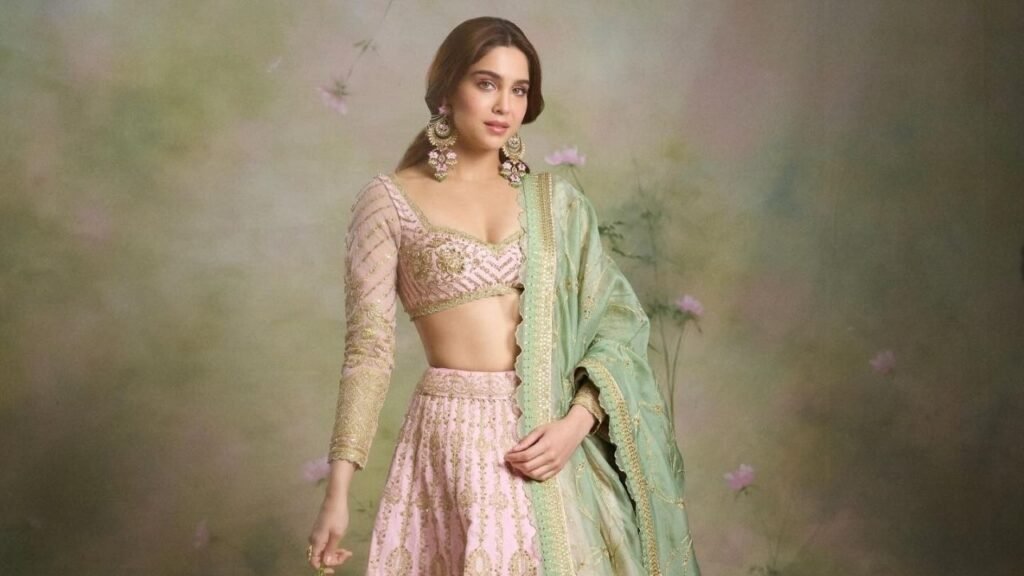
What makes Sharvari’s lehenga particularly remarkable is the sheer craftsmanship behind it. The couture ensemble reportedly required nearly 2000 hours of meticulous handwork by skilled artisans.
Crafted in pure raw silk, the lehenga was realised in soft and delicate shades of lotus pink, complemented by a sage and peacock green dupatta. The colour palette was carefully selected to evoke the natural beauty of Vrindavan’s gardens — a recurring motif in Indian devotional poetry and miniature paintings.
The dupatta, made from delicate silk organza, added a layer of fluid elegance to the silhouette, creating a graceful contrast with the structured lehenga.
Torani’s design philosophy often focuses on reviving Indian craft traditions while weaving them into modern couture narratives, and Sharvari’s look was a perfect example of this approach.
Traditional Handcraft Techniques Take Centre Stage
The lehenga featured an intricate blend of traditional Indian embroidery techniques that have been preserved across generations of artisans.
Among the craft techniques incorporated into the ensemble were:
- Zardozi embroidery
- Dapka work
- Marodi detailing
- Badla embroidery
- Kinari embellishments
Each element was carefully layered to create depth and texture, resulting in a garment that reflected both artistic heritage and contemporary couture.
These techniques are hallmarks of Indian craftsmanship, historically associated with royal wardrobes and ceremonial attire. Their inclusion in the design added a sense of regal sophistication to Sharvari’s appearance.
A Look Inspired by Indian Artistic Traditions
The visual language of the ensemble also echoed centuries-old Indian artistic traditions. Torani revealed that the aesthetic references were inspired by miniature paintings, temple murals and folklore that depict the divine dance of Radha and Krishna.
In many traditional artworks, the imagery of gardens, lotus flowers, peacocks and moonlit landscapes symbolises spiritual love and devotion — themes that the designer translated into fabric, colour and embroidery.
By weaving these elements into the design, Torani created a piece that felt almost like a living canvas, echoing the eternal romance celebrated in Indian mythology.
Sharvari’s Effortless Elegance
Sharvari complemented the elaborate couture piece with understated styling that allowed the craftsmanship of the lehenga to remain the focal point.
Her graceful presence and minimal accessories highlighted the intricate detailing of the ensemble. The actor’s poised appearance and natural elegance enhanced the overall impact of the look, making it one of the standout fashion moments at the high-profile reception.
Known for her experimental yet elegant fashion choices, Sharvari has steadily built a reputation as one of the emerging style icons among the new generation of Bollywood actors.
A Star on the Rise
Sharvari’s appearance at the star-studded event comes at a time when her career in the film industry continues to gain momentum.
The actor is currently preparing for her collaboration with filmmaker Imtiaz Ali in Main Vapas Aaunga. The project has already generated considerable interest among cinema enthusiasts, given Ali’s reputation for emotionally resonant storytelling.
Sharvari first gained significant recognition for her performances in recent years and has since been associated with several high-profile projects in Hindi cinema.
Her growing presence at major industry events and fashion gatherings also reflects her rising influence both in films and in the world of celebrity style.
Celebrating Craft and Culture Through Fashion
Sharvari’s Torani ensemble ultimately represented more than just a glamorous red-carpet look. It was a celebration of Indian craftsmanship, mythology and storytelling — elements that have long been central to the country’s artistic heritage.
By drawing inspiration from the poetic imagery of Raas Leela and the sacred landscapes of Vrindavan, the design brought together spirituality, romance and tradition in a single couture creation.
In an era where fashion increasingly blends modern aesthetics with cultural narratives, Sharvari’s appearance demonstrated how clothing can become a powerful medium for storytelling.
As Indian designers continue to reinterpret heritage through contemporary fashion, ensembles like this remind audiences that the roots of couture often lie in the timeless tales, landscapes and artistic traditions that have shaped the country’s cultural identity for centuries.