








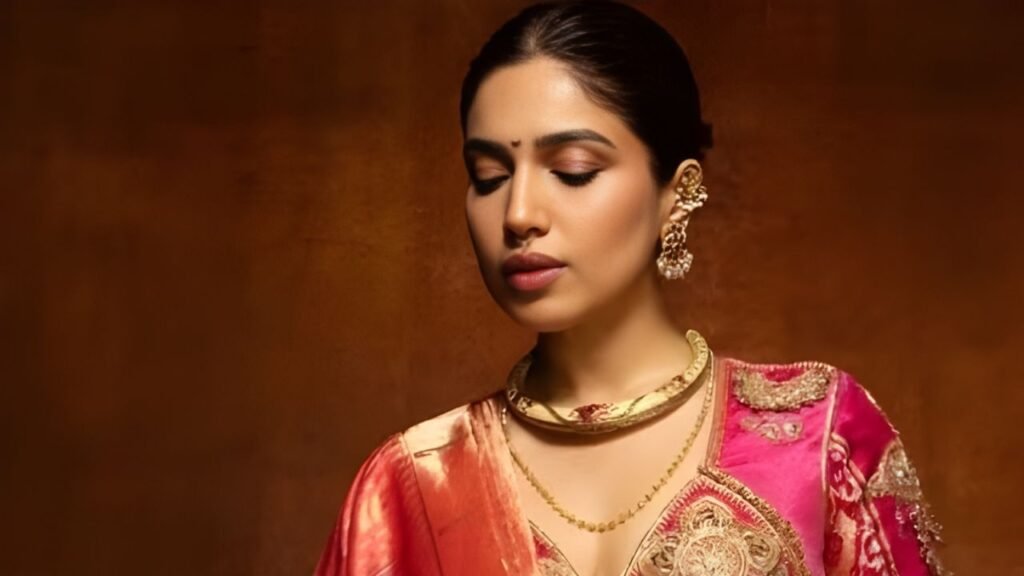

In an era where red carpets are often dominated by experimental silhouettes and avant-garde couture, actor Bhumi Pednekar chose to return to tradition. At a recent awards ceremony in Mumbai, the actor stepped out in a richly woven Paithani saree that beautifully blended heritage craftsmanship with contemporary styling.
The look quickly became one of the most talked-about fashion moments of the evening. Rooted in Indian textile history yet styled with modern elegance, Bhumi’s ensemble showcased how traditional fashion can continue to evolve while maintaining its cultural significance.
The actor later shared glimpses of the look on Instagram following her win for Daldal, writing that she wanted to be “draped in a bit of her heritage.” The result was a striking visual narrative that balanced archival fashion, regional identity, and red-carpet glamour.
A Paithani Rooted in History
Bhumi’s saree came from the revivalist label Pankaj S Heritage, a brand known for preserving traditional weaving techniques and celebrating India’s textile legacy.
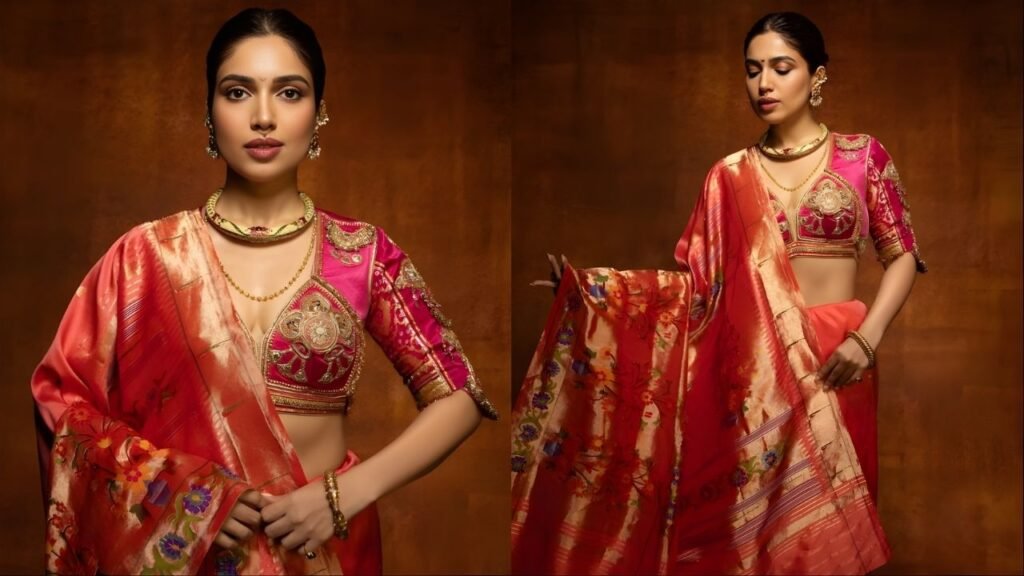
The vibrant orange silk drape featured intricate floral motifs and shimmering real gold zari woven across the borders and pallu. The craftsmanship reflected the hallmark beauty of the Paithani weave, a textile tradition that traces its origins to the historic town of Paithan in the Sambhajinagar district.
For centuries, Paithani sarees have been regarded as one of Maharashtra’s most prized textiles. Historically worn by royalty and brides, the handwoven silk is celebrated for its luxurious jewel-toned palettes, elaborate motifs, and metallic threads crafted with extraordinary skill.
Bhumi’s interpretation honoured that long-standing heritage while bringing the textile into a contemporary red-carpet context.
Styling That Blends Tradition and Modernity
The saree was styled by fashion stylists Bidipto Das and Junni Khyriem, who approached the look with a vision that combined traditional draping with modern structure.
Instead of the classic Maharashtrian drape, the team opted for a Gujarati-inspired styling technique. The pleats fell neatly at the front while the pallu swept dramatically from the back and across the torso.
This sculptural drape added architectural elegance to the ensemble while ensuring the intricate craftsmanship of the textile remained the focal point.
The structured styling also brought a contemporary sensibility to the traditional garment, demonstrating how heritage pieces can seamlessly transition into modern fashion narratives.
Jewellery Inspired by Maharashtrian Tradition
Bhumi’s accessories paid homage to the rich jewellery traditions of Maharashtra. Each element was carefully chosen to complement the saree while reinforcing its cultural roots.
Her look included:
- A bugadi ear ornament, traditionally worn on the helix of the ear
- Statement earrings
- A striking septum ring
- A gold beaded chain
- A classic kada bracelet
- Delicate hair jewellery that enhanced the overall regal aesthetic
A distinctive metal half-moon bindi added a powerful finishing touch, lending the look a royal and ceremonial character.
A Peshwa-Inspired Scroll Bag
Adding another layer of historical storytelling to the ensemble, Bhumi carried a scroll bag inspired by the Peshwa era.
The design references an object once used in the Maratha kingdom to transport royal messages and documents across territories. By incorporating this historical element, the styling subtly connected the outfit to the political and cultural history of the Maratha empire.
The accessory served as both a fashion statement and a symbolic nod to India’s rich past.
Contemporary Beauty Meets Heritage Fashion
While the clothing and accessories leaned heavily into heritage aesthetics, Bhumi balanced the look with contemporary beauty styling.
Her hair was pulled back into a sleek, centre-parted bun, allowing the jewellery and saree drape to remain prominent.
The makeup palette was modern yet understated:
- Sculpted brows
- Softly defined eyes with muted brown shadow
- Blush-tinted cheeks
- A glossy fuchsia lip
This subtle glam approach ensured the focus remained on the craftsmanship of the Paithani saree while still delivering a polished red-carpet appearance.
Heritage Fashion on the Modern Red Carpet
Bhumi Pednekar’s look demonstrated how traditional Indian textiles can hold their own on modern red carpets. In a fashion landscape often driven by innovation and experimentation, the actor’s choice highlighted the timeless appeal of heritage craftsmanship.
Paithani sarees represent generations of artisanal skill, with each piece requiring meticulous hand-weaving techniques passed down through families of weavers. By showcasing such a textile on a major public platform, Bhumi helped spotlight the enduring relevance of these traditions.
The ensemble also reflected a broader movement within Indian fashion where celebrities are increasingly embracing regional crafts and archival textiles for major events.
A Celebration of Craft, Culture, and Couture
Ultimately, Bhumi Pednekar’s Paithani saree look was more than just a red-carpet outfit—it was a celebration of craft, culture, and couture.
By blending traditional weaving, historical references, and modern styling, the actor demonstrated that heritage fashion can feel both timeless and contemporary.
Her appearance served as a reminder that the stories woven into India’s textiles continue to inspire new generations, proving that fashion rooted in history can still feel strikingly modern on today’s global stage.
JayHo Beauty
Paithani sarees remain one of India’s most treasured textile traditions, originating in Paithan, Maharashtra. Known for their vibrant silk, intricate motifs, and real gold zari work, these handwoven masterpieces symbolize both cultural identity and artisanal excellence. By choosing a Paithani for a major red-carpet appearance, Bhumi Pednekar highlights the enduring importance of preserving and celebrating India’s textile heritage.