








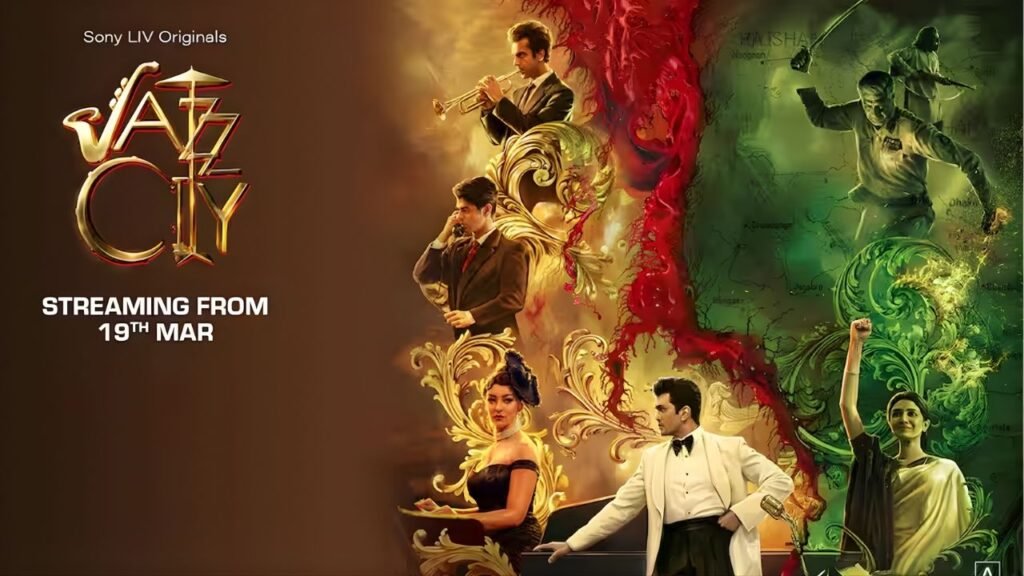

Jazz City, directed by Soumik Sen, arrives as one of the more ambitious OTT offerings of 2026 — a series that sets itself against the explosive backdrop of the 1971 Bangladesh Liberation War and dares to weave espionage, jazz, and revolution into a single, sprawling narrative. The result is a show that is frequently beautiful to look at, occasionally gripping to watch, and ultimately frustrating in equal measure.
What Is Jazz City About?
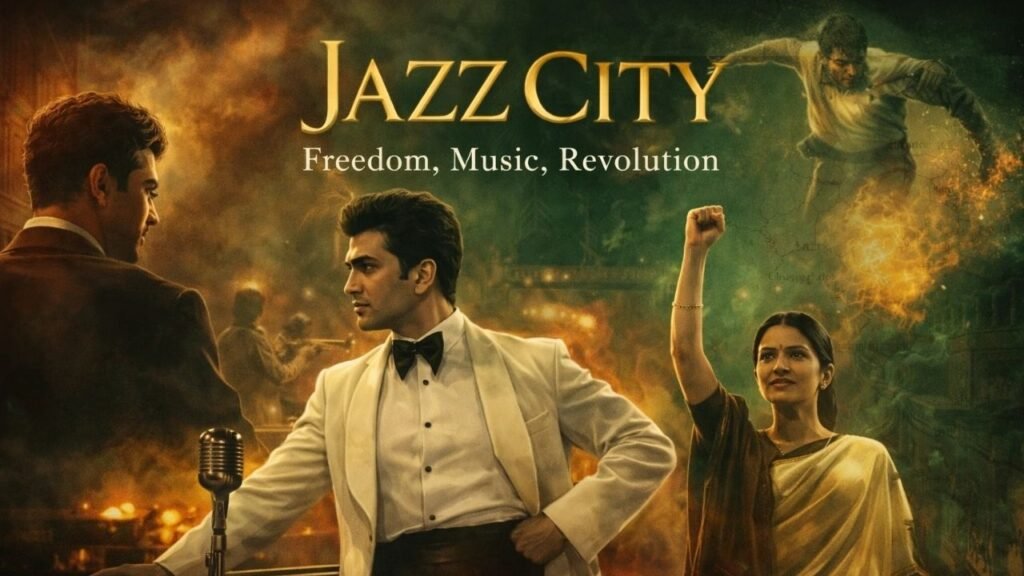
Set in Calcutta during the volatile months of 1971, Jazz City centres on a jazz club that doubles as a covert nerve centre for rebellion. The series opens with a declaration that doubles as a mission statement: “This is a story of a nobody who had the courage to be a somebody.”
It is a compelling hook. The premise — music as cover, the club as a gathering point for idealists and operatives — carries genuine cinematic potential. A story that marries mood with politics, rhythm with revolution, and performance with consequence is exactly the kind of bold storytelling that Indian OTT needs more of.
What Works — The Atmosphere and Premise
Where Jazz City genuinely succeeds is in its atmosphere. Soumik Sen has crafted a world that feels considered and specific — the dim lighting of the club, the charged energy of Calcutta in crisis, the aesthetic of a city caught between culture and conflict. The series captures the mood of a turbulent era with impressive visual confidence.
The early episodes also establish the shadowy intelligence networks and morally ambiguous characters with enough intrigue to hold attention. The brutality of the opening scenes underlines the ideological violence of the period without flinching, and for a brief stretch, Jazz City feels like it might genuinely deliver on its considerable promise.
What Doesn’t Work — Where the Series Loses Its Rhythm
The series’ most significant problem is pacing. What begins as a tightly wound atmospheric thriller gradually loosens into something far more languid. The storytelling increasingly resembles a carefully staged tableau — visually arresting, dramatically inert.
By the seventh and eighth episodes, the narrative shift becomes difficult to ignore. Voice-overs begin to replace dramatised action. For a story built around espionage, coded messages, and active rebellion, the absence of palpable tension is not a minor flaw — it is a fundamental one. A jazz composition that never resolves, no matter how beautifully performed, ultimately leaves its audience unsatisfied.
The series gestures towards depth — the moral complexity of its characters, the mechanics of underground resistance — without ever fully committing to exploration. It raises questions it does not answer and introduces threads it does not follow.
Performances and Direction
Soumik Sen’s direction is at its strongest when the camera is allowed to simply observe — a charged exchange in a darkened corridor, a performance on stage that carries double meaning. His visual instincts are rarely in doubt. What the series lacks is the editorial discipline to match its ambition with urgency.
The cast acquits itself capably across the board, navigating material that asks them to carry atmosphere as much as character. However, the writing does not consistently give them enough to work with in the later episodes, and the passive narrative rhythm limits what even committed performances can achieve.
Jazz City — Verdict: Worth Watching?
Jazz City is ambitious, atmospheric, and intermittently engaging. It is the kind of series that you want to be better than it is — and that desire itself speaks to the genuine promise at its core. The premise is strong, the world is well-built, and the first half delivers enough to justify the investment.
What it ultimately lacks is the dramatic momentum to sustain that investment through to the finish. It captures the mood of a turbulent historical moment without fully harnessing its dramatic potential. For viewers with patience for slow-burn storytelling and an appreciation for period aesthetics, Jazz City offers enough to reward a watch — with the caveat that it never quite becomes the historic, must-see series it clearly aspires to be.
Rating: 3 / 5
KEY TAKEAWAYS:
- Jazz City is set during the 1971 Bangladesh Liberation War in Calcutta
- Directed by Soumik Sen — ambitious premise, uneven execution
- First half is atmospheric and engaging; episodes 7–8 lose dramatic momentum
- Voice-overs replace action in later episodes — tension is the casualty
- Rating: 3/5 — worth watching for period atmosphere, not for gripping drama
JAY-HO ANALYSIS
Jazz City is the rare OTT series that is let down not by lack of vision but by lack of follow-through. Soumik Sen clearly understands how to build a world — the question this series raises for his next project is whether he can sustain dramatic tension across a full run. The premise alone earns it an audience; the execution will determine whether that audience returns.