











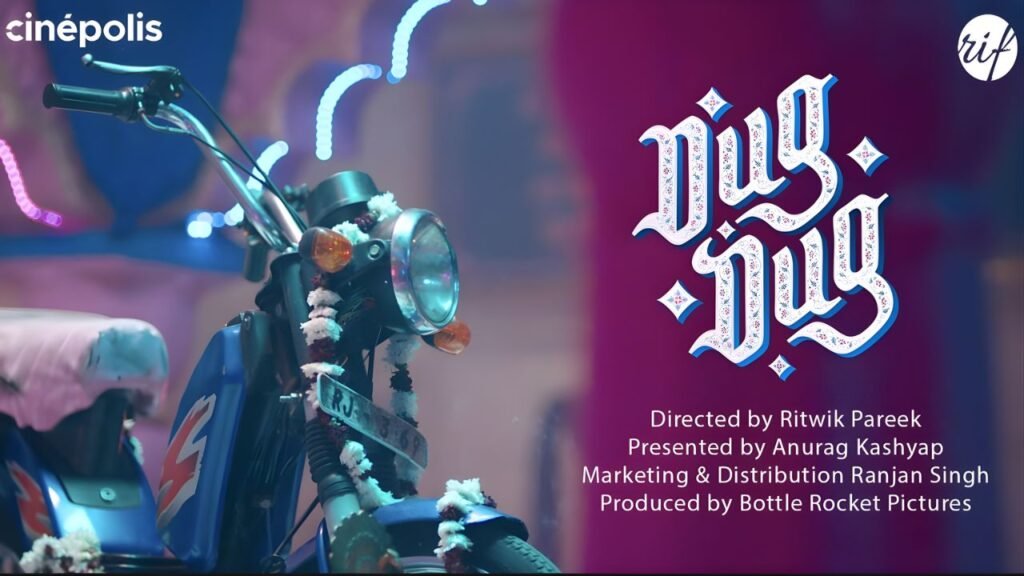
A missing motorbike turning into a symbol of faith is not something audiences see every day. Dug Dug trailer has dropped, offering a fascinating glimpse into a world where belief begins to override logic. The film, directed by debutant Ritwik Pareek, revolves around a strange phenomenon involving a “wish-granting” bike, with reports indicating that the story is inspired by real events.
Set to release on May 8, the film blends comedy, mystery, and satire, creating a narrative that feels both unusual and thought-provoking from the very first frame.
Dug Dug Trailer Breakdown — A Story Rooted In Faith And Mystery
The trailer opens with a haunting line about fate and loss, immediately setting a mysterious tone. A villager’s death becomes the starting point of the story, but things take a bizarre turn when his bike goes missing from a police station.
What follows is a strange chain of events. The same bike reappears at the exact location of the man’s death, sparking curiosity and speculation among villagers.
Soon, belief begins to take shape. People start praying to the bike, offering alcohol and rituals in the hope of having their wishes fulfilled. As reports of “miracles” spread, what begins as curiosity transforms into a full-fledged belief system.The trailer captures this transformation with visually rich sequences, highlighting how quickly faith can evolve into something much larger.
Why Dug Dug’s Concept Stands Out
The premise of Dug Dug is rare in mainstream storytelling. It explores how easily narratives can shift from coincidence to belief, especially in close-knit communities.
The film positions itself as a satire, examining how faith can be commercialized and manipulated over time. At its core, it raises questions about logic, perception, and the human need to believe in something beyond explanation.
With audiences increasingly drawn to unconventional stories, this concept has the potential to stand out in a crowded release window.The involvement of established filmmakers backing the project further adds credibility and anticipation.
Public Reaction Builds Curiosity Around Dug Dug
The trailer has already sparked conversations online, with viewers intrigued by its unusual storyline. Many have praised the film’s fresh concept and the way it blends humor with mystery.
Social media discussions highlight the film’s unique tone, with audiences expressing interest in how the story will unfold.The visual style, combined with its offbeat narrative, has also been a major talking point among early viewers.
Hidden Detail: The Real Inspiration Behind Dug Dug
One of the most compelling aspects of Dug Dug is its connection to real-life events. The story draws inspiration from incidents where everyday objects have been turned into symbols of faith.
The film appears to explore how such beliefs originate and grow, often fueled by coincidence, storytelling, and community influence.The cinematography plays a crucial role in shaping this narrative, using surreal and trippy visuals to blur the line between reality and imagination.
This layered storytelling approach gives the film a distinctive identity.
What Comes Next For Dug Dug
Following its trailer release, all eyes are now on how the film performs upon its theatrical debut on May 8.
The film has already made rounds at multiple international festivals, building credibility and generating early interest among cinephiles.
If the narrative connects with audiences, Dug Dug could emerge as a standout film in the comedy-mystery genre.Its success may also encourage more filmmakers to experiment with unconventional, grounded yet imaginative storytelling.
Jay-Ho Reel
Dug Dug arrives as a refreshing departure from formula-driven cinema, blending satire with mystery in a way that feels both entertaining and thought-provoking. The concept of a wish-granting bike is unusual, but it taps into something deeply human—the need to believe.
As anticipation builds, the film could spark conversations not just about faith, but about how easily narratives shape reality. If executed well, Dug Dug might not just entertain—it could leave audiences questioning the thin line between belief and truth.