









Inside Jaane Pehchaane Anjane – The Artists Behind Anupam Kher’s New Musical Comedy-Drama | Part 2
From Delhi’s street theatre and Mumbai’s casting rooms to documentary filmmaking, Mithila art and now an international stage, Maya Sharma has spent more than two decades building a career across remarkably different creative spaces. This fall, that path brings her to North America with Anupam Kher’s Jaane Pehchaane Anjane, including its Boston-area performance on October 11.
When the curtain rises on Jaane Pehchaane Anjane, the immediate attention naturally falls on Anupam Kher and Swaroop Sampat. Look a little deeper into the ensemble, however, and another fascinating story begins to emerge.
Maya Sharma has auditioned for roles and has also sat on the other side of the room, helping cast actors for major films and series. She has performed under theatre lights, worked behind the camera, travelled through Uttarakhand making documentaries, taken on creative production responsibilities and found an entirely different form of expression in the intricate lines of Mithila painting.
As Jaane Pehchaane Anjane prepares for its North American tour, Maya joins Anupam Kher, Swaroop Sampat, Meghna Malik and an accomplished ensemble.
Before the Camera Came the Stage
Maya Sharma’s performing career began in 2004, with early experiences that included street plays with JNU IPTA in Delhi and performances during her college years.
Street theatre can be a demanding training ground. There are no retakes and few barriers between performer and spectator. An actor has to communicate immediately, hold attention and respond instinctively to people standing just a few feet away. Without the controlled environment of a conventional auditorium, much depends on the performer’s ability to make the story connect in the moment.
From those beginnings, Maya moved deeper into theatre, working with respected directors including Robin Das, Bapi Bose, M.K. Raina, Surendra Sharma, Vivek Mishra, Himanshu B. Joshi, Ramesh Manchanda, Satish Anand and Raj Narayan Dixit. Over the years, she performed in more than 20 theatrical productions across India, taking on characters spanning different ages, personalities and emotional landscapes.
After moving to Mumbai, her stage work continued through collaborations with directors including Pramod Pathak, Rohit Tiwari, Kulvinder Singh Bakhshish, Gajendra Ahire and Mithil Rey. She also performed in English-language productions, further widening the range of her theatre experience.
One name from that period carries particular relevance today: Gajendra Ahire.
Years after working together in Mumbai theatre, Ahire and Maya find themselves collaborating again. This time, he is the writer and director of Jaane Pehchaane Anjane, and the production is travelling internationally with Anupam Kher.
For Maya, theatre has always carried a particular appeal because of the immediacy between performer and audience. No two performances unfold in exactly the same way, and that unpredictability remains part of what draws her to the stage.
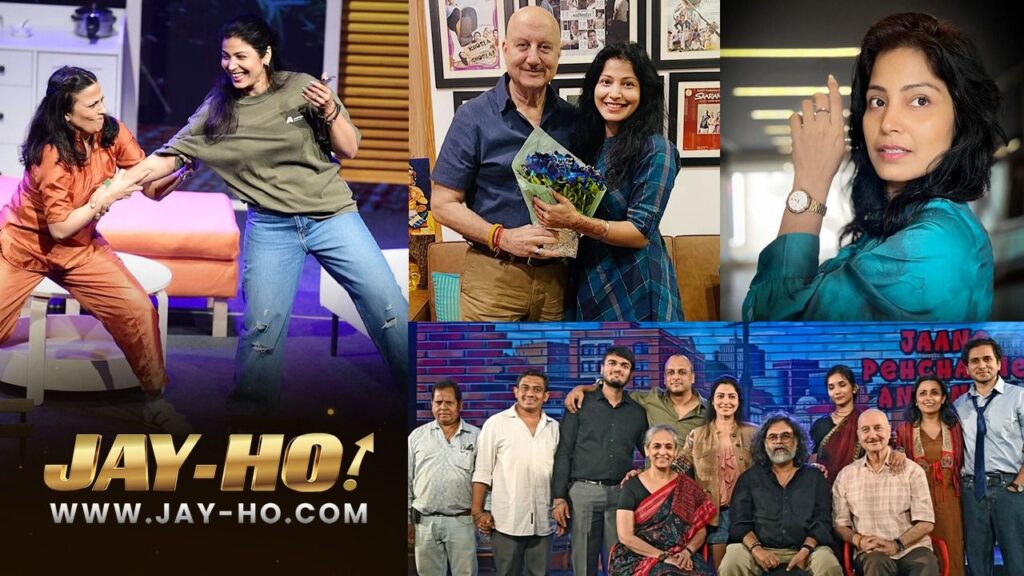
Learning Storytelling From Behind the Camera
Acting could easily have remained Maya’s singular pursuit, but curiosity took her in another direction.
She spent a period working as a creative director for a production house, becoming involved in different aspects of filmmaking, including writing, editing, cinematography, acting and direction. The experience gave her access to the mechanics of filmmaking beyond what happens in front of the camera.
Documentary filmmaking opened another world altogether.
Her work took her through Uttarakhand, particularly the Garhwal region, where she worked closely with local communities while creating documentary projects for the Government of Uttarakhand as well as independent productions.
Those assignments were far removed from constructed characters and controlled sets. They required her to enter communities, listen to real experiences and understand the people whose lives would eventually become part of the films she was making.
She later carried that experience into corporate filmmaking and projects with NGOs.
Documentary work demanded a different kind of attention — one based less on performing a written character and more on observing, listening and recognizing what mattered in somebody else’s lived experience.
The Actor Who Began Casting Other Actors
Perhaps the most unexpected turn in Maya Sharma’s career came when she began working in casting.
For more than a decade, Maya has been involved on the other side of the audition process. Her collaborations with casting director Gautam Kishanchandani included projects such as Choked, Ghost Stories, Guilty Minds and Thar.
Her perspective inside the casting room was inevitably influenced by having entered countless audition rooms as a performer herself. Maya has spoken about understanding the pressure actors experience and the importance of creating an environment in which they can become comfortable enough to give an authentic performance.
There is a fascinating reversal in this part of her career. Actors can spend years walking into rooms hoping that someone sitting across the table will recognize something special in them; Maya eventually became one of the people sitting across that table, searching for that quality in somebody else.
Few performers get to experience the audition room so intimately from both directions.
Maya also took on responsibilities as a creative producer, adding another dimension to her work behind the scenes and exposing her to the practical process of moving projects toward production.
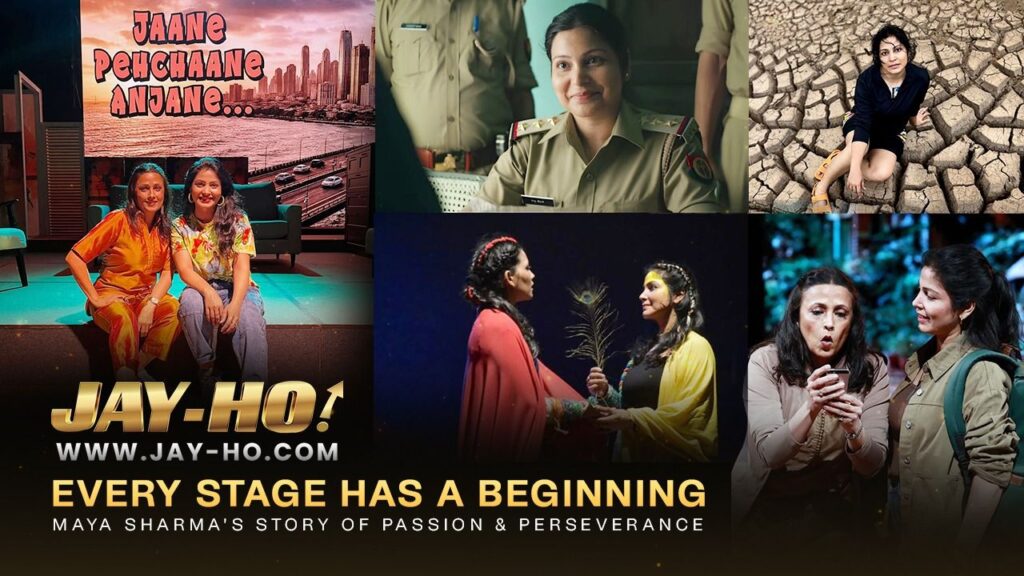
From Police Inspector to Maharani
Even while working behind the scenes, Maya continued building her own career in front of the camera.
Her television work includes Mauka-E-Vardaat, where she played a police inspector in a lead role, and Bheema, in which she appeared as a District Magistrate. In K.C. Bokadia’s Sardar: The Game Changer, Maya portrayed the Maharani of Jamnagar alongside Rajit Kapoor.
Her screen work has extended across television, films, advertising, short films and voiceovers, while her recent projects include Sanskar, directed by K.C. Bokadia and featuring Mugdha Godse and Aman Verma.
But another part of Maya’s creative life did not emerge from Mumbai’s theatres, studios or casting rooms at all. Its roots were much older — and led back to Patna.
A Patna Connection Finds Its Way Onto Canvas
Born in Patna, Maya grew up with an awareness of one of Bihar’s most distinctive artistic traditions: Mithila painting, widely known as Madhubani art.
The intricate patterns and earthy character of the art form had fascinated her since childhood. Life eventually carried her to theatre, Delhi and Mumbai, but that early connection with Mithila art remained in the background.
Then came the COVID period, when the pace of everyday life suddenly changed and Maya finally had the time to explore that childhood interest more seriously.
What began as curiosity gradually developed into a personal artistic practice. Her work draws upon the detailed patterns, symbolism and visual language associated with traditional Mithila art while leaving room for her own interpretation. She has since created original and commissioned works, including paintings inspired by Radha and Krishna.
It was a strikingly different creative environment from the collaborative worlds she knew professionally. There was no director waiting for a performance, no camera framing the scene and no actor walking into an audition. The canvas offered a quieter space, connected to an artistic tradition she had known long before entering the entertainment industry.

Theatre Calls Her Back
Through all these changes, theatre remained part of Maya’s professional life.
In recent years, she has brought acting firmly back to the centre of her work. One of her significant theatrical projects is Maai Ki Aakhiri Chhath, where she takes on the protagonist role of Maai.
Then came Jaane Pehchaane Anjane.
The production reconnects her with Gajendra Ahire and places Maya within an ensemble led by two highly accomplished performers, Anupam Kher and Swaroop Sampat.
More than twenty years separate her early street plays in Delhi from this international production. The scale is different, the collaborators are different and the audiences will be thousands of miles from where her career began. Yet the essential challenge of live performance remains unchanged: an actor walks onto a stage, and whatever happens next must happen in that moment.
Inside Jaane Pehchaane Anjane
Written and directed by acclaimed filmmaker and theatre personality Gajendra Ahire, Jaane Pehchaane Anjane explores relationships in today’s world and the curious contradiction of people being deeply familiar to one another while, in many ways, remaining strangers.
The musical comedy-drama moves through relationships, memories and emotional connections with humour, music and drama, looking at the people we believe we know and the parts of them that may still remain undiscovered.
Anupam Kher captured the essence of the production particularly well when introducing the play:
“This play is not just a story. It is a reflection of you.”
That reflection extends to relationships, memories and emotions as they unfold in the immediacy of live theatre.
The production brings together Anupam Kher and Swaroop Sampat, supported by an ensemble featuring Meghna Malik, Maya Sharma, Vikas Rawat, Shraddha Mandale and Herman D’Souza.
Its creative team adds another dimension to the production. Anu Malik has composed the music, marking the celebrated composer’s first venture into creating music for a stage play, while the lyrics are written by acclaimed lyricist Kausar Munir. The songs feature the voices of Shaan, Sukhwinder Singh and Anandi Joshi, with choreography by Chirag Aggarwal.
For readers who have been following this series, Chirag Aggarwal was the focus of Part 1, where we explored why dance plays such an important role in the musical world of Jaane Pehchaane Anjane. Part 2 turns the attention to one of the performers audiences will see when the production arrives in North America.
From Mumbai to North America
Jaane Pehchaane Anjane had its world premiere at Mumbai’s iconic NCPA Tata Theatre on April 12, 2026, where the production opened to a packed audience and received a standing ovation.
Reflecting on the premiere afterward, Anupam Kher described the experience as “nothing short of magical,” recalling how the performance developed into an emotional conversation between the actors and the audience.
This fall, Jaane Pehchaane Anjane travels across the United States and Canada, taking the production thousands of miles from the Mumbai stage where it premiered.
After Patna, Delhi and Mumbai, North America now becomes Maya Sharma’s next destination.
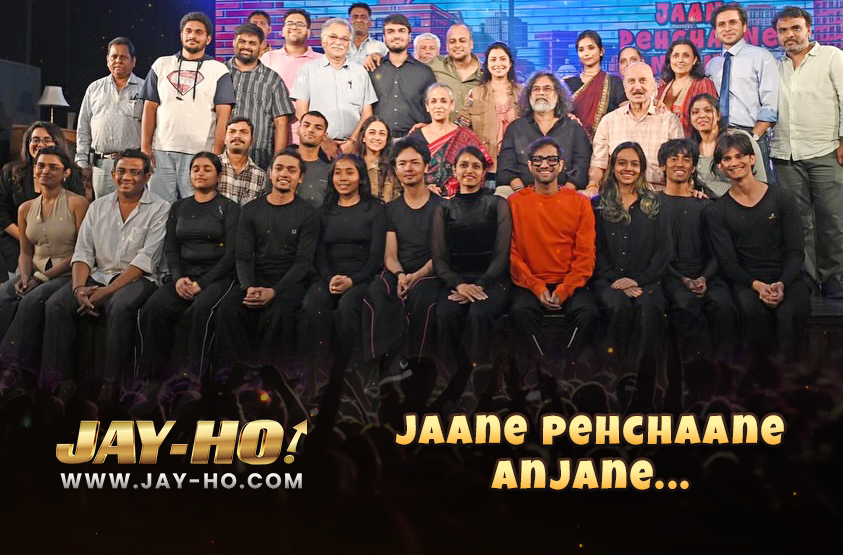
Boston Welcomes Maya Sharma on October 11
For New England audiences, that destination is the Collins Center for the Performing Arts in Andover, Massachusetts, where Jaane Pehchaane Anjane will be performed on Sunday, October 11, 2026.
Presented in the Boston area by Jay-Ho! and Dhoom Entertainment, the production brings Anupam Kher, Swaroop Sampat and the ensemble together for an evening of contemporary Indian theatre that moves through humour, music, emotion and the complexities of human relationships.
Anupam Kher may naturally be the name that first draws many people to the production, while Swaroop Sampat is another familiar and admired presence. But an ensemble production is also shaped by artists whose stories audiences may know little about before the curtain rises.
That is the purpose of our Inside Jaane Pehchaane Anjane series: to introduce the artists and creative minds who come together to build what audiences eventually experience on stage.
Maya Sharma is our second chapter.
On October 11, when she steps onto the stage at the Collins Center in Andover, the setting will be very different from the Delhi street theatre where she started in 2004. More than two decades have passed, with many different experiences in between.
And then the curtain will rise — this time in Boston, with Maya Sharma stepping into one of the biggest theatrical moments of her career.
FAQs
1. Who is Maya Sharma in Jaane Pehchaane Anjane?
Maya Sharma is an actor, casting professional, filmmaker, and theatre artist who is part of the ensemble cast of Anupam Kher’s musical comedy-drama Jaane Pehchaane Anjane during its North American tour.
2. What is Jaane Pehchaane Anjane about?
Jaane Pehchaane Anjane is a musical comedy-drama written and directed by Gajendra Ahire. The play explores relationships, memories, and human emotions through humour, music, and drama, highlighting how people can be familiar yet remain strangers to one another.
3. When and where can audiences watch Jaane Pehchaane Anjane in Massachusetts?
The play will be staged on Sunday, October 11, 2026, at the Collins Center for the Performing Arts in Andover, Massachusetts, as part of its North American tour.
4. What is Maya Sharma’s background in theatre and films?
Maya Sharma began her theatre journey in 2004 with street plays in Delhi and has since acted in over 20 stage productions. She has also worked as a casting professional, filmmaker, creative producer, documentary creator, and television and film actor.
5. Which films and shows has Maya Sharma worked on as a casting professional?
Maya Sharma has collaborated with casting director Gautam Kishanchandani on projects including Choked, Ghost Stories, Guilty Minds, and Thar, bringing her experience as both an actor and casting professional.
6. Who are the main cast members of Jaane Pehchaane Anjane?
The production stars Anupam Kher, Swaroop Sampat, Meghna Malik, Maya Sharma, Vikas Rawat, Shraddha Mandale, and Herman D’Souza.
7. Who has composed the music for Jaane Pehchaane Anjane?
The music has been composed by Anu Malik, with lyrics by Kausar Munir. The songs are performed by Shaan, Sukhwinder Singh, and Anandi Joshi, while choreography is by Chirag Aggarwal.
8. Why is Maya Sharma’s journey unique?
Maya Sharma has built a diverse career spanning theatre, acting, casting, filmmaking, documentary production, creative direction, and Mithila art. Her return to the stage with Jaane Pehchaane Anjane reflects more than two decades of experience across multiple creative disciplines.