












Aakhri Sawal arrives with the energy of a television debate that never pauses for breath. Directed by Abhijeet Mohan Warang, the film jumps directly into political and ideological territory without trying to soften its opinions. It is loud, emotionally charged, and constantly confrontational.
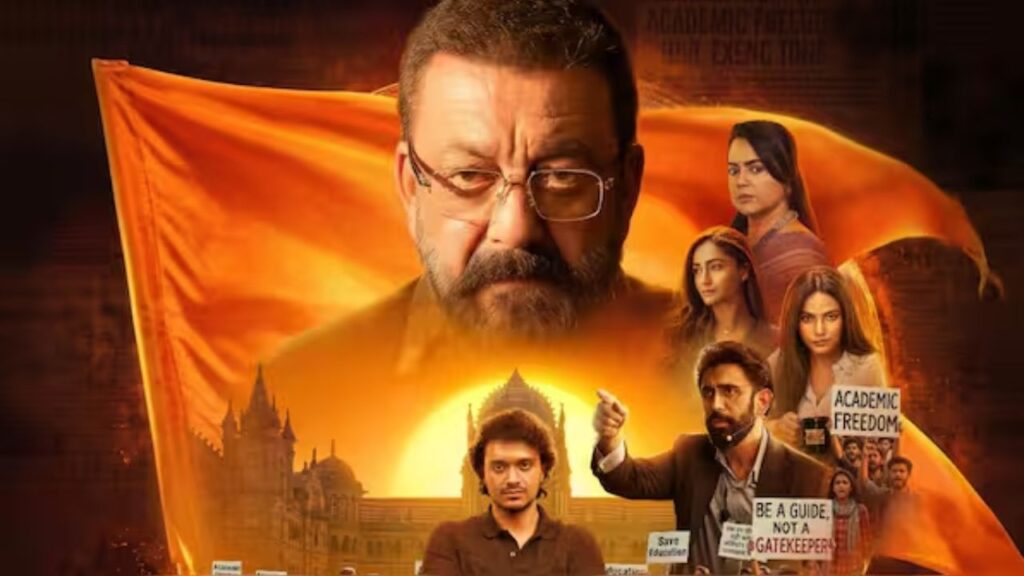
The story follows Professor Gopal Nadkarni, played by Sanjay Dutt, whose rejection of a student thesis on the RSS triggers a controversy that quickly spirals beyond the university campus. His student Vicky Hegde, portrayed by Namashi Chakraborty, refuses to apologise or compromise, turning a classroom disagreement into a national debate fuelled by news channels and social media outrage.
The film makes its intentions clear very early. This is not a balanced political drama trying to satisfy every ideological side equally. Instead, it behaves like a film with strong opinions that wants audiences to react emotionally. That honesty works in its favour, even when the screenplay becomes exhausting.
Sanjay Dutt Keeps The Film Grounded
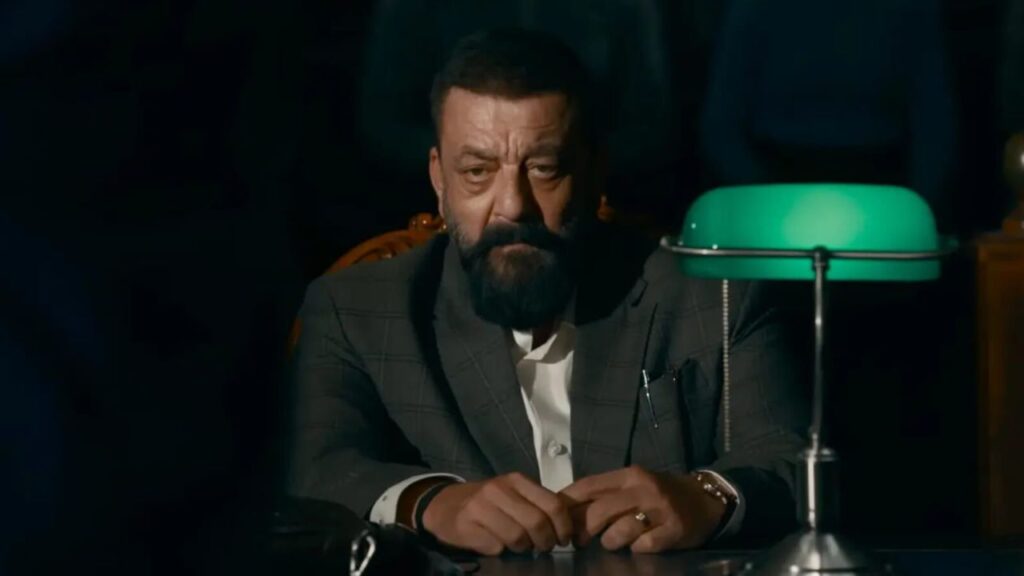
The strongest reason the film remains engaging is Sanjay Dutt himself. While the screenplay often turns every scene into an argument, Dutt brings calmness and restraint to Professor Nadkarni. His performance avoids unnecessary theatrics, which helps balance the film’s otherwise aggressive tone.
There is a certain weight in the way he delivers silence between confrontations. Even during scenes overloaded with ideological speeches, Dutt manages to make the character feel human instead of symbolic. That emotional grounding becomes essential because the film itself rarely slows down.
Sameera Reddy also delivers a solid performance as Professor Pallavi Menon, who represents the ideological opposition within the narrative. Her scenes with Dutt create some of the film’s strongest moments because both actors understand how to maintain tension without overacting.
Meanwhile, Amit Sadh plays journalist Aditya with sharp intensity. His television debate sequences feel uncomfortably close to modern prime-time news culture in India, where spectacle often becomes more important than truth.
But that was only half the story.
Where The Film Starts Repeating Itself
The biggest problem with Aakhri Sawal is not its politics. It is the repetition. The screenplay keeps circling back to the same arguments again and again, often without adding new emotional or intellectual depth.
Several debate scenes feel stretched longer than necessary, almost as if the film is afraid of silence. Every character speaks with extreme intensity, which eventually reduces the impact of moments that should have felt explosive. A tighter edit could have transformed the film from engaging to genuinely powerful.
The background score also becomes overwhelming at times. Instead of trusting performances and dialogue, the film constantly pushes emotion through loud music cues. Subtlety is almost completely absent from the storytelling style.
Still, there is something fascinating about the film’s refusal to dilute itself for mainstream comfort. In an industry where political storytelling often becomes overly cautious, Aakhri Sawal at least feels willing to provoke conversation openly.
Why The Film Still Holds Attention
Despite its flaws, the film remains difficult to ignore because it understands the emotional nature of modern public discourse. Today’s debates are no longer limited to classrooms or intellectual spaces. They are amplified by television studios, viral clips, hashtags, and online outrage.
The film captures that atmosphere surprisingly well.
There are moments where the narrative feels less like cinema and more like watching India argue with itself in real time. That chaotic energy gives the film urgency, even when the storytelling loses control. Audiences may disagree with the film politically, but many viewers will still appreciate that it takes a clear stand instead of hiding behind vague neutrality.
The social media response around the film has already become divided, with some praising its boldness while others criticise its lack of nuance. Ironically, that reaction mirrors the exact environment the movie is trying to portray.
And that makes the experience strangely compelling.
What came next, almost nobody predicted.
Why This Political Drama Will Divide Audiences
Aakhri Sawal succeeds more as a conversation starter than as a perfectly crafted film. It is messy, heavy-handed, and often too loud for its own good. But it is also passionate, emotionally direct, and genuinely interested in discussing subjects mainstream Bollywood usually avoids.
That alone gives the film relevance.
The movie may frustrate viewers searching for nuance and layered political writing. Yet audiences looking for intense performances, ideological confrontation, and emotionally charged drama will probably stay invested throughout.
Most importantly, the film never feels fake. It believes every word it says, and that conviction gives even its weakest scenes a strange sense of authenticity.
Rating: 3/5
Strong performances and fearless intent keep Aakhri Sawal engaging, even when the storytelling becomes repetitive and excessively loud.
Why This Moment Deserves More Than A Headline
Political dramas in mainstream Hindi cinema rarely arrive without fear anymore. Most films either avoid controversy entirely or dilute their opinions enough to stay safe. Aakhri Sawal does neither. It speaks loudly, argues constantly, and refuses to apologise for its perspective.
That approach will absolutely divide audiences, but perhaps that is exactly why the film matters. Even with its flaws, it creates discussion instead of passive consumption. In an entertainment landscape filled with safe storytelling, that kind of conviction still stands out.
Sanjay Dutt starrer Aakhri Sawal is loud, politically charged and completely uninterested in playing safe. Directed by Abhijeet Mohan Warang, the film jumps directly into ideological conflict and keeps pushing harder with every scene. This is not the kind of Bollywood drama that hides behind soft messaging or balanced storytelling. Instead, it openly embraces confrontation, emotion and argument.
The film revolves around Professor Gopal Nadkarni, played by Sanjay Dutt, whose rejection of a student thesis on the RSS sparks a university controversy that quickly spirals into a national debate. What begins as an academic disagreement soon turns into a media circus involving politics, ideology and personal ego. The screenplay constantly raises its voice, sometimes to exhausting levels, but there is also conviction behind that chaos.
That conviction becomes the film’s biggest strength. Even during its weakest moments, Aakhri Sawal feels like a film that genuinely believes in its arguments instead of simply chasing controversy for headlines.
Where The Film Finds Its Real Fire
The emotional backbone of the story comes from the clash between Professor Gopal Nadkarni and Vicky Hegde, played by Namashi Chakraborty. Vicky refuses to apologise after his thesis is rejected, and his stubbornness becomes the fuel for the larger ideological battle. Their conflict is less about academics and more about identity, belief systems and public perception.
Meanwhile, Sameera Reddy plays Professor Pallavi Menon, who enters as a strong opposing ideological voice. Her scenes bring another layer to the debate, especially when the narrative shifts from classrooms to television studios and public outrage. Amit Sadh as journalist Aditya becomes the bridge between these worlds, turning private disagreements into primetime spectacle.
The film captures something modern Bollywood rarely touches anymore — how quickly public discourse becomes performance. News debates, social media outrage and ideological branding all become part of the drama. Some scenes feel overly theatrical, but they also mirror the noisy reality of modern political conversation in India.
And that is where the film unexpectedly becomes engaging.
Strong Performances Carry The Weight
Sanjay Dutt carries the film with complete authority. His screen presence gives weight to scenes that could have easily slipped into melodrama. Even when the dialogues become overly dramatic, he manages to ground the character with restraint and intensity. There is exhaustion in his performance, but also quiet anger, which works well for a professor dragged into a public storm.
Namashi Chakraborty delivers one of his more confident performances here. He matches the film’s aggressive energy and never disappears beside Sanjay Dutt’s towering presence. Their confrontations feel believable because both actors commit fully to the emotional tension.
Sameera Reddy’s return adds maturity to the narrative. She avoids turning Pallavi Menon into a caricature, which helps the ideological debates feel more layered than expected. Amit Sadh also brings realism to the media portions of the story, especially during televised confrontations that feel intentionally chaotic.
However, the film’s biggest problem is repetition. The screenplay keeps circling back to the same arguments without adding enough emotional progression. Certain debates stretch too long, and some scenes feel written more for applause than storytelling. Still, the performances stop the film from collapsing under its own heaviness.
Why This Debate Refuses To Stay Quiet
One thing Aakhri Sawal understands clearly is that modern audiences do not consume politics quietly anymore. The film repeatedly shows how public opinion is shaped by outrage, headlines and viral narratives rather than patient understanding. In many ways, the story feels less like a campus drama and more like a reflection of India’s permanently online political culture.
That atmosphere gives the film urgency. Social media reactions inside the film mirror the kind of real-world reactions the movie itself may receive. Some viewers will see it as brave and necessary. Others may find it one-sided and exhausting. But indifference is unlikely.
Interestingly, the film avoids becoming emotionally cold despite all the political noise. Underneath the arguments is a story about ego, generational conflict and the fear of losing ideological ground. Those quieter emotional layers prevent the film from becoming just another lecture disguised as cinema.
Still, subtlety is not this film’s language. Every confrontation is amplified, every argument extended and every emotion pushed to maximum volume. That approach will divide audiences sharply, but perhaps that is exactly the point.
Why This Moment Deserves More Than A Headline
Aakhri Sawal is messy, loud and occasionally overwhelming, but it is never lifeless. In an industry increasingly afraid of political discomfort, the film at least attempts to provoke conversation instead of settling for safe neutrality. Not every argument lands, and not every scene works, yet the film’s sincerity gives it unusual energy.
More importantly, it reminds viewers how rare ideological dramas have become in mainstream Bollywood. Whether audiences agree with its politics or not, the film forces engagement. That alone makes it stand out in a landscape crowded with forgettable releases.
Jay-Ho Insider
Aakhri Sawal may not be subtle cinema, but subtlety was never its intention. The film wants confrontation, discomfort and reaction, and in many ways, it succeeds because of that fearlessness. At a time when mainstream Bollywood often avoids politically sensitive territory, this film chooses to step directly into the fire. Some viewers will admire its conviction, while others may reject its aggressive tone completely. Either way, the conversation around the film is unlikely to fade quietly.
What stays with you most is not just the politics, but the intensity with which the film argues for its place in the cultural conversation. That loudness may divide audiences, but it also makes the film impossible to ignore.
Stay tuned to Jay-Ho for everything that matters next.
Jay-Ho! connects creators, events, and audiences — all in one place. Host events, sell tickets, and discover experiences that go beyond the screen at Jay-Ho Events.