













“Bandar” is Anurag Kashyap’s dark psychological prison drama starring Bobby Deol as a fading television actor accused of rape. The film explores the emotional, legal and social consequences of public accusation through a gritty undertrial prison narrative filled with moral ambiguity, black humour and unsettling realism.
Key Takeaways
- Bobby Deol delivers one of his darkest performances in recent years.
- “Bandar” mixes prison drama, psychological tension and black comedy effectively.
- Anurag Kashyap focuses more on the aftermath of accusation than courtroom theatrics.
- The prison portions are among the film’s strongest and most disturbing elements.
- The film is gripping but deliberately uncomfortable and may not appeal to mainstream audiences.
Anurag Kashyap Doesn’t Make Comfortable Films — And “Bandar” Knows It
There are filmmakers who shape stories carefully for audiences.
Then there is Anurag Kashyap, who often seems more interested in trapping audiences inside discomfort and forcing them to sit there without easy answers.
“Bandar” continues that instinctive filmmaking style.
At first glance, the film appears to revolve around a rape accusation against a fading television actor. But the deeper the story sinks into its prison corridors, moral contradictions and psychological claustrophobia, the clearer it becomes that Kashyap is not making a courtroom thriller or a conventional MeToo-era commentary piece.
He is making a film about collapse.
The collapse of reputation.
The collapse of identity.
The collapse of certainty.
And that makes “Bandar” far more unsettling than expected.
What Is “Bandar” About?
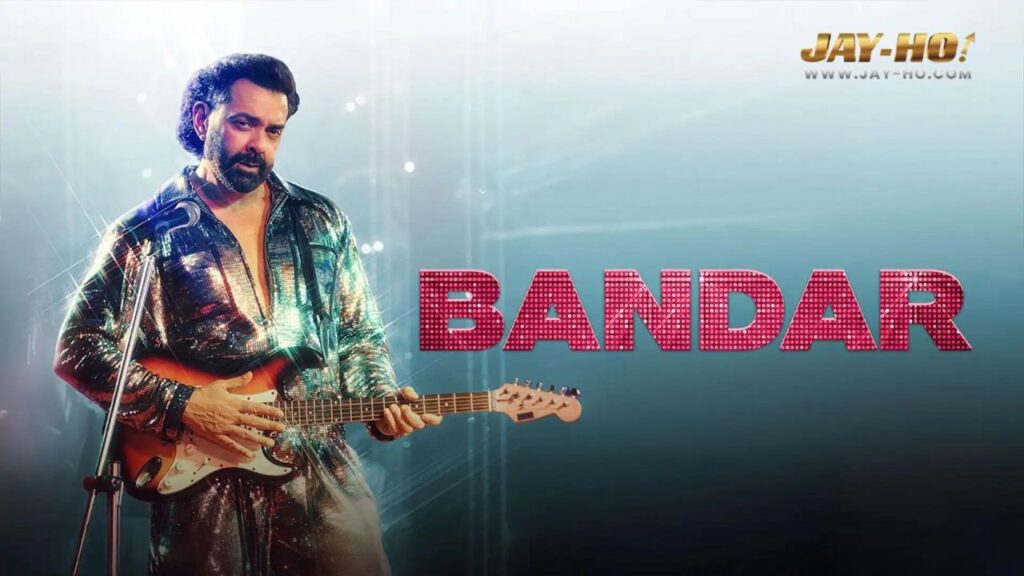
The film follows Samar Mehra, played by Bobby Deol, a once-popular television actor whose career has quietly faded into irrelevance. Financial stress hangs heavily over his life. His fame has evaporated, work opportunities have dried up, and the emotional exhaustion on his face feels almost permanent.
Things spiral rapidly after Samar is arrested following a rape accusation filed by Gayatri Anand, played brilliantly by Sapna Pabbi, a woman he met through a dating app and had a consensual sexual encounter with.
What initially appears to be a legal nightmare gradually mutates into something darker and psychologically corrosive.
Once Samar’s bail is rejected and he is pushed into an overcrowded undertrial prison, “Bandar” stops behaving like a procedural drama and transforms into a grim survival story.
That shift becomes the film’s biggest strength.
The Prison World Feels Suffocatingly Real
One detail audiences will notice almost immediately is how physically unpleasant the prison environment feels.
The overcrowded cells, stale air, overflowing toilets, cockroach-infested corners and bug-ridden food create an atmosphere that feels genuinely suffocating. Kashyap shoots the prison not as a cinematic backdrop, but as a living organism slowly swallowing people whole.
And unlike glossy prison dramas that romanticize brutality, “Bandar” captures something more terrifying:
administrative decay.
Inside this undertrial ecosystem, power operates through favours, money, intimidation and survival instincts. Morality becomes negotiable. Identity becomes fragile.
Indrajith Sukumaran’s Lijo, one of the prison’s dominant inmates, quietly becomes a symbol of that ecosystem. Every interaction with him carries tension because his help never comes without calculation.
This realism gives “Bandar” its bruising emotional texture.
Bobby Deol Gives One of His Most Vulnerable Performances
Bobby Deol has reinvented himself multiple times over the past few years, but “Bandar” may feature one of his most emotionally stripped-down performances.
His Samar Mehra is not designed to be heroic.
He is insecure, flawed, emotionally exhausted and occasionally unlikeable. Kashyap smartly avoids turning him into a spotless victim. Even when the film strongly suggests Samar did not commit rape, it quietly exposes other problematic aspects of his personality — particularly his gaze towards women and his emotional irresponsibility.
That moral greyness matters.
Because “Bandar” is not interested in easy binaries of innocence and guilt. It is interested in how quickly public accusation can dismantle a person’s existence regardless of legal outcomes.
Bobby handles the quieter moments exceptionally well, especially scenes built around humiliation, fear and emotional paralysis. There are moments where his silence communicates more than the dialogues.
His emotional breakdown scenes occasionally feel uneven, but overall, this remains one of his strongest performances in recent years.
Sapna Pabbi Quietly Becomes the Film’s Most Disturbing Presence
If Bobby Deol carries the emotional exhaustion of the film, Sapna Pabbi carries its psychological unease.
Her portrayal of Gayatri feels deeply unpredictable.
Initially, she appears emotionally vulnerable and intensely attached to Samar. But as the narrative unfolds, her behaviour slowly becomes more obsessive and unsettling. She arrives unannounced, attempts to reorganize his home, inserts herself into his emotional space and gradually begins behaving like someone emotionally untethered from reality.
What makes the performance work is that Kashyap never simplifies her into a stereotypical antagonist.
She remains emotionally human even at her most alarming.
That complexity keeps the film uncomfortable in the best possible way.
The Dark Comedy Works Surprisingly Well
One of the film’s biggest surprises is how naturally its humour emerges.
The interrogation sequence involving Jitendra Joshi’s inspector is among the funniest stretches in the film. The awkward conversations around dating apps, explicit chats and the inspector’s hilariously deadpan use of the word “banjo” instead of a cuss word create moments of absurd humour without breaking the film’s gritty tone.
Kashyap understands something many dark dramas forget:
real life remains unintentionally funny even during humiliation.
There’s another wonderfully uncomfortable scene where a policeman video-calls his wife just to show her that he is sitting beside Samar Mehra — only for her to not recognize the actor at all.
It is tragic.
It is humiliating.
And somehow, it is hilarious.
That tonal balance becomes one of “Bandar’s” sharpest achievements.
Why “Bandar” Feels Different From Typical MeToo Dramas
The bigger issue here is that “Bandar” is not trying to become a simplistic “false accusation” narrative.
That would have made the film far less interesting.
Instead, Kashyap examines the machinery surrounding accusation — the media perception, prison reality, legal paralysis and psychological damage that begin consuming someone almost immediately after public scandal erupts.
The film also refuses to cleanly sanitize Samar’s morality.
This could frustrate viewers expecting straightforward commentary, but it is precisely what makes the storytelling feel more mature and layered. Kashyap seems deeply aware that human behaviour rarely fits neatly into ideological categories.
That ambiguity lingers throughout the film.
Technically, “Bandar” Is One of Kashyap’s Strongest Recent Films
Visually, the film creates a noir-like atmosphere drenched in unease.
The blue-tinted colour grading, sudden crash zooms and claustrophobic framing make the prison feel emotionally suffocating. The sound design also deserves appreciation because silence often becomes as unsettling as the dialogues.
Amit Trivedi’s music remains understated but effective.
Songs like “Pinjara” blend organically into the narrative, while the recurring use of “Ram Siya Ram” playing casually through jail speakers creates an eerie emotional contrast against the bleakness surrounding the characters.
That contradiction quietly becomes one of the film’s most haunting details.
The Film Is Gripping — But Definitely Not For Everyone
“Bandar” is far from a universally accessible film.
Its pacing can feel deliberately slow. Some viewers may struggle with the heavy atmosphere, morally uncomfortable characters and absence of clear emotional release. The film occasionally feels torn between indie realism and mainstream dramatic stylization, creating tonal inconsistencies in certain portions.
The climax, too, may divide audiences.
Unlike Kashyap’s more carefully controlled open endings in films like “Kennedy,” the ending here feels abrupt and emotionally incomplete. Some viewers may appreciate that unresolved discomfort, while others could leave feeling unsatisfied.
But perhaps that emotional incompleteness is the point.
Because “Bandar” is not trying to comfort audiences.
It is trying to leave bruises.
Jay-Ho Verdict
“Bandar” is messy, disturbing, darkly funny and emotionally exhausting — often all at once.
Anurag Kashyap delivers a prison drama less interested in legal resolution and more fascinated by psychological decay, public humiliation and moral ambiguity. Bobby Deol anchors the chaos with a vulnerable performance, while Sapna Pabbi and Indrajith Sukumaran leave lasting impressions in a film crowded with uneasy tension.
This is not easy viewing.
Nor is it designed to become crowd-pleasing entertainment.
But for audiences willing to sit through discomfort and ambiguity, “Bandar” becomes one of Anurag Kashyap’s most compelling recent works — a film that crawls under your skin quietly and refuses to leave even after the credits roll.
How is Bobby Deol’s performance in “Bandar”?
Bobby Deol delivers one of his darkest and most vulnerable performances in recent years. His portrayal of Samar Mehra feels emotionally layered, flawed and deeply human.
Why are audiences comparing “Bandar” to Anurag Kashyap’s earlier films?
Viewers are comparing it to films like “Kennedy” because of its noir-style atmosphere, morally ambiguous characters, gritty realism and emotionally unsettling storytelling approach.
Is “Bandar” worth watching?
If you enjoy gritty prison dramas, morally layered storytelling and Anurag Kashyap’s filmmaking style, “Bandar” is definitely worth watching. It is uncomfortable, gripping and psychologically intense rather than conventionally entertaining.