











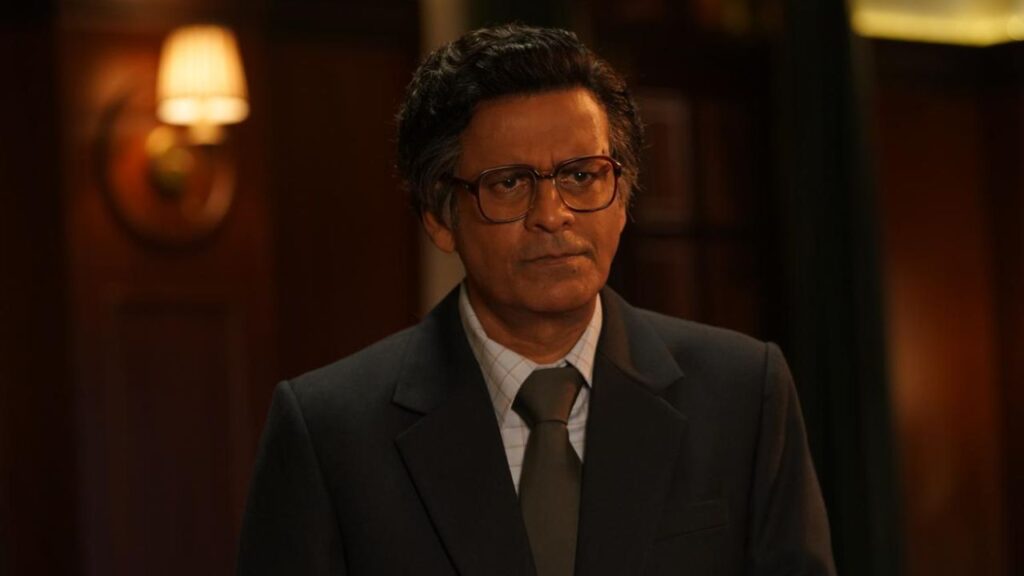

Governor explores one of the most critical moments in India’s economic history and benefits greatly from Manoj Bajpayee’s committed performance. Unfortunately, uneven writing, shallow character development and an oddly preachy tone prevent it from becoming the gripping political thriller it could have been.
Key Takeaways
- Manoj Bajpayee is easily the film’s strongest asset.
- The story is inspired by India’s 1990 economic crisis and the gold pledge mission.
- A fascinating historical chapter is reduced by excessive exposition.
- Several supporting characters feel unnecessary to the main narrative.
- The film struggles to create the urgency its premise demands.
Some stories arrive with built-in tension. They don’t require manufactured drama because history has already done the hard work. Governor is based on one such story. At a time when India stood dangerously close to an economic collapse, a handful of policymakers were forced to make decisions that would shape the country’s future for decades. The stakes couldn’t have been higher. The nation was running out of foreign reserves, confidence in the economy was fading, and drastic measures suddenly became unavoidable.
On paper, this sounds like the perfect setup for a gripping political thriller. You have national urgency, high-level negotiations, bureaucratic resistance and a protagonist tasked with navigating a crisis that could affect millions. Yet despite having access to such compelling material, Governor never fully transforms that tension into engaging cinema. What should have been a sharp and absorbing drama often feels surprisingly flat.
What Is Governor About?
Directed by Chinmay Mandlekar, Governor follows Ramakant Ramanan, a character inspired by former RBI Governor S. Venkitaramanan. Set during India’s financial crisis of 1990, the film chronicles the events that led to one of the country’s most controversial yet necessary economic decisions. With foreign exchange reserves rapidly shrinking and the possibility of default looming large, Ramanan finds himself at the centre of a desperate attempt to stabilise the economy.
As pressure mounts from every direction, he begins working on a strategy that many consider politically risky: pledging India’s gold reserves to foreign institutions. The move is seen as a last resort, but time is running out and alternatives are disappearing. The film attempts to capture both the political challenges behind this decision and the personal burden carried by the man responsible for executing it.
The premise is undeniably fascinating because the consequences extend far beyond individual lives. This is not a story about saving a company or winning an election. It is about preventing a national catastrophe.
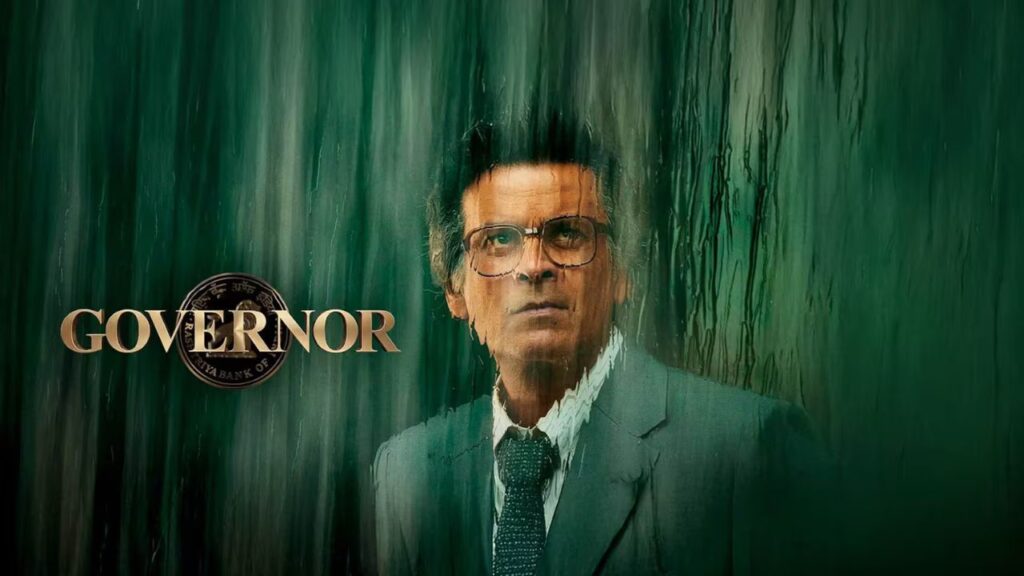
Manoj Bajpayee Carries The Film
If Governor remains watchable throughout its runtime, a significant portion of the credit belongs to Manoj Bajpayee. The actor once again demonstrates why he continues to be one of the most reliable performers in Indian cinema. He approaches Ramakant Ramanan with restraint, avoiding dramatic flourishes and instead focusing on the quiet confidence of a man accustomed to solving complex problems under pressure.
Bajpayee’s greatest strength has always been his ability to communicate internal conflict without relying on lengthy monologues, and that skill serves him well here. Whether he is negotiating policy decisions, dealing with political pushback or simply processing the enormity of the crisis around him, he lends credibility to scenes that might otherwise struggle to hold attention. There are several moments where his performance feels far more sophisticated than the screenplay supporting it.
The frustrating part is that the film rarely digs deep enough into the character to justify the actor’s effort. Bajpayee gives the role texture and nuance, but the writing often settles for broad strokes instead of meaningful exploration.
A Story That Keeps Explaining Itself
The biggest issue with Governor is its inability to trust the audience. Rather than allowing viewers to understand the gravity of the situation through events, decisions and consequences, the film repeatedly pauses to explain what is happening. Characters frequently deliver dialogue that feels more educational than conversational, creating the impression that the film is determined to teach a lesson rather than tell a story.
This approach gradually weakens the narrative momentum. Every time the tension begins to build, another explanatory sequence arrives to slow things down. The result is a film that often feels closer to a classroom presentation than a political thriller. Historical dramas can absolutely educate audiences, but the strongest ones integrate information naturally into the narrative. Governor rarely achieves that balance.
The irony is that the real-life events themselves are dramatic enough. The film simply doesn’t trust them to carry the weight.
The Missing Emotional Connection
While Governor succeeds in presenting the facts surrounding the crisis, it struggles to create an emotional connection with its central character. Ramakant Ramanan is portrayed as intelligent, compassionate and dedicated, but these qualities are largely presented rather than explored. We understand what he does. We never fully understand who he is.
An early scene involving a financially distressed man taking a drastic step appears designed to leave a profound impact on Ramanan. The moment hints at deeper emotional motivations and personal convictions that could have enriched the character. Instead, the film largely moves on, treating the incident as another plot point rather than an experience that shapes his decisions.
This becomes a recurring problem throughout the narrative. Significant moments are introduced but rarely developed. As a result, viewers admire the protagonist’s competence without becoming emotionally invested in his journey.
Supporting Characters Add More Noise Than Value
Governor also suffers from an overcrowded screenplay. Several supporting characters are introduced with their own personal struggles and ambitions, but many of these subplots fail to contribute meaningfully to the main narrative. Whether it’s family aspirations, career goals or personal milestones, these diversions consume valuable screen time without strengthening the film’s themes or emotional stakes.
The issue isn’t that these stories exist. Humanising the world around the protagonist can often enhance a film. The problem is that most of these arcs feel disconnected from the larger crisis unfolding at the centre of the story. Instead of enriching the narrative, they frequently interrupt it.
The same criticism applies to Adah Sharma’s journalist character. She enters the story with the potential to become a compelling voice challenging authority and questioning decisions. Unfortunately, the screenplay never fully develops her beyond a functional supporting role, leaving much of that potential unexplored.
When The Film Starts Feeling Like An Advertisement
One of the strangest aspects of Governor is its visual tone. There are moments when the film appears less interested in storytelling and more interested in celebrating economic reform through cinematic montages. Certain sequences are staged with such overt optimism that they resemble promotional campaigns rather than dramatic scenes.
The background score doesn’t help matters. Instead of complementing the narrative, it frequently instructs the audience how to feel, often in ways that feel overly obvious. Combined with some questionable visual choices, the overall presentation occasionally resembles a public service announcement more than a feature film.
For a story rooted in uncertainty, fear and national anxiety, the polished presentation often works against the material rather than enhancing it.
Why This Story Still Matters
Perhaps the most disappointing aspect of Governor is that its shortcomings stem from execution rather than concept. There is a growing appetite among audiences for stories based on pivotal moments in Indian history. Viewers have shown tremendous interest in dramas that explore politics, economics, science and governance, provided they are presented with depth and authenticity.
The 1990 economic crisis remains one of the most significant turning points in modern India. The decisions made during that period continue to influence the country’s economic trajectory today. That alone makes the story worthy of cinematic treatment.
The challenge is that audiences no longer respond to information alone. They want insight, perspective and emotional engagement. Governor offers plenty of information but struggles to provide the other two.
Final Verdict
Governor is a film that constantly reminds viewers how compelling it could have been. The historical backdrop is fascinating, the stakes are enormous and Manoj Bajpayee delivers a performance that deserves a stronger screenplay. Yet the film repeatedly undermines itself through excessive exposition, shallow character development and a presentation style that often feels more promotional than dramatic.
By the time the credits roll, you come away appreciating the importance of the real-life events far more than the film recounting them. That’s not a complete failure, but it certainly feels like a missed opportunity.
FAQs
Is Governor based on a true story?
Yes. The film is inspired by India’s 1990 economic crisis and the efforts undertaken to prevent a financial collapse, including the controversial decision to pledge gold reserves.
Who plays the lead role in Governor?
Manoj Bajpayee plays Ramakant Ramanan, a character inspired by former RBI Governor S. Venkitaramanan.
What is Governor about?
The film follows India’s economic crisis in 1990 and the difficult decisions taken to stabilize the nation’s economy.
Is Governor a political thriller?
The film attempts to blend political drama, economic history and biographical storytelling, though it leans more toward drama than thriller.
Is Governor worth watching?
Manoj Bajpayee’s performance is worth appreciating, but the film itself struggles to fully capitalize on its fascinating real-life subject matter.