











Huma Qureshi Cannes saree moments have always carried a certain quiet confidence, but this year’s appearance felt especially memorable. Against the spectacle and excess often associated with international red carpets, the actor chose restraint, heritage, and craftsmanship instead. And somehow, that softer statement became impossible to ignore.
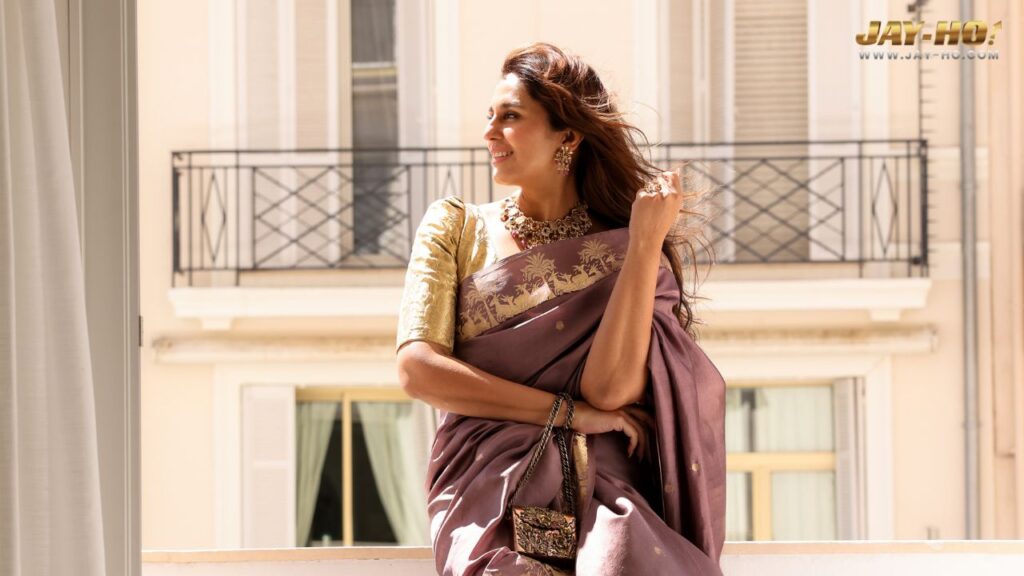
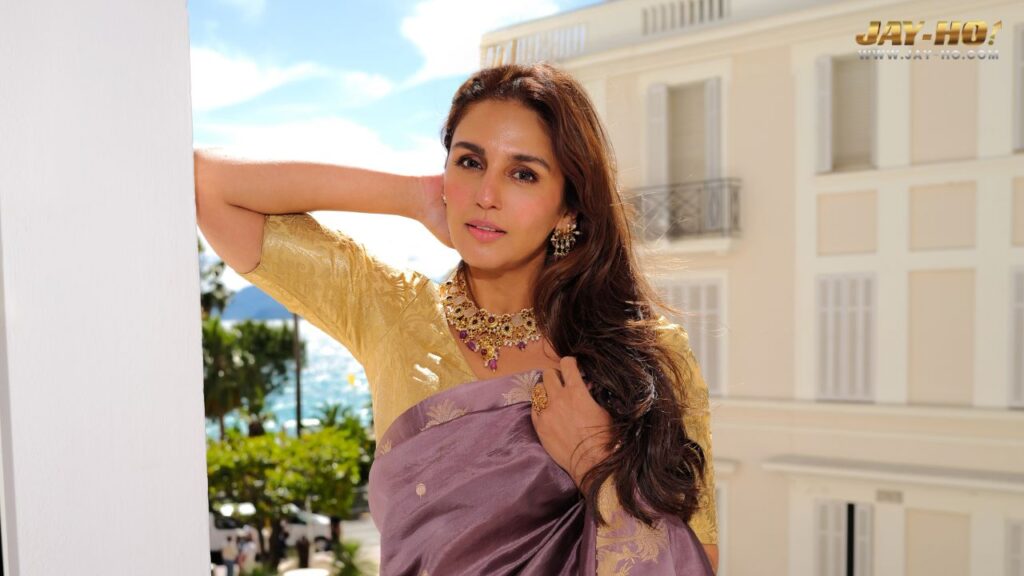
Draped in a muted mauve silk sari by Shanti Banaras, Huma brought an old-world elegance to the Cannes Film Festival that felt deeply rooted in Indian textile history. The look did not scream for attention. It lingered. That was its power.
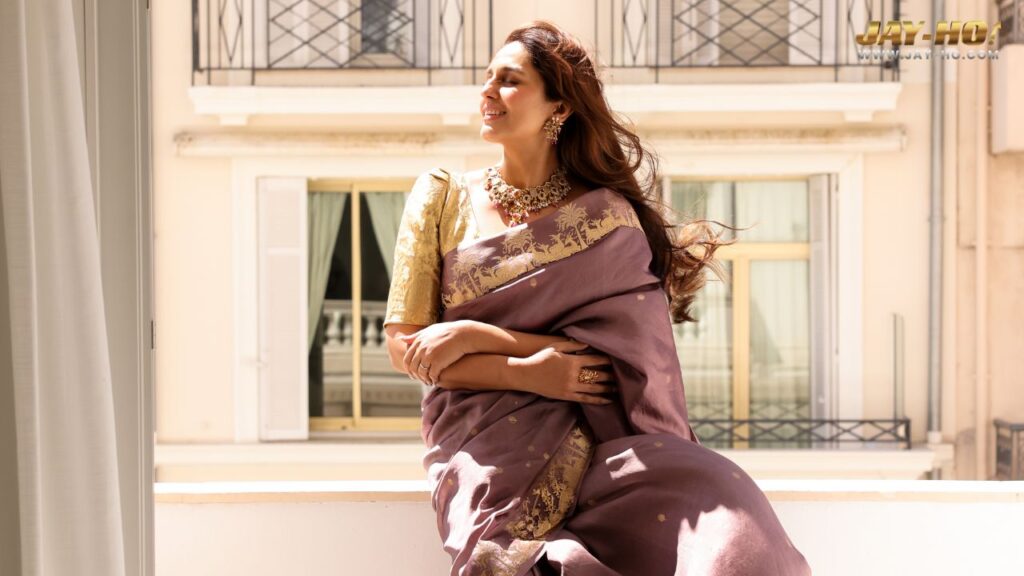
The sari itself carried extraordinary detail. Delicate gold butis scattered across the weave added texture without overwhelming the softness of the fabric. Meanwhile, the antique gold zari border featuring palm trees and elephant motifs transformed the drape into something almost cinematic — like a moving mural unfolding with every step.
In an era of aggressively styled red carpet dressing, this felt refreshingly emotional.
The Banarasi Details That Quietly Stole the Spotlight
At first glance, the look appeared understated. But the closer one looked, the richer it became. That is the hallmark of true Banarasi craftsmanship — luxury that reveals itself slowly rather than instantly.
The muted mauve silk carried a faded romanticism, almost reminiscent of heirloom textiles preserved across generations. The gold butis woven delicately into the body created a soft rhythm across the sari, allowing light to catch naturally instead of aggressively reflecting it. There was nothing flashy about the look. Every detail felt intentional.
What truly elevated the ensemble, however, was the intricate antique gold zari border. The continuous woven landscape of palm trees and elephant motifs added storytelling to the garment. These were not decorative additions for the sake of embellishment. They gave the sari personality, memory, and movement.
According to the brand, each piece involves between 150 and 300 hours of meticulous handwork. That level of labour changes the way a garment is perceived. Suddenly, it is no longer just fashion. It becomes preservation of craft.
And then — one detail quietly changed the entire conversation.
How Shanti Banaras Turned Heritage Into Red Carpet Luxury
The brilliance of this appearance lies in how naturally it balanced tradition with contemporary visual language. Shanti Banaras Instagram has steadily built a design identity rooted in classic Banarasi weaving while introducing motifs and palettes that feel modern enough for global fashion spaces.
That philosophy was visible throughout Huma’s Cannes look.
The palm tree and elephant motifs woven into the border carried a distinctly artistic sensibility. They evoked nostalgia without feeling costume-like. In fact, the motifs almost resembled fragments of miniature paintings translated into textile form. It was heritage storytelling, but interpreted with restraint.
Cannes fashion often rewards spectacle — dramatic trains, exaggerated silhouettes, high-shine embellishments. Yet increasingly, audiences are gravitating toward looks that feel emotionally authentic rather than algorithmically viral. Huma’s sari succeeded because it carried cultural depth without losing sophistication.
Notably, Indian fashion on international carpets has also evolved significantly over the past few years. Earlier appearances leaned heavily into maximalism to establish visibility. Now, designers and celebrities seem more comfortable embracing quiet luxury rooted in craftsmanship.
That shift matters.
Because when Indian textiles are presented with this level of confidence, they no longer feel like “ethnic fashion.” They stand as couture in their own right.
But the internet had barely processed the craftsmanship when another aspect of the look began drawing attention.
The Antique Gold Motifs That Made The Look Feel Cinematic
There was something deeply visual about the sari border that translated beautifully in photographs and videos from Cannes. The antique gold zari motifs did not merely frame the drape — they guided the eye across it.
Palm trees introduced fluidity and movement, while the elephant motifs added a regal undertone associated with Indian artistic heritage. Together, they created a vintage mural effect that felt almost dreamlike against the muted mauve base.
The choice of antique gold instead of brighter metallic tones proved especially important. Bright zari would have shifted the look toward theatrical glamour. Antique gold, however, introduced softness and maturity. It allowed the craftsmanship to breathe.
Fashion lovers online quickly noticed this distinction.
Several social media users praised the look for feeling “royal without trying too hard,” while others described it as one of the most wearable yet luxurious Cannes appearances from an Indian celebrity this season. In a digital landscape dominated by overstyled fashion moments, that kind of reaction stands out.
There is also an emotional reason audiences connect so strongly with Banarasi weaves. For many Indians — especially diaspora audiences — these textiles carry personal memory. Weddings, family heirlooms, festive occasions, mothers’ wardrobes, grandmother stories. A Banarasi sari rarely feels emotionally neutral.
That emotional memory travelled beautifully through Huma’s Cannes appearance.
Fans noticed something else entirely. And it spread fast.
Why Cannes Fashion Is Embracing Softer Indian Elegance Again
Over the last few years, Cannes has become a fascinating space for Indian fashion storytelling. Celebrities are no longer arriving simply to “look international.” Instead, many are leaning into distinctly Indian craftsmanship with far greater confidence.
Huma Qureshi’s Cannes saree reflects this evolution perfectly.
Rather than relying on dramatic embellishment or sculptural experimentation, the look embraced texture, weaving, and silhouette. It trusted craftsmanship to do the talking. That confidence is becoming increasingly influential across global fashion conversations where quiet luxury now dominates red carpet aesthetics.
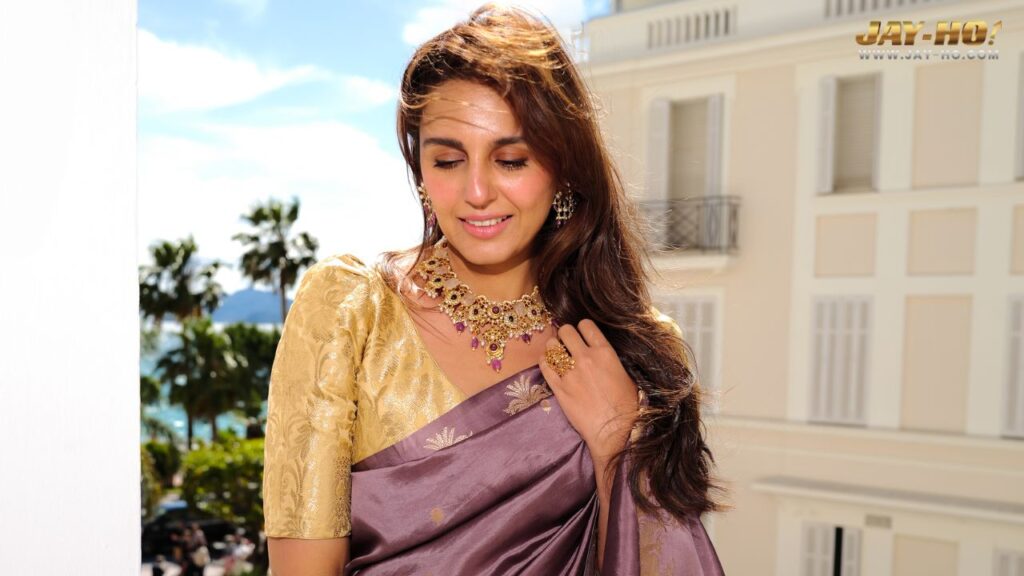
Interestingly, softer palettes are also making a strong comeback. The muted mauve shade carried emotional warmth without overwhelming the eye. It photographed beautifully in natural light while complementing the antique gold detailing effortlessly.
The styling direction further reinforced the understated luxury approach. Style Director Nikhil Mansata ensured the sari remained the emotional centre of the appearance instead of competing with excessive accessories or distracting layering.
Meanwhile, fashion team members Zoha Castelino and Roshni Suklecha helped shape a visual narrative that felt refined, editorial, and emotionally grounded.
That balance is difficult to achieve on international carpets where the temptation to over-style is enormous.
And yet, this look never lost its softness.
The Styling Choices That Elevated The Entire Appearance
One of the smartest decisions behind the appearance was restraint. Every styling choice respected the textile instead of overpowering it.
The drape itself remained fluid and graceful, allowing the woven motifs to remain visible in movement. The jewellery choices complemented the zari work without introducing unnecessary visual noise. Hair and makeup also followed the same philosophy — polished, luminous, but never aggressive.
This kind of styling discipline is increasingly rare in celebrity fashion.
Too often, red carpet appearances attempt to create multiple viral moments simultaneously: dramatic gowns, oversized jewels, experimental makeup, sculptural hair, statement gloves. The result can feel visually exhausting. Huma’s Cannes look moved in the opposite direction.
It trusted elegance.
That trust gave the appearance emotional longevity. Long after louder looks fade from memory, audiences often remember the ones that felt effortless and culturally rooted.
For Indian viewers especially, there was pride in seeing Banarasi artistry presented globally without dilution. The look did not modernise itself by abandoning tradition. It modernised itself by presenting tradition with confidence.
That distinction changed everything.
Why This Look Connected Deeply With Indian Audiences Worldwide
The emotional response to Huma Qureshi’s Cannes saree was not just about fashion. It was about recognition.
For Indian audiences across the world, seeing handwoven Banarasi craftsmanship on an international platform carries symbolic weight. It validates the artistry, labour, and textile traditions that have survived across generations despite fast-fashion culture dominating globally.
NRI audiences responded particularly strongly online, with many describing the look as “nostalgic,” “graceful,” and “deeply Indian without trying too hard.” That emotional connection matters because fashion often becomes a bridge between identity and visibility.
The sari also arrived at a moment when audiences are increasingly rejecting hyper-commercial celebrity styling. People want authenticity again. They want garments with story, texture, and emotional history.
Huma Qureshi’s Cannes appearance delivered exactly that.
And in doing so, it reminded audiences that sometimes the most powerful red carpet statement is not the loudest one — but the one that feels most deeply rooted in who you are.
What Huma Qureshi’s Cannes Saree Says About Where Indian Fashion Is Headed
Huma Qureshi’s Cannes appearance felt significant because it embraced something increasingly rare in celebrity fashion — quiet emotional confidence. The look did not depend on spectacle or shock value to command attention. Instead, it trusted craftsmanship, memory, and textile heritage to create impact. That shift says a great deal about where Indian fashion is headed globally.
Your Questions About Huma Qureshi Cannes saree — Answered
1. What designer label did Huma Qureshi wear at Cannes?
Huma Qureshi wore a handcrafted Banarasi sari by Shanti Banaras for her Cannes Film Festival appearance. The label is known for blending traditional weaving techniques with contemporary motifs.
2. Why is Huma Qureshi’s Cannes saree trending online?
The Huma Qureshi Cannes saree became viral because of its muted mauve palette, antique gold zari work, and emotionally rich Banarasi craftsmanship. Audiences praised the look for feeling elegant rather than overstyled.
3. What made the sari unique?
The border featured woven palm trees and elephant motifs crafted in antique gold zari, creating a mural-like visual effect. Each sari reportedly involves 150–300 hours of detailed handwork.
4. What are fans saying about the look?
Fans have described the appearance as regal, timeless, and refreshingly understated. Many social media users appreciated how the look celebrated Indian heritage without relying on excessive glamour.
5. What does this Cannes appearance mean for Indian fashion globally?
Looks like this reinforce how Indian textiles can stand confidently on global luxury platforms. The Huma Qureshi Cannes saree proved that craftsmanship-driven fashion can feel just as powerful as high-concept couture.