






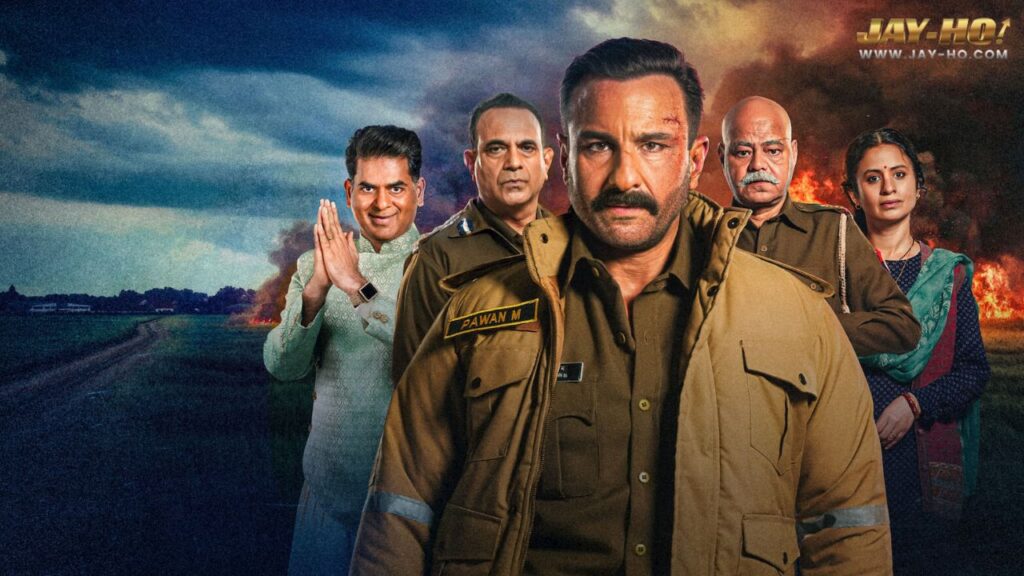

Kartavya Review begins with the kind of atmosphere that instantly pulls you in — dusty roads, silent corruption, unresolved disappearances, and a cop carrying emotional exhaustion like second skin. For a while, Netflix’s latest crime drama feels like it may actually break away from the assembly line of brooding cop thrillers flooding streaming platforms.
Then the cracks begin to show.
The biggest irony of director Pulkit’s Kartavya is that almost every ingredient is present. There is caste tension simmering beneath conversations. There is bureaucratic rot. There is religious exploitation. There is family conflict. There is grief. There is violence. Yet somehow, the film never fully grips you emotionally.
And that becomes its biggest tragedy.
Seven years after Saif Ali Khan redefined his digital image with Sacred Games, he returns to another morally bruised law enforcement role. But while Sacred Games felt explosive, Kartavya feels restrained to the point of emotional suffocation.
The internet reacted within minutes after the film dropped. Some praised its grounded tone. Others immediately pointed out how familiar everything felt.
And honestly, both reactions are valid.
Why Saif Ali Khan Remains The Film’s Biggest Strength
If Kartavya survives its uneven screenplay at all, it is because of Saif Ali Khan.
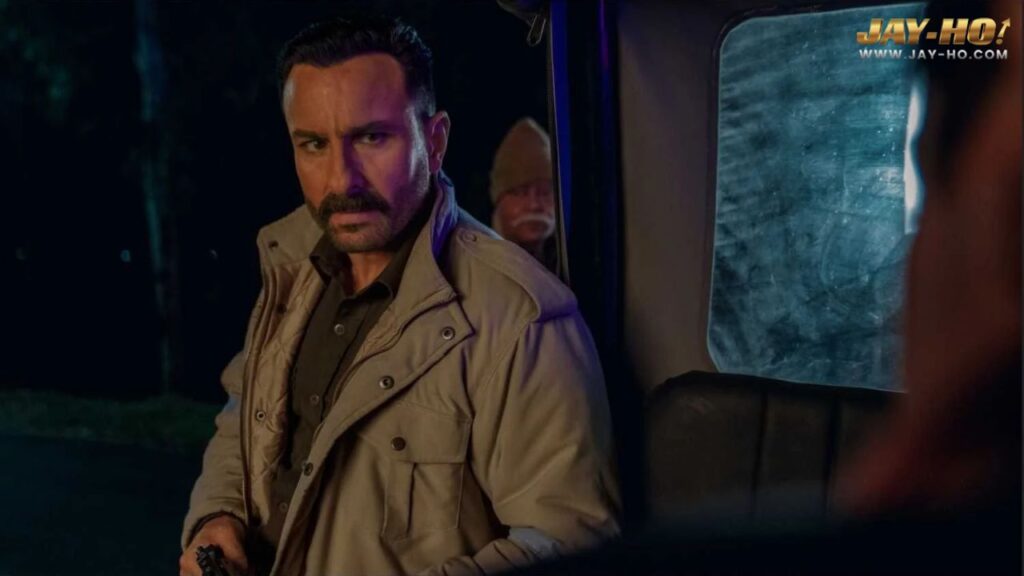
As SHO Pawan, Saif delivers a performance built on fatigue, silence, and suppressed rage. He never overplays the character. Even in moments where the writing fails him, he keeps the emotional reality intact.
That restraint becomes fascinating.
Pawan is not written as a heroic savior. He is deeply flawed, emotionally cornered, and constantly losing control over both his personal and professional life. His brother Deepak elopes. His relationship with his father remains fractured. Meanwhile, journalist Reema Dutta is murdered under his watch while investigating missing boys linked to Anand Bhoomi, a suspicious spiritual establishment.
The pressure keeps mounting.
But fans quickly noticed something else. Saif seems to be acting in a far more layered film than the one Kartavya ultimately becomes.
That disconnect is impossible to ignore.
Several scenes hint at emotional complexity, especially the father-son tension running beneath the narrative. Yet the film repeatedly abandons these emotional threads before they can truly mature.
And that hurts the impact tremendously.
The Small-Town Darkness Feels Real — Until It Doesn’t
One of Kartavya’s most frustrating qualities is how authentic its world initially appears.
The fictional town of Jhamli feels politically tense. There is visible hierarchy. Fear hangs in conversations. Silence carries meaning. Even the missing children investigation carries disturbing social undertones.
For a brief stretch, the film creates genuine intrigue.
Then strangely, the world starts feeling too clean.
For a story drenched in crime, exploitation, disappearances, and corruption, Kartavya often looks oddly sanitised. The danger never fully penetrates the atmosphere. The grime feels designed rather than lived-in.
That visual polish weakens the emotional stakes.
Compare this to truly immersive crime dramas where environments themselves become characters. Here, Jhamli never evolves beyond a backdrop.
And because of that, the film’s darkness never fully lands.
Why Kartavya Review Conversations Are Focusing On Rasika Dugal
One recurring reaction online revolves around Rasika Dugal — and understandably so.
The film gives her far too little to work with.
Rasika has repeatedly proven her ability to bring emotional intelligence to morally complex narratives. Whether through subtle expressions or internalized performance rhythms, she excels in layered storytelling spaces.
Kartavya barely taps into that strength.
This is particularly disappointing because the film constantly gestures toward emotional nuance. It wants to say something meaningful about fractured masculinity, institutional failure, and social imbalance. But female characters largely remain underexplored despite the emotional weight they could have added.
Viewers immediately started discussing this online.
Not because Rasika performs poorly. Quite the opposite.
The frustration comes from seeing an actor capable of so much depth trapped inside a narrative that keeps prioritizing procedural mechanics over emotional excavation.
And that becomes another example of Kartavya aiming high but stopping halfway.
The Mahabharata References Add Weight But Not Depth
One of the film’s more ambitious choices involves repeated Mahabharata parallels.
Pawan and his subordinate Ashok reference Abhimanyu several times, positioning Pawan as a man trapped inside systems far larger than himself. There are also subtle nods to Arjun and Dronacharya, particularly around conflict, loyalty, and betrayal.
On paper, this sounds compelling.
But the execution lacks conviction.
The symbolism is introduced without being emotionally integrated into the narrative structure. Instead of enriching the story organically, the references often feel externally imposed — like thematic annotations rather than lived psychological truths.
That was not the only surprise.
The film repeatedly gestures toward philosophical depth but rarely commits to exploring its implications fully. It wants viewers to feel tragedy, but it rushes through emotional consequences too quickly.
As a result, the references become intellectually interesting but emotionally distant.
A Thriller Without Tension Starts Feeling Emotionally Hollow
This may be Kartavya’s biggest issue.
For a film built around murder investigations, disappearances, corrupt power structures, and institutional politics, there is remarkably little tension.
The narrative moves linearly. Predictably.
Twists arrive without shock value. Revelations lack emotional aftermath. Even confrontations feel muted.
And slowly, the film loses urgency.
A strong thriller thrives on escalation. Every discovery should tighten emotional pressure. Every conversation should carry danger beneath it.
Kartavya rarely achieves that rhythm.
Instead, scenes unfold with a strange flatness that drains momentum from the story. Even the climactic portions fail to generate the adrenaline or emotional devastation one expects from such material.
The result?A crime drama that constantly hints at greatness but never fully transforms into it.
The One Detail That Weakens Kartavya The Most
The film tries to handle too much within 1 hour and 48 minutes.
Missing boys. Corrupt spirituality. Family trauma. Caste conflict. Bureaucratic politics. Masculinity. Police failure. Mythological symbolism.
Individually, these are compelling themes.Together, they demand breathing room.
This is where many viewers are asking the same question: should Kartavya have been a series instead of a film?Probably yes.
Because the emotional architecture feels incomplete. Characters are introduced with complexity but abandoned midway. Themes emerge powerfully before being sidelined. Even emotional payoffs feel rushed.
The story wants depth.
But it never stays still long enough to earn it.
Why Netflix’s Cop Thriller Formula Now Feels Exhausted
There was a time when streaming crime dramas felt fresh in India.
Now, audiences have become sharper.
Viewers no longer respond automatically to gloomy policemen, dimly lit interrogation rooms, and emotionally unavailable protagonists. They expect psychological depth, narrative experimentation, and emotional authenticity.
That is exactly why Sacred Games worked years ago.
It felt alive.
Kartavya, unfortunately, feels assembled from familiar streaming-era ingredients. Competently made? Yes. Occasionally engaging? Absolutely.
But unforgettable? Not quite.
The genre itself is demanding reinvention now.
And films that fail to evolve risk disappearing into the algorithmic blur of “another Netflix thriller.”
Does Kartavya Still Deserve A Watch?
Despite its flaws, Kartavya is not a terrible film.
In fact, there are moments where it genuinely works. Saif Ali Khan’s restrained performance holds attention. Certain atmospheric stretches create intrigue. Some emotional undercurrents linger longer than expected.
But the film ultimately feels like unrealized potential.
You keep waiting for it to become sharper. Darker. More emotionally fearless.
It never fully does.
And perhaps that is the most disappointing part of Kartavya. Not that it fails completely — but that you can constantly see the far stronger film trapped inside it.
FAQ Section
What is the overall verdict in Kartavya Review?
Kartavya Review finds the film ambitious but emotionally uneven, with Saif Ali Khan delivering one of the movie’s strongest elements.
Is Kartavya worth watching on Netflix?
Yes, especially for Saif Ali Khan’s performance and the film’s grounded atmosphere, though the screenplay lacks consistent tension.
Why are viewers discussing Rasika Dugal in Kartavya Review?
Many viewers feel Rasika Dugal was underutilized despite her strong screen presence and acting capability.
Is Kartavya similar to Sacred Games?
While both feature Saif Ali Khan in intense roles, Kartavya lacks the layered storytelling and gripping narrative depth of Sacred Games.