






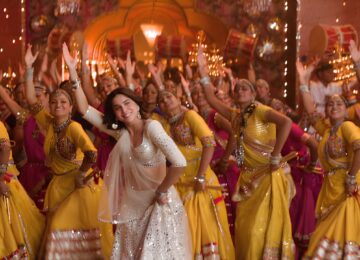

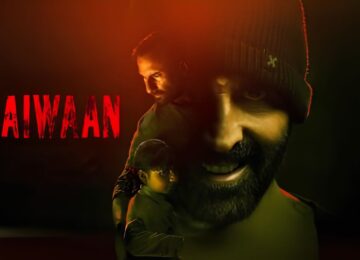


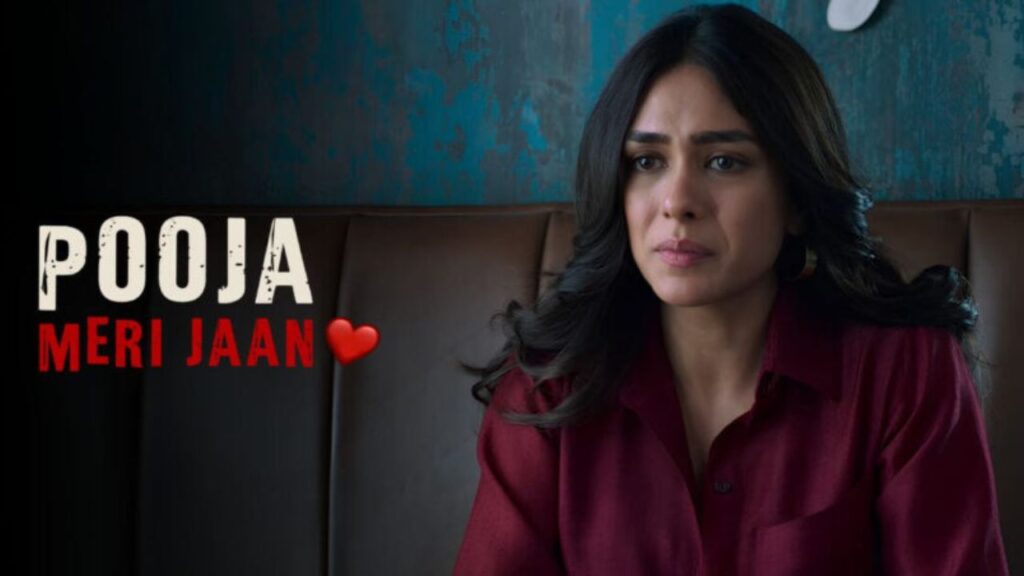

Pooja Meri Jaan is an important drama about obsession, rejection and the scrutiny women can face after refusing unwanted advances. Mrunal Thakur gives a convincing performance as Pooja, while Huma Qureshi brings natural warmth to Sana. The film has some uneven plot points, but its central message remains powerful.
What is Pooja Meri Jaan about?
Pooja Meri Jaan follows a friendship that takes a disturbing turn when romantic obsession enters the equation.
Pooja and Aniket are college friends who belong to the same theatre group. They frequently perform as Romeo and Juliet, but Aniket eventually begins treating their fictional romance as something more.
He develops feelings for Pooja and repeatedly tries to pursue her.
Pooja makes her position clear. She rejects him and asks him to remain her friend.
Aniket refuses to accept that boundary.
The situation reaches a breaking point after another performance of Romeo and Juliet, when Aniket proposes to her. Pooja rejects him again, and the consequences are devastating.
Aniket dies by suicide, leaving Pooja facing an abetment-to-suicide case.
Does Pooja Meri Jaan handle its subject effectively?
The film’s strongest quality is its refusal to turn a difficult subject into melodrama.
Instead of presenting obsession as an exaggerated cinematic phenomenon, the story explores how seemingly ordinary behaviour can become threatening when someone refuses to accept rejection.
Pooja’s situation becomes even more difficult after Aniket’s death.
She finds herself under public scrutiny and becomes the subject of a media trial. The central conflict therefore moves beyond the relationship itself.
It becomes a story about whether a woman can be held responsible simply for exercising her right to reject someone.
That is where the film’s message gains its strongest impact.
How does Mrunal Thakur perform as Pooja?
Mrunal Thakur is convincing as Pooja because she allows the character to remain at the centre of the story.
She does not play every emotion at maximum intensity.
Instead, her performance feels controlled, particularly when Pooja is forced to deal with circumstances that are beyond her control.
The actor also avoids making the character feel like a vehicle for a social message.
Pooja feels like a person first, which makes her predicament more affecting.
How is Huma Qureshi in Pooja Meri Jaan?
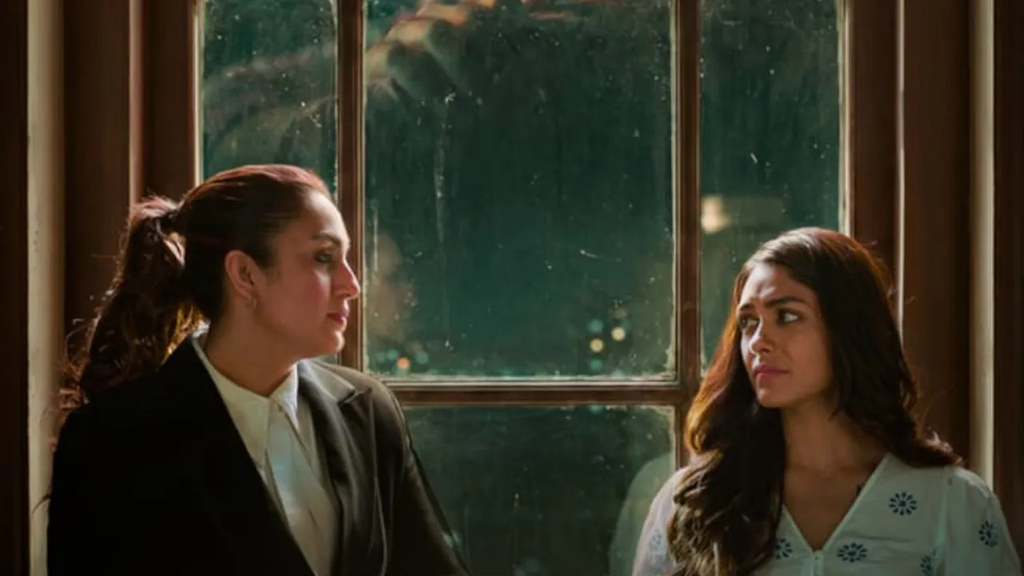
Huma Qureshi is equally natural as Sana, Pooja’s lawyer.
Her dialogue delivery has an everyday quality that makes Sana’s conversations feel less scripted.
Sana is not simply there to defend Pooja in court. Her own connection to Aniket complicates the way she approaches the case.
That creates an interesting emotional conflict, although the screenplay does not explore it as deeply as it could have.
Does the film explore Sana’s conflict enough?
This is one of the screenplay’s noticeable weaknesses.
Sana is troubled by her friendship with Aniket, and that relationship becomes important to her emotional journey.
The film hints at a deeper history between the two characters, but does not give that relationship enough room to develop.
Her visions of Aniket suggest that their friendship affected her profoundly.
More time spent establishing their bond could have made Sana’s internal conflict more convincing.
As a result, one of the film’s potentially strongest emotional threads feels underdeveloped.
How is Vikram Singh Chauhan as Aniket?
Vikram Singh Chauhan makes an impression despite having a comparatively limited role.
Aniket’s character is particularly effective because the film does not present him as an obvious villain from the beginning.
His behaviour becomes increasingly troubling as Pooja’s rejection fails to change his approach.
That progression makes the character more uncomfortable because it reflects how possessiveness can remain hidden behind an outwardly pleasant personality.
What works in Navjot Gulati’s direction?
Navjot Gulati keeps the storytelling relatively restrained.
The central relationship between Pooja and Aniket receives the most attention, allowing the film to establish how their dynamic changes over time.
The narrative also avoids turning Pooja’s trauma into spectacle.
That decision works in the film’s favour.
The events feel more unsettling precisely because they are not presented through excessive melodrama.
Where does Pooja Meri Jaan fall short?
The film has some unevenly developed plot threads.
Sana’s relationship with Aniket needed greater attention, particularly because it becomes important to her emotional journey.
Some supporting characters also appear to introduce potentially significant subplots without those ideas being fully developed.
Sunita Rajwar, playing a police officer, and Vijay Raaz, playing Aniket’s lawyer, have moments that suggest there could be more to their respective characters.
Those possibilities are not explored sufficiently.
Their scenes can therefore feel like fragments of stories that never fully materialise.
Does Pooja Meri Jaan have an important message?
Yes, and the message is arguably the film’s biggest strength.
The story examines how difficult it can be for someone to speak about unwanted behaviour when the person responsible is considered pleasant or trustworthy by everyone else.
That contradiction is central to Pooja’s predicament.
Aniket’s image among people around him makes Pooja’s version of events harder for others to accept.
The film uses that conflict to examine a broader social problem: the assumption that someone who appears kind or well-liked cannot behave abusively.
It also stresses the importance of respecting rejection and personal boundaries.
Is Pooja Meri Jaan worth watching?
Yes, particularly for viewers interested in grounded dramas that address uncomfortable social realities.
The film is not without flaws.
Its pacing and some supporting character arcs could have been sharper, while Sana’s emotional journey deserved greater depth.
But the performances, restrained treatment and central theme keep the film engaging.
Mrunal Thakur and Huma Qureshi fit naturally into the story rather than overpowering it.
That is ultimately what makes Pooja Meri Jaan effective: it does not need excessive embellishment to make its point.
Pooja Meri Jaan Review: Verdict
Pooja Meri Jaan is an unembellished and uncomfortable drama that derives its impact from the reality of its subject. Mrunal Thakur and Huma Qureshi give grounded performances, while the screenplay occasionally leaves promising character threads underdeveloped. Despite those flaws, the film’s message about boundaries, rejection and the difficulty of being believed remains difficult to ignore.
FAQ Section
Is Pooja Meri Jaan worth watching?
Yes. The film offers strong performances and a restrained examination of obsession, rejection and public judgment, despite some uneven screenplay elements.
What is Pooja Meri Jaan about?
Pooja Meri Jaan follows Pooja after a friend becomes romantically obsessed with her, rejects her boundaries and dies by suicide after she refuses his proposal.
How is Mrunal Thakur in Pooja Meri Jaan?
Mrunal Thakur gives a convincing and restrained performance as Pooja, allowing the character’s emotional situation to remain central to the story.
How is Huma Qureshi in Pooja Meri Jaan?
Huma Qureshi is natural as Sana, Pooja’s lawyer, although the film could have explored Sana’s complicated friendship with Aniket in greater depth.
What is the main message of Pooja Meri Jaan?
The film highlights the importance of respecting rejection and personal boundaries while examining why people can struggle to believe women when the person accused is otherwise considered well-liked or trustworthy.