







When the floodwaters began to recede across Punjab, the first signs of relief slowly began to appear. Food, mattresses and temporary shelters were reaching families, and communities were taking their first steps towards rebuilding their lives.
But while volunteering with the Sood Charity Foundation, Ayaan Sood found himself looking beyond the immediate relief. He began wondering about the days after the essentials had been delivered, the trucks had moved on, and families were left to rebuild what the floods had taken away.
What happens when the relief trucks leave?
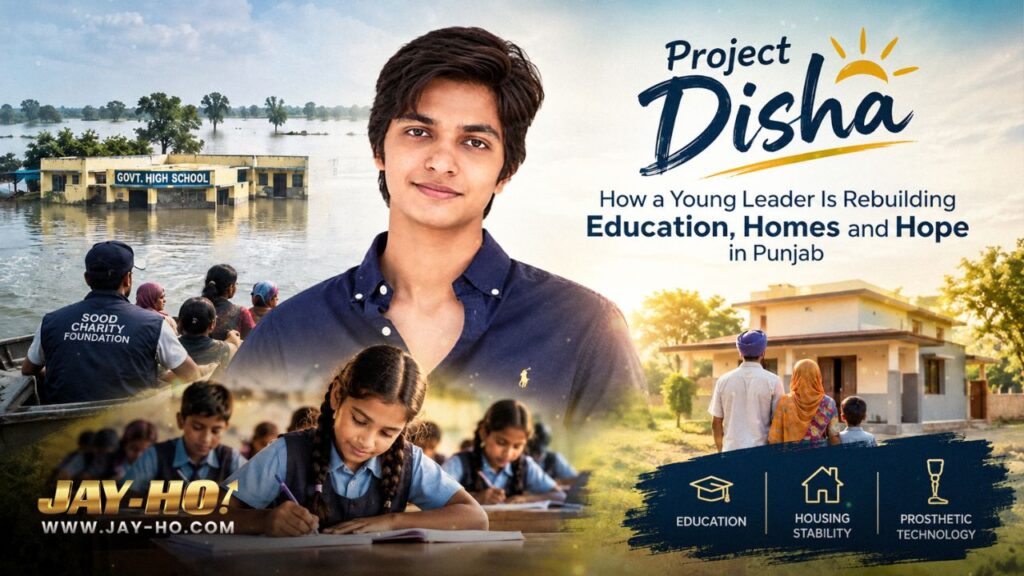
The question stayed with Ayaan. Then, while crossing a small town by boat, he saw a flooded school standing empty. Behind those closed doors were children whose education had suddenly been interrupted by circumstances beyond their control.
For Ayaan, that moment became more than a difficult sight. It became a reason to think about what could come next — how children could continue learning, how families could regain stability, and how communities could rebuild with greater hope for the future.
That thought gave birth to Project Disha, a youth-led initiative founded by Ayaan Sood. What began with a simple effort to help children continue their education gradually grew into a larger mission focused on education, housing stability, and prosthetic technology.
The journey is captured in Against the Current: The Story of Project Disha, a documentary created by Ayaan Sood — a story about looking beyond immediate relief and finding ways to help communities move forward.
How Did Project Disha Begin?
In September 2025, Punjab faced some of the worst floods in its history. Thousands of homes were lost, and families across five cities were left without stability.
Ayaan volunteered with the Sood Charity Foundation, which provided mattresses, temporary shelters, and food. Yet one question stayed with him: what happens when the relief trucks leave?
The question became clearer while crossing a small town by boat. Ayaan saw a flooded school standing empty and began thinking about the children who studied there. What would happen to their education while their communities were recovering?
That moment became the starting point of Project Disha.
Why Did Project Disha Focus on Education First?
When a flood hits, education can easily become a secondary concern for families trying to rebuild their lives. When Ayaan asked affected families what would happen to their children’s education, many had no clear answer.
Project Disha was created to help change that.
The team took a clear, structured approach:
- Understanding needs: They used a database of crisis-affected individuals to learn where each person lived and what they needed.
- Building a Bridging Curriculum: With volunteers and mentors, they created it within a week. It was never meant to replace schools. It was designed to help students return to school without falling behind.
- Creating learning spaces: They organised education outreach camps, starting with about 90 students.
- Seeking support: Ministers, politicians, and volunteers all helped the team move forward.
Among the mentors was Dr. Manoj Saigal, a trainer with 27 years of experience who has trained more than 1.3 lakh people. Having known the Sood family for over a decade, he joined the mission and called it one of the projects closest to his heart.
What Challenges Did the Team Face?
Getting students to join was not easy. Families were still struggling with the aftermath of the floods, so education was not always their immediate priority.
Volunteers and mentors met families in person, listened to their concerns, and patiently built trust. Ayaan personally monitored the progress of the very first group of 90 students.
The first week went well, with almost full attendance. But then the numbers began to fall: 90 students, then 70, and by the fourth week, only 20.
At first, it felt like a setback. Ayaan wondered whether people did not value education. He soon realised the truth was much deeper, and he went back to the drawing board to understand it.
How Did Housing Become Part of the Mission?
After speaking with each family, Ayaan learned something important: a child cannot focus on homework without a home.
Education could not be a priority for people who did not know where they would sleep at night.
His father’s advice guided him: do whatever you feel is right, but go to the core of it. Project Disha joined hands with the Sood Charity Foundation, ran surveys across the state, and began rebuilding homes.
The results were significant:
- Over 237 homes built in crisis-affected areas of Punjab
- Attendance rose once families had greater stability
- One camp grew into two, then five, and then 11 camps across five cities
- More than 990 students are now supported, roughly 1,000
The experience showed the team that creating a safe and stable environment for families could also help children find their way back to education.
How Did Project Disha Start Providing Prosthetic Arms?
At one education camp, Ayaan noticed a student who was struggling to write basic multiplication. It was not because the work was hard. The boy did not have a right arm, and he had found his own way to write by pressing his left elbow on the paper to hold it steady.
When asked how he managed, he replied in Hindi, “Mere paas koi aur sahara nahi hai,” meaning that he had no other support.
This moment changed the way Ayaan looked at accessibility. He began asking: what about the people this system was never built for?
The team began with small, low-cost changes:
- Changing seating arrangements to improve a student’s line of sight
- Using weighted paper to make writing easier
These steps showed that education systems had rarely been designed with people with disabilities in mind. This was not because anyone thought they did not matter, but because not enough people had stopped to think about the practical barriers they faced.
To go further, the team reached out to engineer Mr. Prashant Gard, founder of the Anali Foundation, who had already developed a framework for fully functional prosthetic arms.
Working with the Anali Foundation and the Suchadi Foundation, Project Disha has distributed 400 prosthetic arms across Mumbai and Punjab.
What Is the Tri-Sectional Framework?
The tri-sectional framework is the heart of Project Disha. It is built on the belief that support should create lasting change rather than remain temporary.
It covers:
- Education: Making sure every child can keep learning, even in difficult times.
- Housing stability: Rebuilding homes so families can regain safety and dignity.
- Prosthetic technology: Giving people the tools to learn, work, and live independently.
Together, these three areas look at different aspects of crisis recovery and help communities rebuild with greater stability.
What Has Ayaan Learned From Project Disha?
Ayaan says the project changed the way he sees every problem. He now practices systems thinking, which means building frameworks that keep working even when the founder is no longer involved, so that every beneficiary can receive long-lasting support.
His advice for young people is simple and powerful: look at every problem in your life as a framework, understand which parts are missing, and do your best to fill them.
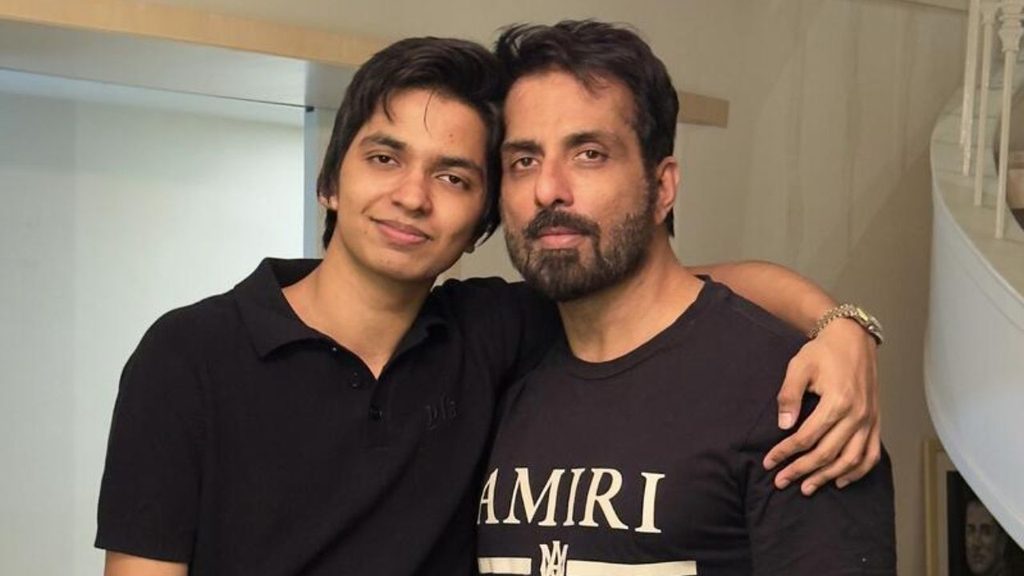
Who Inspired Ayaan?
Ayaan’s biggest inspiration is his father, Sonu Sood, a philanthropist who supported people during the COVID-19 crisis and continues to help others.
His father’s example gave Ayaan a strong understanding of how humanitarian work can grow from helping one person to creating systems that can support many more.
This example also shaped Ayaan’s ambitious goal of becoming a prominent social entrepreneur and building solutions that can create meaningful, long-term impact.
What Is the Future of Project Disha?
Ayaan hopes Project Disha will grow from a youth-led programme into a much larger movement.
His vision includes:
- Reaching every state in India
- Working with governments to build a shared framework
- Expanding to other countries in the future
- Making sure communities feel ready, not worried, when the next crisis arrives
His dream is that families will wake up after a crisis knowing that help is already on its way, and that no crisis can take away a child’s right to education or a family’s right to stability.
A Mission That Continues to Grow
Project Disha shows that meaningful relief does not have to end when the immediate crisis is over.
What began with a group of children trying to continue their education has grown into a wider effort involving homes, accessibility, technology, and long-term community support.
Through empathy, teamwork, and a willingness to look deeper into the problems people face, Ayaan Sood and the Project Disha team are building a model that looks beyond immediate relief and towards lasting hope.
As Ayaan says: “Be the change you want to see.”
Key Facts at a Glance
- Founder: Ayaan Sood, son of actor and philanthropist Sonu Sood
- Documentary: Against the Current: The Story of Project Disha, by Ayaan Sood
- Meaning of “Disha”: The Hindi word for “direction”
- Focus areas: Education, housing stability, and prosthetic technology
- Students supported: Over 990 across five cities, through 11 education outreach camps
- Homes built: Over 237 in crisis-affected areas of Punjab
- Prosthetic arms distributed: 400 across Mumbai and Punjab
- Key partners: Sood Charity Foundation, Anali Foundation, and Suchadi Foundation
- Long-term vision: To work with governments across India, and possibly the world, so communities are ready before the next crisis
Watch the Documentary
Watch Against the Current: The Story of Project Disha to hear the full story directly from Ayaan and the team.
Frequently Asked Questions
Who founded Project Disha?
Project Disha was founded by Ayaan Sood.
What is Against the Current: The Story of Project Disha?
It is a documentary created by Ayaan Sood that tells the story of Project Disha, from its beginning after the Punjab floods to its work in education, housing, and prosthetic technology.
What does “Disha” mean?
“Disha” is the Hindi word for direction. It reflects the project’s aim of giving young people a clear path forward after a crisis.
What does Project Disha do?
It supports crisis-affected communities through education, housing stability, and prosthetic technology.
How many students has Project Disha supported?
Over 990 students across five cities in Punjab, through 11 education outreach camps.
Why did Project Disha start building homes?
Attendance in the first camp dropped from 90 students to 20 in four weeks. The team learned that families without safe and stable homes could not focus on education, so housing became a core part of the mission.