











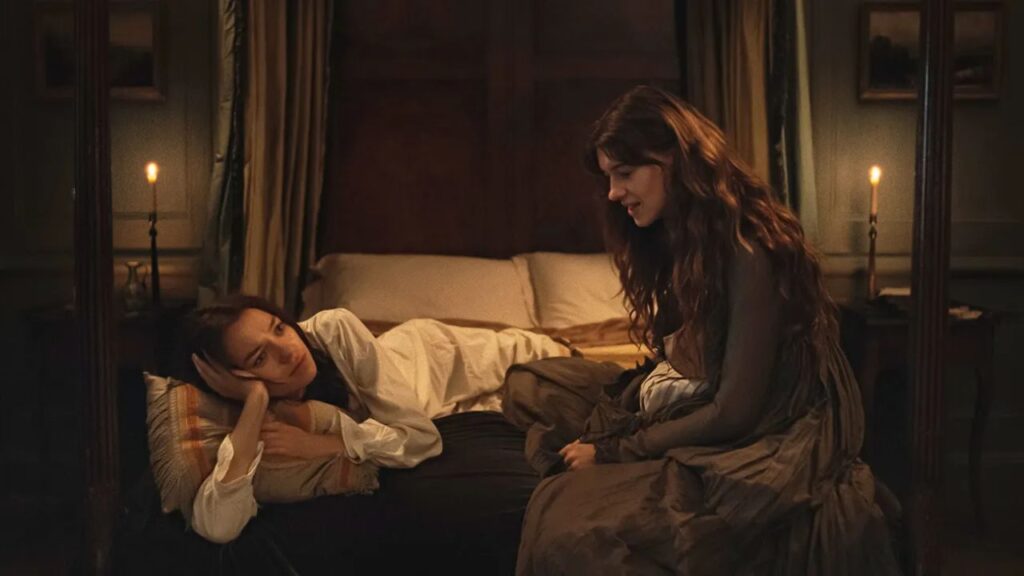

Georgia Oakley’s Sense and Sensibility gives Jane Austen’s classic an earthy, emotionally intense makeover. Daisy Edgar-Jones and Esmé Creed-Miles make a compelling pair as the Dashwood sisters, but subdued humour, uneven characterisation and excessive melancholy prevent the adaptation from matching the charm of the 1995 film.
Revisiting Jane Austen after Ang Lee’s celebrated 1995 adaptation is rather like arriving at a ball after everyone has praised the previous dance. Director Georgia Oakley attempts to justify the invitation with a moodier, earthier interpretation of Sense and Sensibility, trading some of the drawing-room sparkle for windswept longing and emotional turbulence.
Based on Austen’s 1811 novel, the film follows sisters Elinor and Marianne Dashwood as they navigate financial insecurity, romantic disappointment and the restrictions of a society where a woman’s future is closely tied to marriage. Daisy Edgar-Jones plays Elinor, who tries to govern her emotions through reason, while Esmé Creed-Miles portrays Marianne, whose impulsive nature often puts her feelings ahead of caution.
Oakley’s interpretation places the sisters’ relationship at the centre of the story. It also gives considerable attention to Marianne’s connection with nature and the emotional freedom she seeks in a world that expects women to behave within narrow social boundaries.
There is plenty to appreciate in this approach, particularly its emphasis on female experience and the emotional differences between the two sisters. However, the film’s persistent melancholy frequently overwhelms the wit, irony and social comedy that make Austen’s writing so enduring. The narrative can feel oppressively sombre, while several supporting characters lack the spark needed to bring balance to the proceedings.
Against the formidable memory of the 1995 film, this adaptation also faces a difficult question: what does this retelling bring to a story audiences already know so well? Oakley offers a more physically expressive and emotionally intense version, but the result does not always establish a sufficiently distinctive identity.
Sense and Sensibility Review: Actors’ Performances
Daisy Edgar-Jones brings restraint and quiet vulnerability to Elinor. Her performance depends on small gestures, controlled expressions and the emotions her character struggles to reveal. She understands the character’s internal conflict and gives the eldest Dashwood sister a thoughtful presence.
Esmé Creed-Miles, meanwhile, approaches Marianne with raw, impulsive energy. Her performance captures the character’s romantic idealism and emotional intensity, although some moments border on the overwrought. The contrast between the two leads gives the film its strongest foundation, even when the screenplay does not fully sustain the emotional rhythm.
George MacKay makes Edward Ferrars appealingly diffident, while Frank Dillane lends Willoughby enough charm to explain Marianne’s attraction. However, Willoughby remains somewhat underdeveloped, limiting the complexity of that relationship.
Herbert Nordrum plays Colonel Brandon with tenderness, but the character lacks the commanding presence the role demands. Fiona Shaw’s Mrs Jennings brings welcome eccentricity and energy, although her warmth occasionally gets lost amid the character’s boisterousness. Caitríona Balfe, despite her presence in the ensemble, is given frustratingly little room to make a lasting impression.
Music and Aesthetics: An Earthy Take on Austen
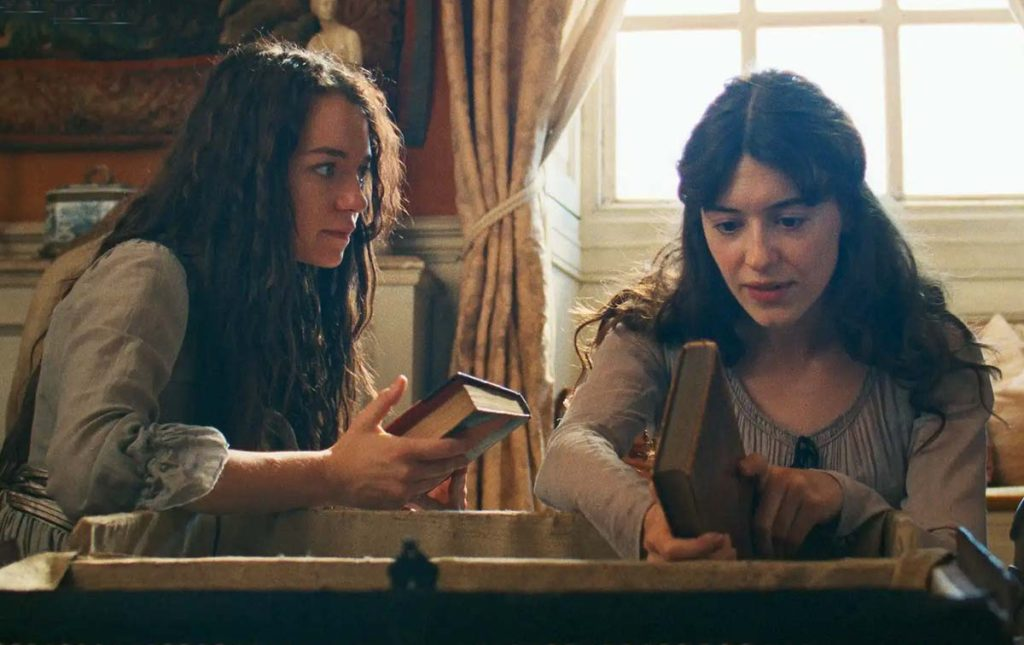
Shot on 35mm film, Arnaud Potier’s cinematography embraces natural light, muted colours and Devon’s untamed landscapes. The visual approach gives the film a tactile quality, drawing attention to the countryside and the characters’ physical relationship with their surroundings.
Grace Snell’s costumes reinforce the sisters’ earthy informality, while Roger Goula’s score deepens the romantic yearning. Together, these elements create a period setting that feels less polished and more connected to the characters’ emotional states.
However, the deliberately unkempt styling and occasional modern flourishes do not always feel like a natural extension of the story. At times, they come across as calculated attempts to distinguish this version from conventional period dramas.
The film’s visual identity is therefore more successful than some of its narrative choices. Its landscapes, natural textures and music create an evocative atmosphere, but atmosphere alone cannot compensate for the reduced humour and uneven characterisation.
Final Verdict: Does Sense and Sensibility Match the 1995 Classic?
Georgia Oakley’s Sense and Sensibility finds its strongest moments in the relationship between Elinor and Marianne. Daisy Edgar-Jones and Esmé Creed-Miles bring contrasting energies to the sisters, while the earthy cinematography and evocative score give the adaptation a distinct visual and emotional texture.
Yet the film’s subdued humour, excessive melancholy and underwritten supporting characters prevent it from reaching the emotional and comic balance that makes Austen’s story so enduring. The 1995 adaptation remains a formidable point of comparison, and this new version struggles to justify its retelling beyond its moodier presentation.
There is genuine feeling in Oakley’s approach, but the adaptation does not consistently translate that feeling into compelling drama. It offers a fresh visual interpretation of a familiar classic, even if its emotional weight sometimes comes at the expense of the wit and liveliness the story needs.
Stay tuned to Jay-Ho! for more movie reviews and entertainment updates.
FAQs
1. Who stars in the 2026 Sense and Sensibility adaptation?
The film stars Daisy Edgar-Jones as Elinor Dashwood and Esmé Creed-Miles as Marianne Dashwood, alongside Caitríona Balfe, Frank Dillane, George MacKay, Herbert Nordrum and Fiona Shaw.
2. Who directed the 2026 Sense and Sensibility film?
Georgia Oakley directed the 2026 adaptation, with a screenplay by Diana Reid based on Jane Austen’s novel.
3. How is the new Sense and Sensibility different from the 1995 film?
Georgia Oakley’s version takes a moodier, earthier approach, emphasising the Dashwood sisters’ relationship, emotional intensity and connection with nature. The review finds that this approach sometimes reduces the humour and social comedy associated with Austen’s story.
4. Is the 2026 Sense and Sensibility worth watching?
The film offers strong central performances and evocative cinematography, particularly from Daisy Edgar-Jones and Esmé Creed-Miles. However, its subdued humour, uneven supporting characters and heavy melancholy may not work for every viewer.