





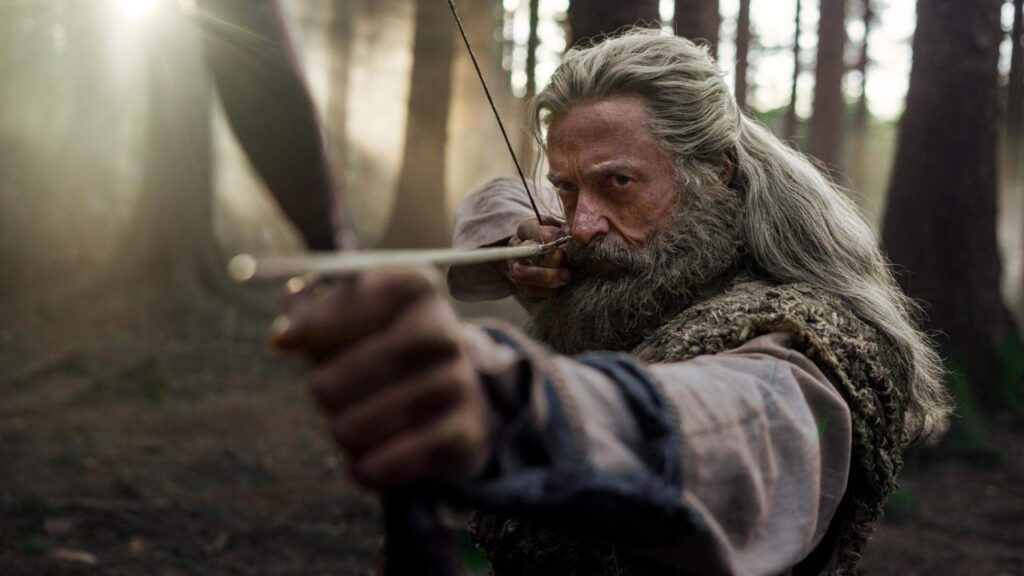

The The Death of Robin Hood Review begins with a simple truth—this is not the Robin Hood story audiences grew up with. There are no triumphant speeches, no celebratory rebellion, and no comforting hero worship. Instead, The Death of Robin Hood strips one of popular culture’s most celebrated legends down to his emotional core, revealing not a glorious outlaw but a broken, aging man burdened by violence, memory, and unresolved guilt.
Directed by Michael Sarnoski, the film takes a daring approach to myth. Rather than retelling the familiar folklore of Sherwood Forest, noble theft, and righteous rebellion, Sarnoski asks a far more uncomfortable question: What remains after the legend fades? What happens when heroism no longer feels heroic, and survival itself begins to feel like punishment?
That thematic ambition makes The Death of Robin Hood one of the year’s most intriguing films. It may frustrate viewers expecting a traditional action-adventure epic, but for those willing to embrace its meditative pace and emotional weight, the film offers something richer and far more unsettling.
The Death of Robin Hood Review: Michael Sarnoski Deconstructs a Legend
Legends typically grow more romantic with time. Stories soften rough edges, glorify rebellion, and immortalize heroes. Michael Sarnoski chooses the opposite path.
He dismantles the myth.
That decision defines the entire emotional and philosophical framework of the film.
Robin Hood here is not an icon of freedom but a deeply haunted fugitive. He is no longer fighting kings or inspiring rebellion. Instead, he is fighting memory, regret, and the psychological wreckage of his own past.
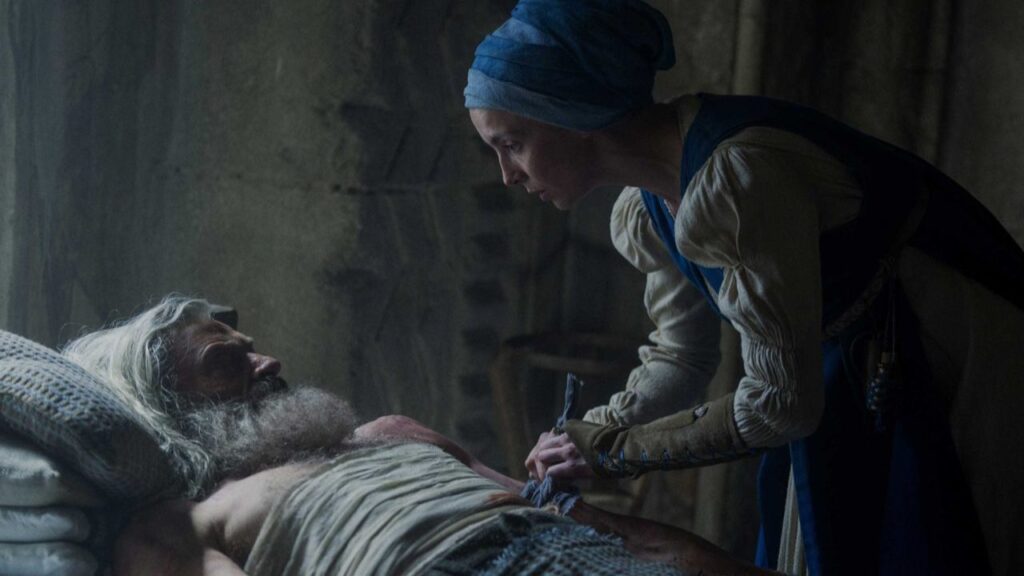
The film begins after a brutal encounter leaves Robin physically wounded and emotionally vulnerable. Seeking refuge, he begins a journey that gradually shifts the film away from medieval adventure into something far more introspective.
This is not a story about stealing from the rich.
It is a story about moral debt.
The narrative becomes a meditation on remorse, accountability, and redemption. Sarnoski repeatedly challenges the audience to question whether celebrated heroes are simply the beneficiaries of favorable storytelling.
Who writes legends?
Who gets remembered as noble?
Who gets forgotten?
These questions give the film remarkable thematic depth.
The Death of Robin Hood Review: A Story That Demands Patience
One of the defining characteristics of The Death of Robin Hood is its pacing.
This is a deliberately slow-burning film.
The narrative unfolds with patience, allowing silence, atmosphere, and internal conflict to take precedence over plot-heavy momentum. This artistic choice works beautifully in many scenes, especially when emotional tension simmers beneath quiet interactions.
However, this same strength occasionally becomes a weakness.
There are moments when introspection becomes so relentless that the narrative risks losing forward momentum. The film’s commitment to solemnity sometimes creates emotional distance, particularly for viewers expecting more dynamic storytelling.
Supporting characters also suffer from underdevelopment.
Several characters feel less like fully realized individuals and more like symbolic reflections of Robin’s conscience. While this reinforces the film’s thematic focus, it also limits emotional complexity in certain relationships.
Still, the screenplay remains compelling because of its conviction.
Even when pacing falters, the film never feels intellectually hollow.
It knows exactly what it wants to explore.
Hugh Jackman Delivers One of His Finest Late-Career Performances
The emotional anchor of The Death of Robin Hood Review is undoubtedly Hugh Jackman.
This is one of the most restrained performances of his career.
Jackman abandons the commanding charisma and larger-than-life intensity that often define his screen presence. In their place, he delivers something quieter, sadder, and far more vulnerable.
His Robin carries strength like an old wound.
That physical and emotional exhaustion becomes central to the performance.
Every movement suggests weariness.
Every expression hints at buried trauma.
Jackman brilliantly portrays a man who has survived long enough to question whether survival itself was worth the cost.
There is extraordinary power in that restraint.
Rather than dramatizing guilt through grand speeches, Jackman communicates inner collapse through stillness and subtle shifts in expression. His performance feels lived-in and painfully human.
This is acting rooted in emotional truth.
Jodie Comer Brings Warmth to a Bleak World
Jodie Comer provides the film with much-needed emotional warmth.
As Sister Brigid, Comer avoids sentimentality while bringing compassion and grounded humanity to the story. In a film filled with grief, violence, and emotional decay, her presence introduces moments of grace.
She never plays the role as simplistic redemption.
Instead, she becomes an emotional counterbalance to Robin’s despair.
Comer’s performance is subtle but deeply affecting, and her scenes with Jackman carry some of the film’s strongest emotional resonance.
Meanwhile, Bill Skarsgård makes a memorable impact despite limited screen time. His screen presence adds intensity and unpredictability whenever he appears.
Noah Jupe and Faith Delaney also contribute understated performances that enrich the emotional undercurrents.
Although their characters deserved deeper exploration, both actors add emotional texture.
Visual Storytelling Elevates the Film
One of the film’s greatest achievements lies in its visual language.
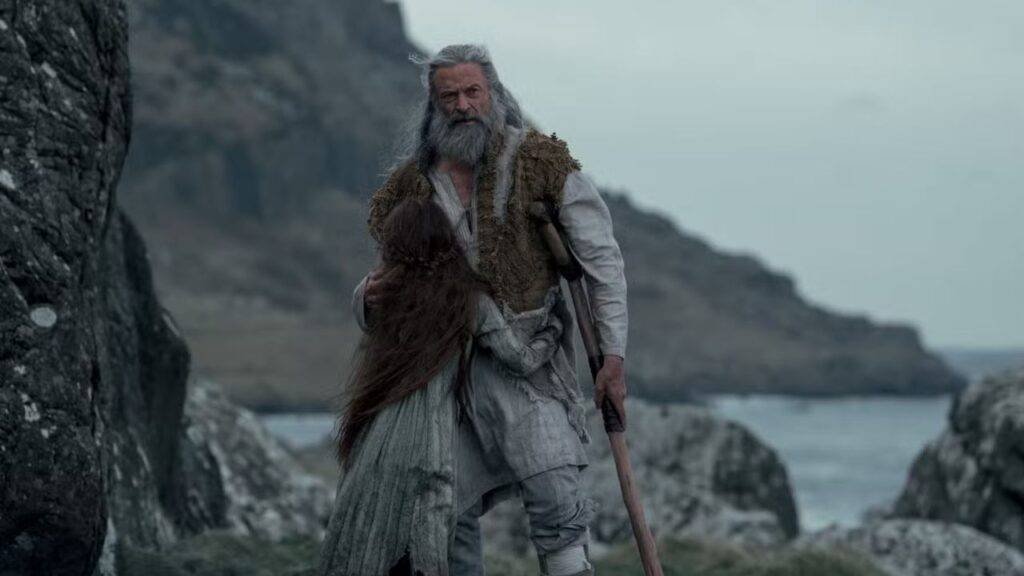
The cinematography is stunning.
Rugged landscapes become emotional extensions of Robin’s psychological state. Nature does not merely serve as background—it becomes part of the storytelling.
Bleak terrain mirrors internal collapse.
Shifting compositions and subdued color palettes reinforce melancholy and isolation. Every frame feels carefully composed to evoke emotional exhaustion and fading myth.
The aesthetic borders on elegiac.
This visual sophistication gives the film an almost poetic quality.
Violence, when it arrives, feels shocking precisely because the film refuses to romanticize it.
There is no glamorous choreography.
No heroic spectacle.
Only brutal physical consequences.
That realism strengthens the film’s central message: legends are often built upon real bloodshed.
Music and Atmosphere Reject Heroic Glory
The score deserves special mention.
Instead of triumphant orchestral themes traditionally associated with heroic legends, the film embraces mournful folk textures and emotionally restrained compositions.
This choice is brilliant.
The music constantly reminds viewers that this is not a celebration of myth but a lamentation.
Even action sequences feel mourned rather than glorified.
That tonal consistency reinforces the film’s unique identity.
Few modern myth-based films commit so fully to emotional deconstruction.
Final Verdict: Is The Death of Robin Hood Worth Watching?
The The Death of Robin Hood Review verdict is clear—this is a brave, intelligent, and emotionally heavy reimagining that refuses to offer easy catharsis.
It will not satisfy audiences looking for a conventional Robin Hood adventure.
There are no crowd-pleasing heroics.
No grand rebellion.
No celebratory mythmaking.
Instead, director Michael Sarnoski delivers a somber meditation on violence, guilt, and redemption.
Anchored by a deeply moving performance from Hugh Jackman, the film succeeds because it dares to challenge everything audiences think they know about legendary heroes.
It may not leave viewers humming heroic ballads.
But it will leave them questioning who deserved those ballads in the first place.
That alone makes it unforgettable.
⭐ Rating: 4/5
Why Watch It?
- Brilliant Hugh Jackman performance
- Bold myth deconstruction
- Stunning cinematography
- Rich philosophical themes
- Emotionally powerful storytelling
FAQ
Is The Death of Robin Hood worth watching?
Yes, especially if you enjoy character-driven dramas and darker reimaginings of classic myths.
Is The Death of Robin Hood an action movie?
Not primarily. It is more of a psychological and emotional drama than a traditional action film.
Who stars in The Death of Robin Hood?
The film stars Hugh Jackman, Jodie Comer, and Bill Skarsgård