






There’s a strange feeling hanging over Star Wars: The Mandalorian And Grogu. Not disappointment exactly. More like exhaustion wrapped inside nostalgia.
This is a franchise that once made audiences believe every lightsaber duel carried destiny and every rebellion could reshape an entire galaxy. But now, somewhere between streaming-era familiarity and blockbuster obligation, the emotional urgency feels weaker.
And yet, somehow, the film still finds ways to pull viewers back in.
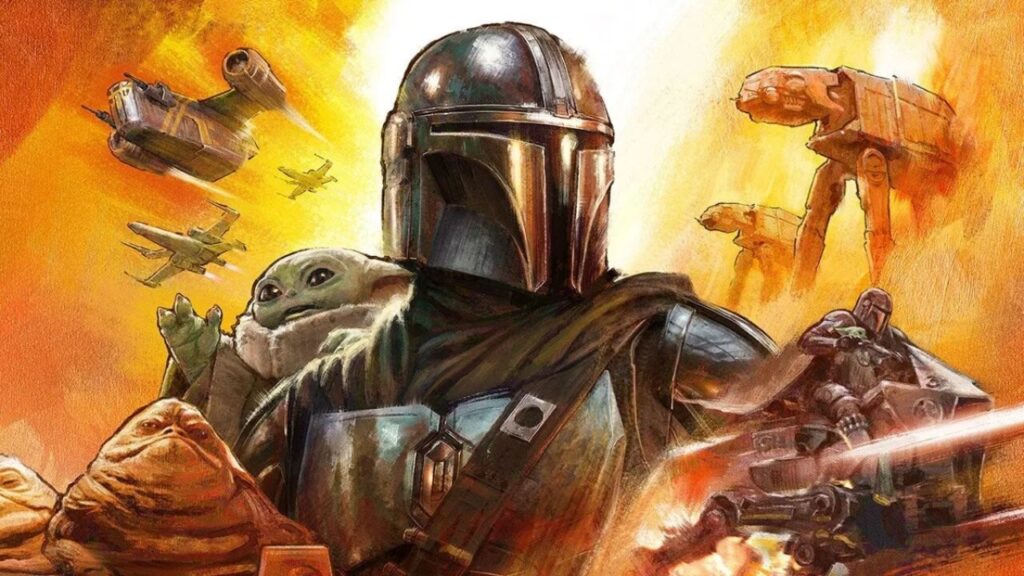
Directed by Jon Favreau, The Mandalorian And Grogu arrives with enormous expectations attached to it. The Disney+ series transformed Din Djarin and Grogu into one of modern pop culture’s most emotionally successful pairings. Expanding that intimacy into a theatrical spectacle, however, proves far more complicated.
Why This Star Wars Film Feels Different From Earlier Chapters
The film sends Din Djarin and Grogu through another sprawling galactic mission involving Imperial leftovers, criminal factions and endless CGI-heavy warfare. The pacing rarely slows down. Ships explode. Creatures attack. Entire worlds appear and disappear in giant digital set pieces.
But movement is not the problem here.
The real issue is emotional consequence.
The galaxy never truly feels endangered. Earlier Star Wars stories carried desperation, rebellion and impossible odds. Here, the villains resemble exhausted middle-management survivors trying to keep a failed empire functioning.
That mythic tension is missing.
Instead of feeling like a cinematic event, the film often resembles a very expensive streaming continuation designed for IMAX screens.
Pedro Pascal Still Gives The Franchise Its Emotional Core
What keeps the film emotionally grounded is Pedro Pascal.
Even beneath layers of beskar armour, Pascal continues to give Din Djarin warmth, exhaustion and understated humour. His vocal performance carries much of the emotional weight the screenplay itself struggles to sustain.
And during the rare moments when the helmet comes off, the film suddenly feels more human.
Pascal understands something modern franchise filmmaking sometimes forgets: audiences remember emotional vulnerability more than visual scale.
That is why several quieter scenes between Din and Grogu land more effectively than the film’s largest action sequences.
Grogu Remains The Film’s Most Reliable Emotional Weapon
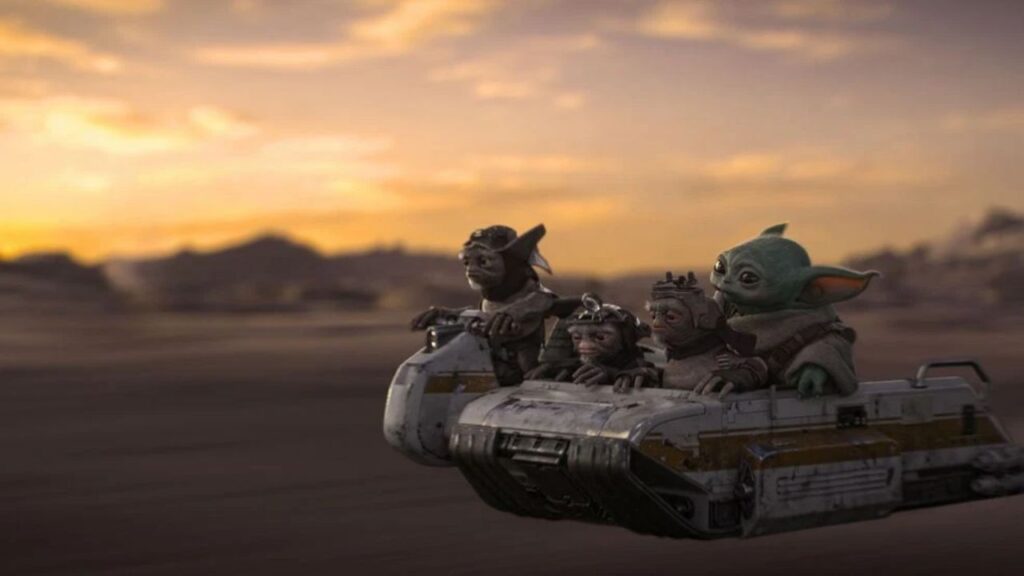
Grogu may now be one of Disney’s most aggressively marketable characters, but the emotional connection still works.
The film smartly avoids turning him into pure comic relief. Instead, Grogu remains the emotional pulse of the story — mischievous, vulnerable and strangely comforting inside an increasingly chaotic galaxy.
A simple reaction shot from Grogu often carries more emotional resonance than entire CGI battle sequences.
That balance between innocence and survival continues to define why audiences remain attached to these characters.
Sigourney Weaver And Jeremy Allen White Bring Unexpected Energy
Sigourney Weaver brings natural authority to the film, although the screenplay frustratingly limits her role to exposition-heavy scenes and command-room conversations.
Still, her screen presence adds maturity to the otherwise franchise-driven energy.
Meanwhile, Jeremy Allen White delivers one of the film’s stranger performances as Rotta the Hutt. It is bizarre, slightly ridiculous and unexpectedly entertaining.
Oddly enough, that unpredictability helps the movie.
In a film built around familiar formulas, moments of absurdity feel refreshing.
The Visual Scale Impresses, But The CGI Often Feels Weightless
Visually, the film fluctuates between immersive and artificial.
Some aerial combat sequences genuinely recapture the operatic scale associated with classic Star Wars. The sound design also remains phenomenal. Few franchises understand sonic nostalgia as instinctively as this one.
The hum of engines. The distant alarms. Familiar orchestral swells.
Those details still trigger emotional memory almost instantly.
But several action scenes suffer from excessive CGI dependency. Entire environments sometimes look digitally assembled rather than physically lived in. Instead of danger, the battles occasionally feel like polished gaming cutscenes stretched across a giant screen.
That lack of texture weakens the emotional impact.
Has Star Wars Become More About Comfort Than Myth?
Perhaps the most interesting thing about The Mandalorian And Grogu is what it quietly reveals about modern franchise culture.
Older Star Wars films made audiences feel awe. This film mostly offers familiarity.
And maybe that is intentional.
For many viewers, returning to Din and Grogu now feels less about discovering something mythic and more about revisiting emotionally safe territory. The franchise no longer operates as groundbreaking cinematic storytelling. It functions as comfort viewing wrapped in premium visual effects.
Whether audiences accept that shift may define the future of Star Wars itself.
Final Verdict: Familiar, Entertaining, But Emotionally Incomplete
The Mandalorian And Grogu remains entertaining in pieces. The emotional chemistry between Din Djarin and Grogu still works. Pedro Pascal continues to anchor the franchise with genuine humanity. The sound design and occasional large-scale sequences remind audiences why Star Wars remains culturally powerful.
But the deeper sense of wonder — the feeling that this galaxy still contains danger, destiny and emotional risk — feels noticeably diminished.
The film remembers what Star Wars looks like.
It just struggles to fully remember what it once felt like.
Rating: 3/5
Stay connected with Jay-Ho for the latest from Bollywood, OTT, music, and pop culture,promote, or book event tickets with Jay-Ho Events — from ticket sales to media coverage, all in one place.