






The Lord of the Rings: The Rings of Power Season 3 brings darker storytelling, stronger character arcs and impressive visuals as Sauron moves closer to forging the One Ring. However, overcrowded subplots and uneven pacing prevent the Prime Video series from fully capturing Middle-earth’s magic.
Series: The Lord of the Rings: The Rings of Power
Directors: Charlotte Brändström, Sanaa Hamri and Stefan Schwartz
Cast: Robert Aramayo, Morfydd Clark, Charlie Vickers, Markella Kavenagh, Jamie Campbell Bower, Daniel Weyman, Owain Arthur, Maxim Baldry, Ema Horvath, Ismael Cruz Córdova and others
Where to Watch: Amazon Prime Video
Rating: 3.5/5 Stars
Review
Middle-earth has a rather inconvenient problem. Everyone wants a piece of it, nobody seems willing to agree on who should rule it, and Sauron is growing increasingly impatient about the whole business. Season 3 of The Lord of the Rings: The Rings of Power plunges into this gathering chaos five years after the fall of Eregion, as the Dark Lord tightens his grip on Middle-earth and moves closer to forging the One Ring.
J.D. Payne and Patrick McKay’s ambitious adaptation finally finds a stronger sense of direction, trading some of the meandering storytelling of earlier seasons for a darker, more purposeful narrative. Galadriel, Elrond and the Elves struggle to contain Sauron’s advance, Númenor is consumed by political upheaval, the Dwarves face their own challenges, and Gandalf continues his journey of discovery. There is considerably more urgency this time, although keeping track of Middle-earth’s competing power centres occasionally requires a cartographer’s patience.
The storytelling benefits from stronger character relationships, unexpected alliances and some genuinely engaging twists. The central conflict feels more immediate, and the stakes are clearer as Sauron’s ambitions become increasingly difficult to contain. However, the sheer number of parallel narratives remains a problem. Certain storylines gather momentum while others appear to be waiting for an invitation. The political machinations in Númenor and Khazad-dûm, in particular, sometimes threaten to turn an epic fantasy into an extended constitutional debate.
Actors’ Performances
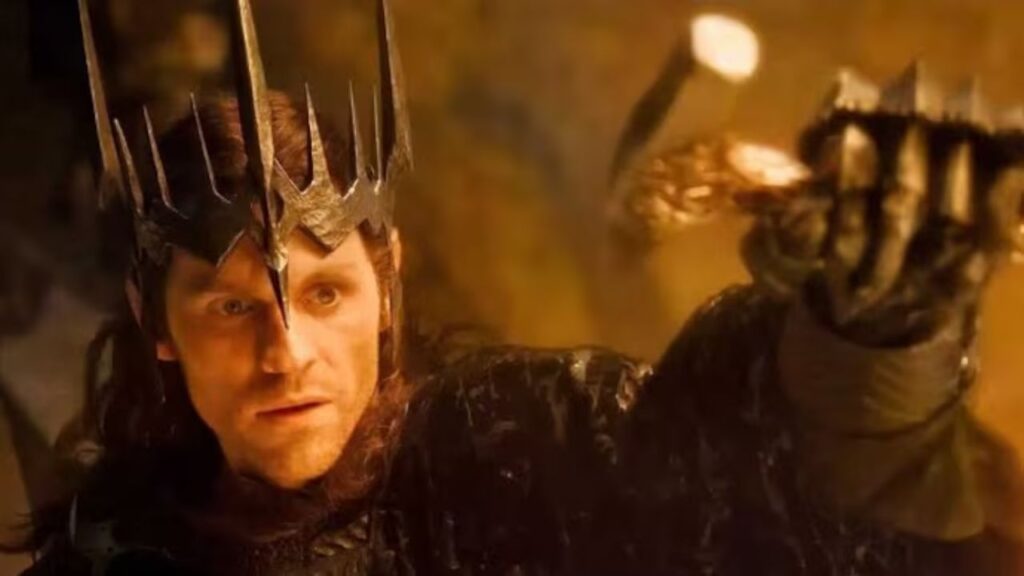
Charlie Vickers gives Sauron a persuasive mix of menace, calculation and insecurity, making his pursuit of absolute power compelling to watch. Rather than relying exclusively on intimidation, Vickers brings a calculating quality to the character that makes his presence particularly unsettling. His performance remains one of the season’s strongest assets.
Morfydd Clark brings emotional vulnerability to Galadriel, whose battles are now as much internal as external. Her character continues to carry the consequences of earlier choices, giving the Elf a more complicated emotional journey. Jamie Campbell Bower’s arrival as Celeborn adds an appealing personal dimension to Galadriel’s otherwise troubled existence.
Adam Young is a welcome surprise as Marnûkh, an Orc whose motivations introduce an intriguing moral complication to Tolkien’s familiar creatures. His presence adds another layer to the series’ exploration of the different peoples of Middle-earth. Daniel Weyman lends Gandalf warmth and conviction, although the character’s storyline could have benefited from greater narrative attention.
Trystan Gravelle makes Pharazôn suitably imposing, bringing the political tensions in Númenor to life. The larger ensemble delivers committed performances, even when the writing does not give every character enough room to develop. The result is a season with several compelling individual performances, though not every storyline receives equally satisfying treatment.
Music and Aesthetics
Visually, the series continues to justify its formidable production ambitions. The imposing architecture of Khazad-dûm, the grandeur of the Elven kingdoms, elaborate costumes and sweeping landscapes recreate Middle-earth with impressive conviction. The production design gives the different realms their own visual identities, making the world feel expansive even when the storytelling becomes crowded.
The increasingly brutal battle sequences bring welcome physicality to the spectacle. Rather than relying only on scale, the action gives the growing conflict a sense of danger and consequence. The visual language remains one of the series’ strongest assets, even when the narrative occasionally loses its bearings.
The musical contribution, meanwhile, does not always leave as distinct an impression as the visual craftsmanship. The score supports the fantasy atmosphere, but the season’s most memorable moments tend to come from its imagery, performances and large-scale confrontations.
Final Verdict
The Lord of the Rings: The Rings of Power Season 3 is a more focused and engaging chapter in the Prime Video fantasy saga. Its darker direction, stronger character relationships and impressive production design give the story renewed energy, while Charlie Vickers and Morfydd Clark remain central to its emotional and dramatic appeal.
However, the series has not entirely escaped the problems that have affected it from the beginning. Too many parallel storylines, uneven pacing and stretches of political exposition occasionally dilute the impact of its larger conflicts. The ambition is admirable, but the storytelling still struggles to give every part of Middle-earth equal narrative purpose.
For viewers already invested in this version of Tolkien’s world, Season 3 offers enough spectacle, character development and dramatic conflict to make the return worthwhile. For those hoping for a consistently gripping fantasy adventure, the journey remains uneven.
Rating: 3.5/5 Stars