







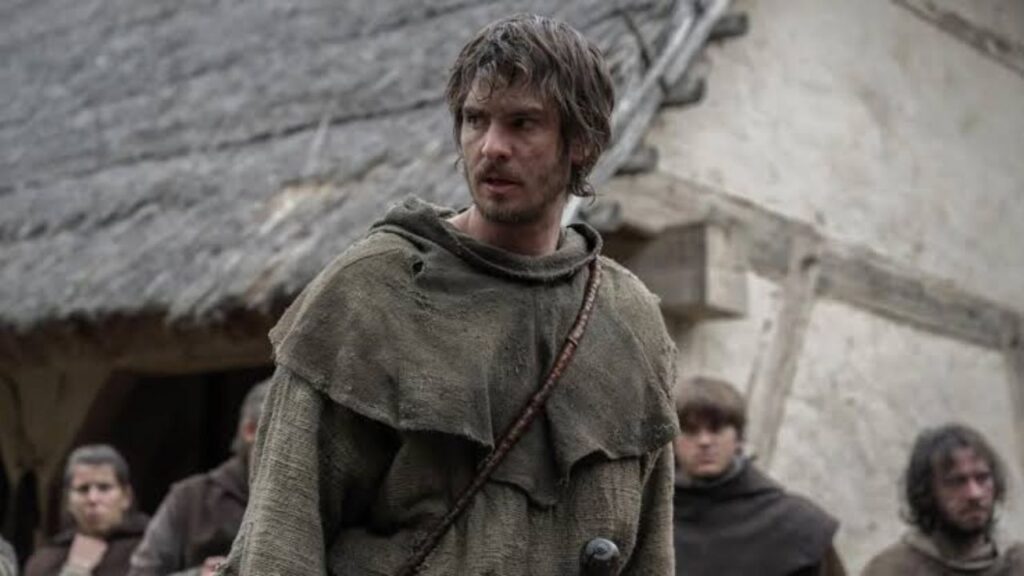

The Uprising is an intense historical drama that examines how grief and anger can turn into a larger rebellion, while questioning what happens when a righteous cause becomes difficult to control. Directed by Paul Greengrass, the film stars Andrew Garfield as a grieving farmer who becomes involved in the 1381 Peasants’ Revolt.
Rather than presenting revolution as a straightforward battle between good and evil, The Uprising explores the divisions, personal ambitions and violence that emerge once an uprising gathers momentum.
Andrew Garfield delivers a committed central performance, while Greengrass brings his trademark kinetic filmmaking style to the medieval setting. However, the film’s relentless visual intensity and relatively broad portrayal of some characters occasionally affect its pacing.
The Uprising Movie Review: Story And Plot
Set against the backdrop of the 1381 Peasants’ Revolt, The Uprising follows a nameless farmer played by Andrew Garfield.
The protagonist is introduced as a grieving man living in a society already strained by taxation, inequality and the perceived indifference of those in power. His personal anger gradually develops into something larger as he becomes part of a rebellion challenging the existing order.
What makes the film interesting is that the revolt doesn’t remain a simple fight between ordinary people and an oppressive establishment. As the movement grows, different characters begin bringing their own ambitions, frustrations and ideas to the cause.
The result is a rebellion that becomes increasingly complicated.
The film also explores the darker side of collective anger. Violence directed towards immigrants adds another uncomfortable layer to the story, preventing the uprising from being portrayed as an entirely heroic movement.
The Uprising Review: What Works?
One of the film’s biggest strengths is its refusal to make revolution look simple.
Greengrass shows how a movement can begin with genuine anger over injustice but become increasingly difficult to control. The film’s central question is therefore not simply why people rebel, but what happens after a rebellion develops a momentum of its own.
The historical setting also provides the film with an effective backdrop for exploring themes of inequality, power and social unrest.
Andrew Garfield’s character gives the story a personal emotional centre. His journey from grief to anger and eventually to reluctant leadership gives the larger historical events an intimate dimension.
Where The Uprising Falls Short
The film’s biggest weakness is arguably its tendency to maintain the same level of intensity for too long.
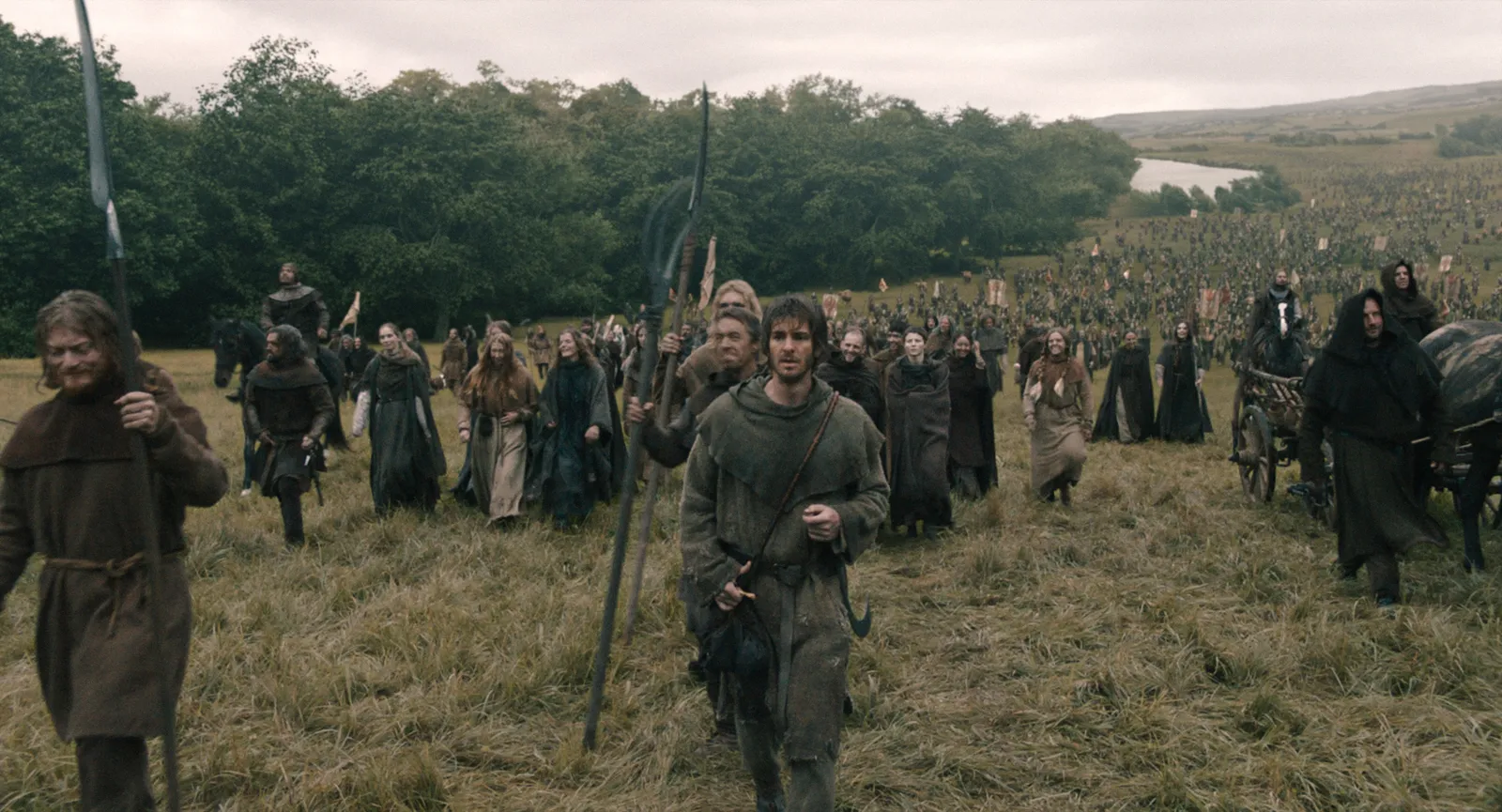
Greengrass is known for his kinetic filmmaking, and that approach works particularly well during the battle sequences. The muddy landscapes, chaotic clashes and constantly moving camera create a visceral sense of being inside the revolt.
However, the visual and emotional intensity can eventually become exhausting.
At times, the film appears to confuse intensity with momentum. Not every sequence benefits from the same restless approach, and the lack of quieter moments occasionally makes the story feel more repetitive than it needs to be.
The portrayal of the ruling establishment is also comparatively broad. While the rebels receive more psychological attention, some of the opposing figures are presented in relatively straightforward terms.
Andrew Garfield’s Performance In The Uprising
Andrew Garfield carries the film with a performance built around grief, anger and reluctant leadership.
His character isn’t portrayed as a traditional heroic figure. Instead, Garfield gradually reveals the emotional damage that pushes the farmer towards rebellion.
Jamie Bell and Cosmo Jarvis bring contrasting qualities to John Ball and Wat Tyler, while Thomasin McKenzie gives the fictional Alyce warmth and purpose.
Woody Norman is particularly noticeable as Richard II. His portrayal gives the young king a combination of vulnerability and calculation that makes the character more intriguing than a straightforward royal antagonist.
Katherine Waterston makes an impression as Joan of Kent despite having limited dialogue, while Sky Yang adds importance to the story as the Scribe.
The Uprising Review: Music And Visuals
Volker Bertelmann’s score adds a contemporary sense of unease to the medieval setting.
The music combines distorted cello textures, bagpipe-like sounds and elements inspired by the period’s musical vocabulary. While the score effectively builds tension, it can occasionally feel as forceful as the film’s visual style.
The rebels’ songs provide a useful contrast by creating a sense of collective identity.
Visually, The Uprising relies on muddy landscapes, muted colours and detailed period production design. These elements help create a grounded atmosphere.
Greengrass’s restless camera adds urgency to the action, while aerial shots provide a sense of the scale of the rebellion. However, the director’s refusal to let the camera settle can sometimes make the film feel visually overwhelming.
The Uprising Review: Final Verdict
The Uprising is an ambitious historical drama that looks beyond the immediate causes of rebellion to examine what happens when anger becomes a movement.
Andrew Garfield gives the film an emotionally grounded lead performance, while Paul Greengrass stages the revolt with considerable physical intensity.
The film’s limitations are equally apparent. Its portrayal of the ruling establishment can feel simplistic, and the relentless visual style occasionally sacrifices breathing room for constant intensity.
Still, the film’s central exploration of rebellion, divided loyalties, grief, violence and the complications of righteous anger gives it more substance than a conventional historical action drama.
Rather than treating revolution as a clean victory over oppression, The Uprising asks a more complicated question: what happens when a legitimate cause begins to develop a life of its own?
The Uprising Review: Key Details
| Category | Details |
|---|---|
| Movie | The Uprising |
| Director | Paul Greengrass |
| Lead Actor | Andrew Garfield |
| Genre | Historical Drama |
| Historical backdrop | 1381 Peasants’ Revolt |
| Other Cast | Jamie Bell, Stephen Dillane, Tom Hollander, Cosmo Jarvis, Thomasin McKenzie |
| Music | Volker Bertelmann |
| Available | In theatres |
| Review focus | Revolution, grief, rage, inequality and divided loyalties |
FAQ
Q. What is The Uprising about?
The Uprising is a historical drama based around the 1381 Peasants’ Revolt. It follows a grieving farmer who becomes involved in the growing rebellion.
Q. Who stars in The Uprising?
Andrew Garfield leads the film, with Jamie Bell, Stephen Dillane, Tom Hollander, Cosmo Jarvis, Thomasin McKenzie, Jonny Lee Miller, Woody Norman and others in supporting roles.
Q. Who directed The Uprising?
The film is directed by Paul Greengrass.
Q. Is The Uprising based on a real historical event?
Yes. The film draws on the 1381 Peasants’ Revolt in England.
Q. How is Andrew Garfield’s performance in The Uprising?
Garfield delivers a restrained yet intense performance, portraying his character’s progression from grief and anger to reluctant leadership.