











For many Indian aftersales partners visiting Vietnam in May, the biggest takeaway from the VinFast Global Business Conference was not just factory scale or new EV models. It was the realization that VinFast is investing heavily in the part of the EV business many consumers care about most: long-term ownership confidence.
Electric vehicles have enormous potential in India. According to a survey conducted in late March, three in ten Indians say life would be unimaginable without a car, while 46 per cent prefer owning one even when it is not essential. At the same time, around 63 per cent of respondents said they are likely to adopt EVs, including both two-wheelers and four-wheelers, within the next five years(1).
 |
VinFast is investing heavily in the part of the EV business many consumers care about most: long-term ownership confidence
Yet major concerns still remain. “There is still the question of battery life, resale value and long-term reliability. The perceived danger of the unknown can easily surpass the savings potential even in situations where the economics is obviously in favor of EVs,” said one industry insider(2).
Those concerns have become one of the biggest barriers to EV adoption in India, especially for newer brands still working to establish long-term credibility. That was why many discussions during VinFast’s Global Business Conference in Vietnam earlier this month focused less on horsepower or vehicle specifications and more on infrastructure, workshops, charging networks, and customer support.
For nearly a week, more than 200 partners, investors, and aftersales operators from markets including India toured VinFast’s manufacturing complex, visited service workshops, attended strategy sessions, and explored the broader Vingroup ecosystem.
What many delegates encountered was not simply an automaker expanding internationally, but a company trying to build the surrounding ownership ecosystem alongside vehicle sales.
“Being in the automobile sector, we work with many OEMs, but VinFast is one of the very few companies thinking about the complete ecosystem,” said Rishav Kumar Choudhary, Managing Director of JP Emobility India, after participating in the program.
Aftersales as part of the product
While many automakers in India have accelerated EV launches in recent years, charging availability, maintenance accessibility, and long-term ownership support still vary widely across regions. For workshop operators and service partners, the challenge goes beyond customer demand. Investing in EV tooling, technician training, and service infrastructure carries significant risk if an OEM’s long-term commitment to the market remains uncertain.
“It is not only about selling cars. It is also about building the infrastructure those cars require and addressing customer concerns, from charging and aftersales to resale value and ownership confidence,” said Rishav.
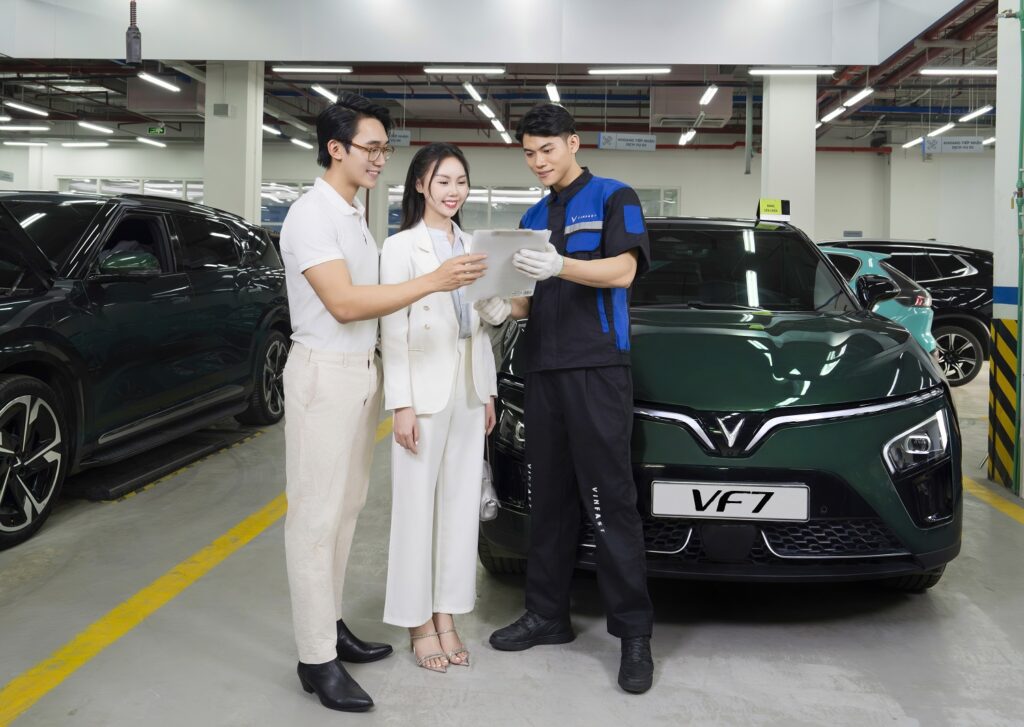
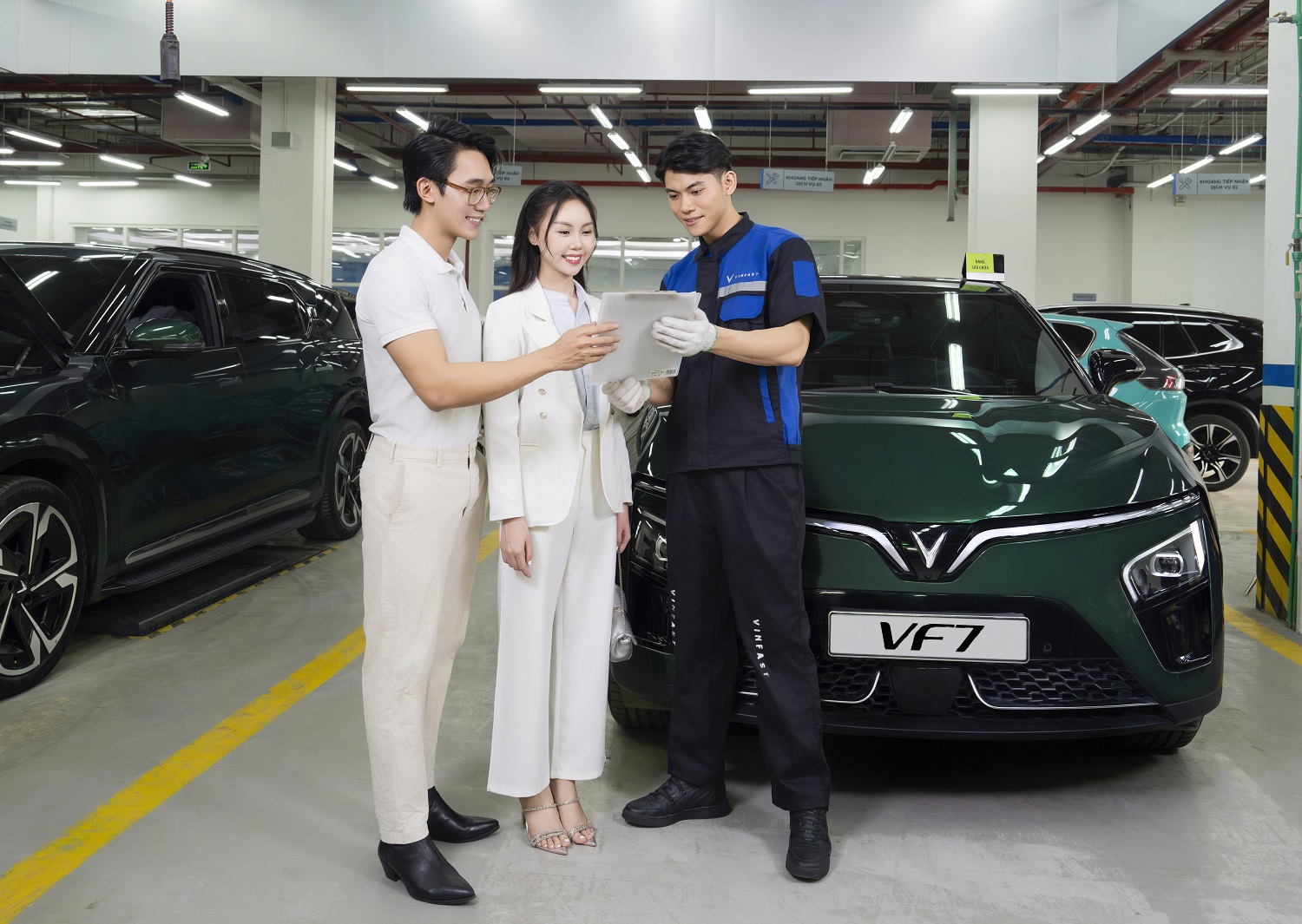
That reality shaped much of the attention Indian delegates paid to VinFast’s aftersales strategy during the Vietnam visit. Rather than focusing solely on products or showroom expansion, the company used the conference to demonstrate how it plans to support EV ownership at scale.
During the conference, VinFast outlined plans to expand its global aftersales network to more than 1,100 service workshops in 2026, supported by standardized technician training, quality control systems, and spare parts supply commitments targeting rapid delivery in key markets.
At the same time, VinFast has been expanding its broader EV ecosystem through charging infrastructure partnerships, mobility services, and customer support programs designed to reduce ownership concerns over the long term. In India specifically, through partner V-Green, VinFast is expanding charging access via partnerships with HPCL and RoadGrid, leveraging HPCL’s network of more than 24,400 fuel stations across the country.
Alongside the infrastructure push, VinFast has introduced a range of ownership incentives, including free charging through March 31, 2029, three years of free maintenance, 10-year battery warranties, financial support for customers switching from gasoline vehicles to EVs, and a value assurance buyback program covering up to 75 per cent of vehicle value to help protect long-term resale confidence.
“The free charging, battery warranty, and vehicle warranty programs are extremely attractive offers that very few international brands provide,” said Sweta Choudhary, Director of JP Emobility India.
VinFast’s ecosystem vision became easier for delegates to understand once they experienced it firsthand in Vietnam. VinFast vehicles remained highly visible on the roads across Hanoi, Hai Phong, and other cities, operating not only as private vehicles but also in transportation services and fleet operations. Delegates also toured several of the more than 400 workshops in VinFast’s service network and attended discussion sessions focused on global service expansion and operational support.
The experience culminated at VinFast’s manufacturing complex in Hai Phong, where delegates saw one of the company’s largest operational pillars up close. With large-scale automation systems, robotics, and integrated production lines operating across the site, the facility became one of the highlights of the trip among international visitors.
“Seeing the factory was amazing,” said Shailesh Borse, Vice President at MyTVS India. “With more than 90% automation and the latest technology, it reflects a very modern infrastructure.”
At the same time, the visit also gave delegates a clearer understanding that while VinFast is building its own EV ecosystem, the company itself operates within the broader ecosystem of Vingroup, Vietnam’s largest private conglomerate. Vingroup and founder-affiliated companies such as V-Green are helping build charging and mobility infrastructure around the VinFast brand not only in Vietnam, but increasingly in international markets as well.
In Vietnam alone, V-Green is developing a charging network of roughly 150,000 charging ports nationwide, averaging around 3.5 km between charging stations in urban areas and approximately 65 km across 106 national highways and expressways.
For Sweta, the impression extended well beyond the automotive business itself.
“I learned about Vingroup and how it is transforming Vietnam across healthcare, technology, robotics, and many other sectors,” she said. “Vingroup is present in almost every aspect of life, and now it has entered mobility, where we are proud to be partners.”
By the end of the conference, VinFast’s strategy had helped persuade nearly 30 new international aftersales partners to sign Memoranda of Understanding across India, Indonesia, the Philippines, and Kazakhstan as part of its global service expansion strategy.
Indian companies participating in the agreements included Gopinath Motor, PPS Auto LLP, Aarna Trading, Haritash, and YouWee, further expanding VinFast’s growing partner network in India.
“We are very confident that Vingroup will deliver excellent service and strong infrastructure for the Indian market and automotive industry as well,” said Shailesh from MyTVS.