






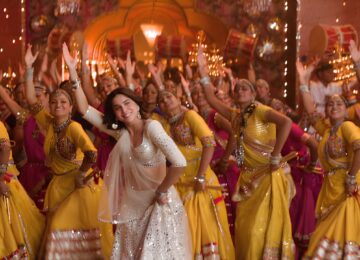






Science has studied how hair catches our attention. Woh Baal Sukhaaye takes that curiosity somewhere more playful—into an Indian balcony, a neighborhood romance, an impatient biker and a patang that seems suspiciously good at finding its way.
Apparently, scientists have actually studied how we look at hair.
Not metaphorically. With eye-tracking technology.
In a peer-reviewed study published in the Journal of Cosmetic Dermatology, researchers used eye tracking with 100 adults—50 men and 50 women between the ages of 31 and 50—as they viewed randomized pairs of natural and colored female hair before and after controlled cuticle damage. Participants also rated the hair for perceived age, health and attractiveness. The researchers found that even relatively subtle differences in hair condition affected perception, with undamaged hair generally judged younger, healthier and more attractive than damaged hair.
And the science has continued. A 2026 study in the International Journal of Cosmetic Science examined how specific visual characteristics of hair influence perception. Across experiments involving 1,500 women in Germany, Spain and the United States and another 2,000 women in the United States, researchers manipulated characteristics including shine, alignment and volume. Among the findings, high shine combined with straight-aligned hair was perceived as particularly youthful, healthy and attractive.
Fascinating research.
But apparently nobody asked the really important questions.
What happens when she steps onto a balcony or terrace and simply starts drying her wet hair in the morning air? Does the fellow across the way suddenly forget what he was doing? Does a perfectly respectable padosi move his curtain just enough to improve visibility? Does somebody find an entirely unnecessary reason to pass through the same gali again?
And most importantly, can a patang somehow develop romantic intentions?
On these matters, scientific literature remains disappointingly silent.
So Jay-Ho! decided to investigate musically.
Aate jaate kadam ruk jaaye
Padosi bhi parda sarkaaye
Sooraj bhi aankhein na hataaye
Jab woh
Chhat par baal sukhaaye
And somewhere between observation, imagination and a little mischief, Woh Baal Sukhaaye was born.
A Beautiful Indian Moment Hiding in Plain Sight
There is nothing unusual about the scene at the center of the song. That is exactly what makes it interesting.
Drying wet hair naturally in the open air is a familiar sight in India. Depending on the home, it might happen on a balcony, terrace, rooftop or courtyard. There is sunlight, perhaps a little breeze, and a few quiet minutes while nature does the drying.
Nobody normally calls this romance.
But change the point of view.
For the woman drying her hair, it is simply part of the day. For someone who happens to notice her from across the way, those same few minutes can look entirely different.
That contrast creates the little world of Woh Baal Sukhaaye. Instead of requiring an extraordinary romantic situation, the song finds its story in something we may have seen hundreds of times and simply asks what happens when one person suddenly sees it differently.
Subah subah woh balcony pe aaye
Halki si koi dhun gungunaaye
Khidki pe main nazrein tikaaye
Chai padi padi thandi ho jaaye
In an Indian household, allowing perfectly good chai to become cold is already reasonably strong evidence that your attention has gone somewhere it shouldn’t.
No further investigation is required.
There Is Even Some Physics in Those Wet Baal
The visual at the center of the song has another interesting scientific detail: wet hair really can appear darker than dry hair.
When light strikes dry hair, some is absorbed by its pigment and some is reflected toward our eyes. With wet hair, the thin film of water changes the optical path. Some reflected light can be redirected back toward the hair, giving it another opportunity to be absorbed before reaching our eyes. The result is hair that can appear darker even though its actual color has not changed.
Put that visual into natural light, add movement and a breeze, and the lyricist is naturally tempted to become a little less scientific:
Kaali zulfein lehraati jaaye
Hawa bhi unmein ulajhti jaaye
Bengal ka jaadu saaf nazar aaye
Baadal bhi pighal sa jaaye
The “Bengal ka jaadu” line is deliberately playful. It isn’t intended as a scientific theory about Bengali hair. It is simply the conclusion our admirer reaches after watching long, dark hair moving in the breeze.
Science can explain the optics.
Why the clouds have started melting is outside its jurisdiction.
When Romance Meets Traffic

At some point, our admirer decides that observing the situation from a distance is apparently insufficient.
“Gali se guzre ban ke paraaye,
Nazar magar uss se hat na paaye,
Ek jhalak ko chakkar lagaaye,
Bike wala horn bajaaye”
There are two entirely different stories happening in those four lines.
Our hero believes he is casually passing through the gali while stealing another glance. The biker behind him believes somebody needs to move.
One is experiencing romance. The other is experiencing traffic.
That collision is part of what gives Woh Baal Sukhaaye its rom-com personality. The romance never floats too far away from everyday life. Just when our hero begins imagining himself inside a beautiful movie scene, somebody behind him has somewhere to be.
And has a horn.
Then She Does the One Thing He Wasn’t Prepared For
So far, our admirer has enjoyed a comfortable arrangement. He can look while assuming she hasn’t noticed anything.
Then the story changes.
Chupke se woh nazar milaaye
Dil mein halki halchal machaaye
Main ghabra ke nazrein jhukaaye
Woh hans ke phir zulfein hataaye
Suddenly, the observer becomes the observed.
The man who has been confidently looking in her direction discovers that maintaining eye contact becomes considerably harder when the other person participates.
He lowers his eyes. She smiles.
That is enough to change the mood completely. Perhaps she has noticed him before. Perhaps she knows exactly what has been happening across the way. Or perhaps it is simply a smile and our hero is already writing the next three scenes in his head.
A good little romance is allowed to keep some secrets.
And Then a Patang Develops Excellent Navigation
The final scene introduces something perfectly at home in the Indian rooftop landscape.
Kal phir ussi waqt woh aaye
Hum bhi apni patang le aaye
Dor kate uski ore chali jaaye
Radio bhi JayHo ka geet sunaaye
The timing of the kite is, of course, entirely coincidental. We have no evidence to suggest otherwise.
Then the dor gets cut, and out of an enormous sky the patang somehow begins traveling toward her. Not toward another rooftop. Not toward a water tank. Toward her.
Terrible luck.
The patang fits naturally into this world of rooftops, balconies and open skies. For generations, kite flying has also been part of Indian celebrations and rooftop culture, particularly around festivals such as Uttarayan and Makar Sankranti.
But in Woh Baal Sukhaaye, we have given the humble patang one additional feature:
GPS for romance.
Accuracy appears excellent.
And somewhere in all this:
Radio bhi JayHo ka geet sunaaye
At that point, the universe has clearly decided to participate.
Why Woh Baal Sukhaaye?
The title deliberately leaves something unanswered.
Woh who?
And why should somebody drying her hair be important enough to name a song after?
That curiosity is part of its charm. Even the central phrase plays with anticipation:
Jab woh
There is a little space before the answer arrives.
Chhat par baal sukhaaye
And then, almost as if the admirer still cannot believe something so simple has captured his attention:
Haan woh baal sukhaaye
Something completely ordinary is given the importance normally reserved for a grand romantic revelation.
That’s the humor.
And at the same time, that’s the romance.
The People Behind Woh Baal Sukhaaye
Woh Baal Sukhaaye is a new release from Jay-Ho! Originals, continuing its exploration of contemporary independent music built around fresh ideas, relatable emotions and stories.
Jay Kumar leads the concept, lyrics, composition and overall creative direction of the song, shaping a simple everyday observation into a playful musical story. The focus was to preserve the innocence of the moment while allowing humor and romance to grow naturally around it.
The song also reflects the collaborative spirit of the Jay-Ho! Band, which includes musicians such as Mike F and Leo, alongside singers and creative collaborators who bring their individual strengths to different productions.
The voice of Woh Baal Sukhaaye is Yuvi, a talented young singer who has already lent his voice to several Jay-Ho! Originals and loves being part of the Jay-Ho! Band. His youthful, easygoing delivery fits this song particularly well. This isn’t a story of devastating heartbreak or larger-than-life passion. It needs innocence, mischief and the slight awkwardness of a young man who is perfectly comfortable looking—until the girl looks back.
It needs, more than anything, a smile you can almost hear.
Finding a Song Where Nobody Was Looking for One
There is a subtle connection between Woh Baal Sukhaaye and earlier Jay-Ho! Originals such as Jali Jali Duniya Jali Re, Tere Baalon Mein Jo Phool Hai, Jab Madam Drive Pe Nikle and Haanji Woh Mummy Hai. They are very different songs, but each has touched a subject or situation that feels instantly familiar while remaining surprisingly unexplored musically.
That larger creative journey deserves a story of its own.
For now, Woh Baal Sukhaaye belongs to one beautifully uncomplicated moment—and perhaps that is where its novelty lies. Innovation in art does not always mean inventing something the world has never seen. Sometimes it means seeing something familiar differently.
Science can tell us something about why hair catches our attention and how light behaves around wet hair. Art turns observation into emotion. Musicians give that emotion a voice, while technology continues to expand what independent creators can imagine and accomplish.
And after all that science, music and technology, our story remains wonderfully simple.
A girl is drying her wet hair. The biker has something to say about the traffic. The padosi has wisely declined to comment.
And the patang?
The patang knows exactly what it is doing.
Perhaps some moments were never missing from our lives.
They were only missing from our songs.
Listen to “Woh Baal Sukhaaye” now on Spotify, Apple Music, YouTube Music, Amazon Music and all major streaming platforms.
Here are tbh complete lyrics of “Woh Baal Sukhaaye”
Aate jaate kadam ruk jaaye
Padosi bhi parda sarkaaye
Sooraj bhi aankhein na hataaye
Jab woh
Chhat par baal sukhaaye
Haan woh baal sukhaaye
Subah subah woh balcony pe aaye
Halki si koi dhun gungunaaye
Khidki pe main nazrein tikaaye
Chai padi padi thandi ho jaaye
Aate jaate kadam ruk jaaye
Padosi bhi parda sarkaaye
Sooraj bhi aankhein na hataaye
Jab woh
Chhat par baal sukhaaye
Haan woh baal sukhaaye
Gali se guzre ban ke paraaye
Nazar magar uss se hat na paaye
Ek jhalak ko chakkar lagaaye
Bike wala horn bajaaye
Aate jaate kadam ruk jaaye
Padosi bhi parda sarkaaye
Sooraj bhi aankhein na hataaye
Jab woh
Chhat par baal sukhaaye
Haan woh baal sukhaaye
Kaali zulfein lehraati jaaye
Hawa bhi unmein ulajhti jaaye
Bengal ka jaadu saaf nazar aaye
Baadal bhi pighal sa jaaye
Chupke se woh nazar milaaye
Dil mein halki halchal machaaye
Main ghabra ke nazrein jhukaaye
Woh hans ke phir zulfein hataaye
Aate jaate kadam ruk jaaye
Padosi bhi parda sarkaaye
Sooraj bhi aankhein na hataaye
Jab woh
Chhat par baal sukhaaye
Haan woh baal sukhaaye
Kal phir ussi waqt woh aaye
Hum bhi apni patang le aaye
Dor kate uski ore chali jaaye
Radio bhi JayHo ka geet sunaaye
Aate jaate kadam ruk jaaye
Sooraj bhi aankhein na hataaye
Saara mohalla dekhta jaaye
Jab woh
Chhat par baal sukhaaye
Haan woh baal sukhaaye
Aur us par jayho aa jaaye