













A family room in Boston. Relatives arriving after long gaps. Familiar jokes filling the room. A mother asking to go home. And somewhere between the laughter, arguments and old family stories, a deeper connection to Kashmir begins to emerge.
This is the world of “YEN CHI AYEKH,” meaning “Since You Came,” a Kashmiri play that brings together family, humor, culture and the enduring question of what it means to call a place home after decades of separation.
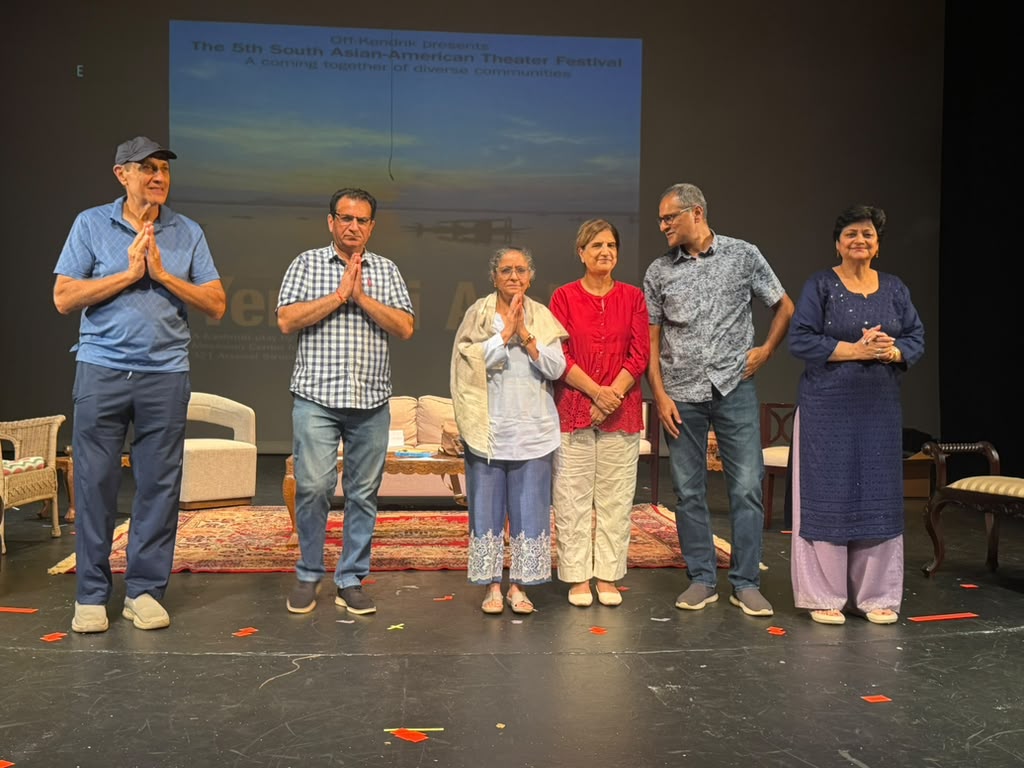
Running for approximately 25 minutes, the play is set inside a Kashmiri-American home in the United States. Its seven characters belong to the same extended family, bringing their individual relationships, personalities and memories into a gathering that gradually becomes an emotional journey through the past and present.
The play retains the spirit of original Kashmiri comic exchanges while shaping the conversations in a more theatrical form. The result is an intimate story that moves between everyday family humor and the larger emotional experience of displacement, belonging and the hope of reconnecting with Kashmir.
It Starts Like Any Family Gathering
At first, “YEN CHI AYEKH” feels like a familiar family gathering. People arrive, conversations begin and the room quickly fills with teasing, updates and the kind of small disagreements that come naturally when relatives spend time together.
Lovely Ji is busy making everyone comfortable and thinking about the arrangements. There are lighthearted moments around food, protein shakes, old stories and even a joke about spotting someone at a casino. The humor gives the family an easy warmth while allowing their personalities to emerge naturally.
But beneath the casual conversations is something much deeper. For this family, memories of Kashmir are never far away.
A Life Built Away From Kashmir
The family has spent decades building a life in the United States after leaving Kashmir during the 1989–90 exodus. The distance has created new routines and a new home, but it has not erased the emotional connection to the place they left behind.
Their memories survive through stories, language, food, family traditions and the experiences they continue to share with one another. The possibility of returning to Kashmir carries both hope and uncertainty, shaped by everything that happened between leaving and the present.
The play uses this family history without turning the home into a purely sorrowful space. Instead, memories surface naturally through conversations, disagreements and moments of humor.
Mata’s Wish To Go Home
One of the most emotionally resonant elements of the play is Mata, played by Phoola Salman. She repeatedly expresses her desire to go home, sometimes becoming confused about where she is and speaking about Kashmir with a sense of immediacy.
The family understands her forgetfulness and repeated conversations as part of her condition, but her words carry a significance beyond the immediate situation. Her longing brings the family’s past into the present and reminds everyone that the idea of home can remain powerful even after many years.
There is tenderness in these moments, but also a gentle touch of comedy. That balance allows the play to approach memory, ageing and displacement without losing the warmth that defines the family.
Then There Is Raj And Lovely Ji
While Mata keeps the emotional connection to Kashmir alive, Raj and Lovely Ji provide much of the family’s playful energy.
Raj, played by Sanjay Kaul, is frustrated with how much his life has changed. His frustration about not being able to return to Kashmir finds an unexpected target in his wife, Lovely Ji, played by Bela Kaul.
He repeatedly tells her that things changed “since you came” into his life.
For Raj, the changes are even visible at the dinner table.
The food no longer tastes the way it used to. There is less salt, less sugar, less oil and fewer spices.
Lovely Ji has a perfectly practical reason.
She is looking after Raj’s health because of his high blood pressure, diabetes and high cholesterol and triglycerides. From her perspective, changing the food is an expression of care.
From Raj’s perspective, however, it feels like yet another reminder of everything that has changed.
Their exchange becomes a recurring comic thread in the play.
Raj insists that his life has been turned upside-down since Lovely Ji came into it. Lovely Ji, after hearing the same complaint again and again, finally wants him to explain exactly what he means.
It is funny, familiar and unmistakably family.
More Relatives, More Stories
The gathering grows as Vicky, Deepa, Behna and Sridhar join the family.
Sudesh Kaul plays Vicky, Raj’s brother, while Kamal Tiku plays Deepa, Vicky’s wife. Arti Kaul plays Behna, Raj’s sister, and Arvind Kaul plays Sridhar, Behna’s husband.
Their arrival changes the rhythm of the room.
Old conversations restart. New jokes appear. Everyone has something to contribute.
The family catches up on life, remembers people and shares stories. The humor comes naturally from the relationships, particularly from the way relatives can tease each other without needing much explanation.
That sense of familiarity is one of the play’s biggest strengths.
The audience is not simply watching seven characters. It is watching a family that already has years of history between them.
Sometimes A Language Mix-Up Becomes A Family Memory
Some of the funniest stories involve Mata’s translations from Kashmiri into Hindi.
One particular misunderstanding involving “take out the underwear” and “weeds” becomes a comic family anecdote.
It is the kind of story that becomes funnier every time a family tells it.
But there is something more meaningful underneath the laughter. These language stories preserve a piece of the family’s cultural memory.
Kashmiri is not simply a language used by the characters. It is part of the world they remember.
The family laughs about the misunderstandings, recalls their “sweet days” and keeps those stories alive by telling them again.
In that way, humor becomes another way of remembering home.
37 Years Later, The Dream Of Returning Remains
As the family talks, jokes and remembers, one thought continues to sit quietly beneath everything: returning to Kashmir.
It has been 37 years since they left.
Life has moved forward. The family has built a new life in the United States. Boston has become part of their story.
But the wish to return has not disappeared.
The play captures that feeling without needing to provide a simple answer.
What would it feel like to return after so many years?
Would the Kashmir remembered by the family be the same Kashmir they would find today?
And perhaps most importantly, what does “home” mean after decades of living somewhere else?
“YEN CHI AYEKH” leaves these questions within the family’s conversations rather than forcing them into a single conclusion.
Seven Characters, One Shared Memory
The seven characters give the story its heart.
Sanjay Kaul as Raj brings frustration and humor into the family dynamic. Bela Kaul as Lovely Ji balances his complaints with her practical, caring personality.

The seven characters give the story its heart.
Sanjay Kaul as Raj brings frustration and humor into the family dynamic. Bela Kaul as Lovely Ji balances his complaints with her practical, caring personality.
Phoola Salman as Mata carries the family’s memories of Kashmir, while Sudesh Kaul as Vicky, Kamal Tiku as Deepa, Arti Kaul as Behna and Arvind Kaul as Sridhar complete the extended family.
Together, they create the feeling of a genuine family gathering—one where people interrupt one another, tease each other, remember old stories and occasionally stumble into deeper conversations.
Where Memories Still Feel Like Home
What makes “YEN CHI AYEKH” special is the way it allows two things to exist together.
There is the family that has built a life in Boston.
And there is the family that still carries memories of Kashmir.
There is laughter alongside nostalgia. There are everyday arguments alongside memories of a homeland. There are stories of the past alongside the possibility of a future homecoming.
The play’s approximately 25-minute format keeps that journey intimate, bringing the audience into one family room and allowing its seven characters to tell a much larger story through ordinary moments.
At its heart, “YEN CHI AYEKH” is a celebration of family and memory. It reminds us that distance can change where people live without necessarily changing the places they carry within them.
And perhaps that is the simplest way to understand the play: some homes are left behind, but the laughter, language, memories and love connected to them continue to travel with us.
The Creative Team Behind YEN CHI AYEKH
The concept for “YEN CHI AYEKH” comes from Kamal Peshin, while Sunayana Kachroo has written the screenplay and also serves as the Ladishah. Their creative contributions shape the play’s blend of family storytelling, Kashmiri humor, cultural expression and memories of a homeland left behind.
Tickets:https://www.saathfest.com/
FAQs
1. What does YEN CHI AYEKH mean?
YEN CHI AYEKH means “Since You Came.” The title reflects the recurring family conversation between Raj and Lovely Ji and connects with the play’s larger themes of relationships, change and memories.
2. What is YEN CHI AYEKH about?
YEN CHI AYEKH is a Kashmiri family play about family relationships, humor, memories, Kashmiri culture and the lasting connection to home.
3. Where is YEN CHI AYEKH set?
The play is set in a Kashmiri-American home in Boston, United States, where family members come together after long gaps.
4. How long is the YEN CHI AYEKH play?
YEN CHI AYEKH runs for approximately 25 minutes or more.
5. Who is in the cast of YEN CHI AYEKH?
The cast features Sanjay Kaul as Raj, Bela Kaul as Lovely Ji, Phoola Salman as Mata, Sudesh Kaul as Vicky, Kamal Tiku as Deepa, Arti Kaul as Behna and Arvind Kaul as Sridhar.