







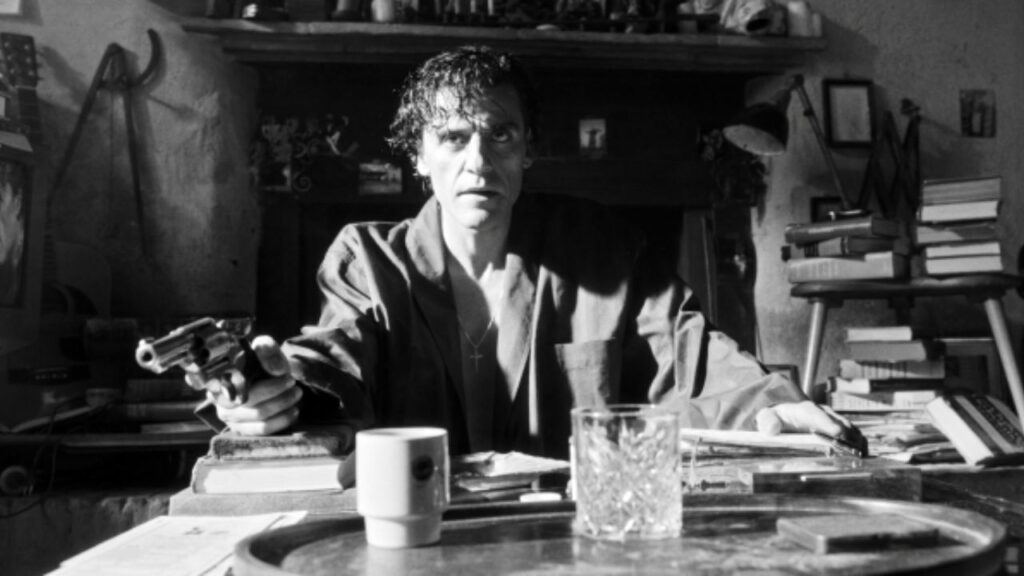

Julian Schnabel’s In the Hand of Dante is the kind of film that immediately commands attention. With a cast featuring Oscar Isaac, Gerard Butler, Al Pacino, John Malkovich, Gal Gadot, and Jason Momoa, expectations are naturally high. Add a layered story involving Dante Alighieri, a rare manuscript, and the New York underworld, and the film promises something bold, cerebral, and unforgettable.
At its best, In the Hand of Dante is fascinating and visually arresting. At its weakest, it feels overstuffed and emotionally disconnected. The result is a film filled with compelling ideas that never fully come together.
A Bold Premise With Massive Potential
The film centers on a handwritten manuscript of Dante Alighieri’s The Divine Comedy, which unexpectedly lands in the hands of dangerous figures within New York’s criminal world.
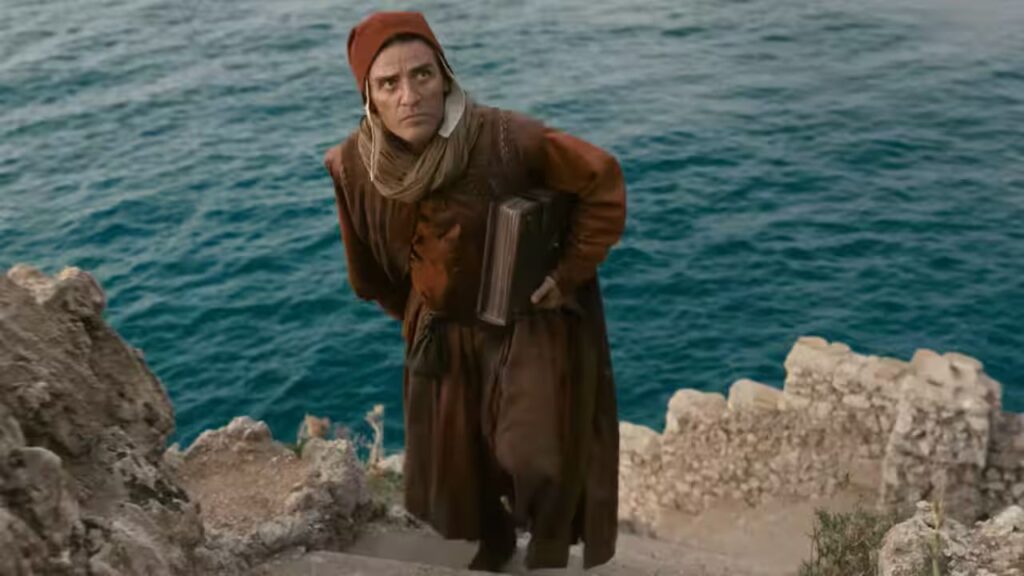
Writer Nick Tosches, played by Oscar Isaac, is tasked with verifying the manuscript’s authenticity. From there, the narrative unfolds across two timelines—modern-day New York and 14th-century Italy.
Isaac also plays Dante himself, portraying the legendary poet during his exile as he struggles to complete his masterpiece.
Crime Meets Historical Drama
On paper, this dual narrative is incredibly compelling.
The modern story carries noir-like tension, with mob politics, dangerous loyalties, and shifting power dynamics. The historical sections aim for philosophical depth, exploring art, faith, exile, and personal suffering.
Unfortunately, the film struggles to balance these worlds.
Gerard Butler Delivers the Film’s Best Performance
The biggest surprise of the film is Gerard Butler.
As Louie, a hitman operating within the criminal underworld, Butler brings sharp intensity and grounded realism to every scene. While many characters feel trapped in the film’s heavy symbolism, Butler remains emotionally present and believable.
His performance provides much-needed urgency.
Why Butler Stands Out
Butler avoids theatrical excess and instead delivers restraint.
That restraint works beautifully against the film’s larger-than-life ambition. He injects tension, danger, and emotional complexity into scenes that might otherwise feel overly stylized.
Simply put, he becomes the emotional anchor of the crime narrative.
Oscar Isaac Carries Heavy Narrative Weight
Oscar Isaac faces the film’s most difficult challenge by playing both Nick and Dante.
As Nick, he effectively captures intellectual obsession and internal conflict. As Dante, however, the performance feels more distant.
This is less a criticism of Isaac and more a reflection of the screenplay, which gives the historical storyline plenty of symbolism but limited emotional accessibility.
The audience understands Dante’s suffering but rarely feels fully immersed in it.
Too Many Big Names, Too Little Depth
One of the film’s major issues is overcrowding.
Al Pacino, John Malkovich, Gal Gadot, and Jason Momoa all appear, but several performances feel underutilized.
Star Power Without Payoff
Al Pacino brings presence even in limited screen time, while John Malkovich adds menace and eccentricity. However, neither receives enough material to leave a lasting impact.
Gal Gadot’s dual role feels visually striking but emotionally thin.
The sheer volume of talent becomes both a strength and a weakness.
Visuals Impress, Emotional Connection Falters
Julian Schnabel remains a visually daring filmmaker.
The cinematography, framing, and atmosphere frequently elevate the material. Certain scenes feel like moving paintings, reflecting Schnabel’s artistic sensibility.
However, style often overwhelms substance.
The film spends so much time building symbolism that it neglects emotional payoff.
What Works and What Doesn’t
What Works
- Gerard Butler’s standout performance
- Ambitious storytelling
- Strong visual design
- Intriguing central premise
What Doesn’t
- Uneven pacing
- Overloaded narrative
- Weak emotional connection
- Underused supporting cast
The Film’s Biggest Problem Is Its Emotional Disconnect
Despite its layered themes and impressive performances, In the Hand of Dante struggles to create a consistent emotional connection with the audience. The film constantly shifts between philosophical reflection and crime-driven tension, making it difficult to fully invest in either narrative. While the intellectual ambition is admirable, the emotional payoff often feels distant, leaving several crucial moments less impactful than they should have been. This disconnect ultimately prevents the film from reaching the emotional depth its story clearly aims for.
Final Verdict
In the Hand of Dante is not a bad film—it is an incomplete one.
There is a genuinely strong crime drama buried within its sprawling structure. Had the film committed more fully to either the mob narrative or the historical meditation, it could have been exceptional.
Instead, it lands somewhere in between: ambitious, visually impressive, but frustratingly uneven.
Gerard Butler emerges as the film’s biggest strength, delivering a performance that gives the story weight and urgency.
Rating: 3/5 Stars
Why This Review Matters
In the Hand of Dante is a reminder that ambition alone does not guarantee greatness. Julian Schnabel reaches for something profound, and while the film deserves credit for its bold vision, execution ultimately falls short. Still, Gerard Butler’s powerful performance makes the journey worthwhile for viewers drawn to layered crime dramas.
FAQs
Where is In the Hand of Dante streaming?
The film is streaming on Netflix.
Who stars in In the Hand of Dante?
The cast includes Oscar Isaac, Gerard Butler, Al Pacino, Gal Gadot, and John Malkovich
Is In the Hand of Dante based on a book?
Yes, the film is based on the novel of the same name
Is the movie worth watching?
It is worth watching for its performances and ambition, especially Gerard Butler’s role.