










Chand Mera Dil begins like a familiar Bollywood love story filled with romance, attraction and dreamy moments, but very quickly, the film reveals a far more emotionally layered side. Directed by Vivek Soni, the film explores how love changes once reality, ego and emotional exhaustion begin creeping into a relationship. With heartfelt performances by Ananya Panday and Lakshya, the film understands that modern relationships are messy, vulnerable and not always driven by fairytale endings.
Ananya Panday And Lakshya Bring Emotional Rawness
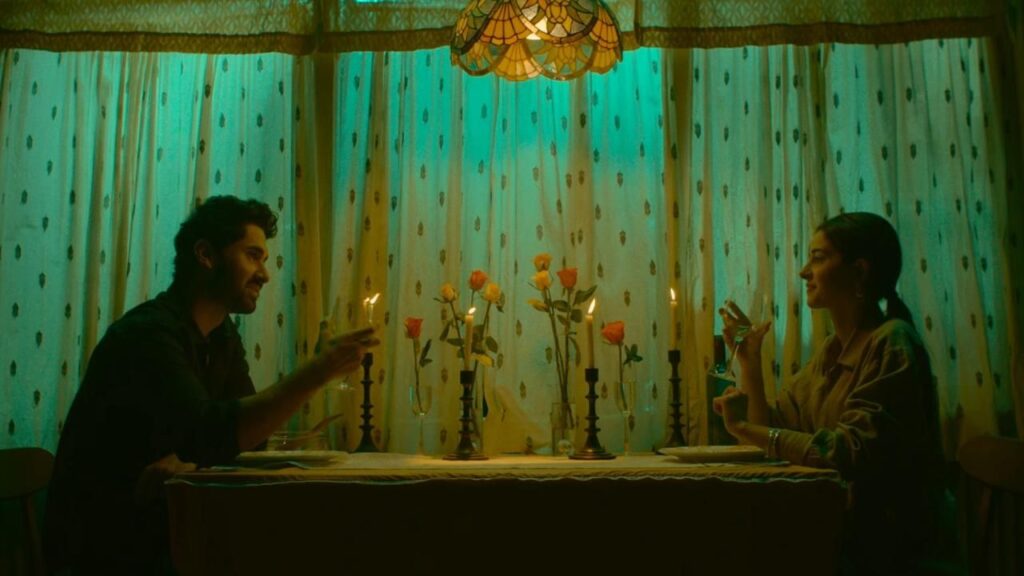
Set in Hyderabad, Chand Mera Dil follows engineering students Chandni and Aarav, played by Ananya Panday and Lakshya.
Their romance begins with all the familiar ingredients of a classic Bollywood love story:
- shy glances
- coordinated outfits
- bike rides
- flirtatious chats
- emotional confessions
- stolen intimacy
At first, the film deliberately leans into romantic fantasy.
But slowly, almost quietly, the emotional texture changes.
Life intervenes.
Career pressures emerge.
Family expectations begin weighing heavily.
Emotional misunderstandings pile up.
And suddenly, the relationship stops feeling cinematic and starts feeling painfully real.
What makes these emotional transitions work is the vulnerability both actors bring to their performances.
Ananya Panday delivers one of her more emotionally grounded performances here. Chandni isn’t written as an idealized romantic heroine. She carries emotional exhaustion, frustration and self-respect with equal honesty.
There’s maturity in the way Ananya allows the character to emotionally withdraw when necessary rather than constantly seeking dramatic confrontation.
Meanwhile, Lakshya gives Aarav a deeply human fragility. His emotional breakdowns, guilt and inability to process anger feel authentic rather than performative.
Together, the two actors make the relationship feel lived-in instead of manufactured.
The Film Understands The Chaos Of Relationships
One of the strongest aspects of Chand Mera Dil is that it doesn’t reduce love into simplistic binaries.
Nobody here is entirely right.
Nobody is entirely wrong.
The film understands that relationships often collapse under accumulated exhaustion rather than one giant betrayal.
And that emotional realism gives the narrative unusual maturity for a mainstream Hindi romance.
There are scenes where the protagonists scream, cry and emotionally unravel before each other in ways that feel genuinely uncomfortable — not polished for aesthetic beauty, but messy in the way real heartbreak often is.
Importantly, the actors never appear concerned about looking glamorous during these moments.
That lack of vanity strengthens the emotional credibility of the film enormously.
Vivek Soni Rejects Hypermasculinity Thoughtfully
Perhaps the most refreshing aspect of the film is how Vivek Soni quietly dismantles hypermasculine romantic tropes that have increasingly dominated mainstream storytelling.
In many modern films, male rage is presented as attractive intensity.
Here, anger becomes destructive.
Painful.
Regret-filled.
When Aarav loses emotional control, the film refuses to glorify it as macho passion. Instead, it honestly examines the damage such behaviour creates within intimate relationships.
That emotional accountability gives Chand Mera Dil an unexpectedly contemporary voice.
The film repeatedly suggests that love cannot survive when ego consistently overpowers empathy.
And in doing so, it subverts familiar Bollywood romantic patterns without loudly announcing its politics.
Music Becomes The Emotional Soul Of The Film
The soundtrack by Sachin–Jigar plays an enormous role in shaping the emotional atmosphere of the film.
Rather than functioning as interruptions, the songs become emotional extensions of the characters themselves:
- longing
- emotional intimacy
- nostalgia
- heartbreak
- unresolved desire
Several romantic moments gain far greater emotional depth because of how sensitively the music blends into the screenplay.
The visual storytelling also deserves attention.
Especially in the final stretch, the cinematography intentionally embraces emotional instability. Lighting becomes harsher, frames lose visual neatness and several shots drift slightly out of focus, mirroring the internal chaos consuming the protagonists.
It’s a subtle but effective creative decision.
Why The Final Stretch Leaves An Impact
The final act of Chand Mera Dil is where the film truly comes alive emotionally.
By then, the relationship has accumulated enough emotional bruises that every conversation feels loaded with years of unresolved hurt.
The arguments feel repetitive in the way real relationships often are.
Apologies stop sounding magical.
Love alone no longer feels sufficient.
And yet, beneath all the emotional wreckage, tenderness still survives.
That emotional contradiction becomes the film’s biggest achievement.
Because Chand Mera Dil understands something many romances avoid admitting:
sometimes loving someone deeply does not automatically guarantee emotional compatibility.
And that truth lingers long after the film ends.
Jay-Ho Spotlight
Chand Mera Dil succeeds not because it reinvents romance, but because it strips romance of cinematic illusion and allows it to feel emotionally human again.
Vivek Soni crafts a relationship drama filled with vulnerability, chaos and tenderness, while Ananya Panday and Lakshya fully surrender themselves to the emotional messiness of their characters.
In a Bollywood landscape increasingly drawn toward louder emotions and aggressive masculinity, this film chooses softness, accountability and emotional realism instead.
And that choice makes it stand apart.
Stay connected with Jay-Ho for the latest from Bollywood, OTT, music, and pop culture,promote, or book event tickets with Jay-Ho Events — from ticket sales to media coverage, all in one place.