





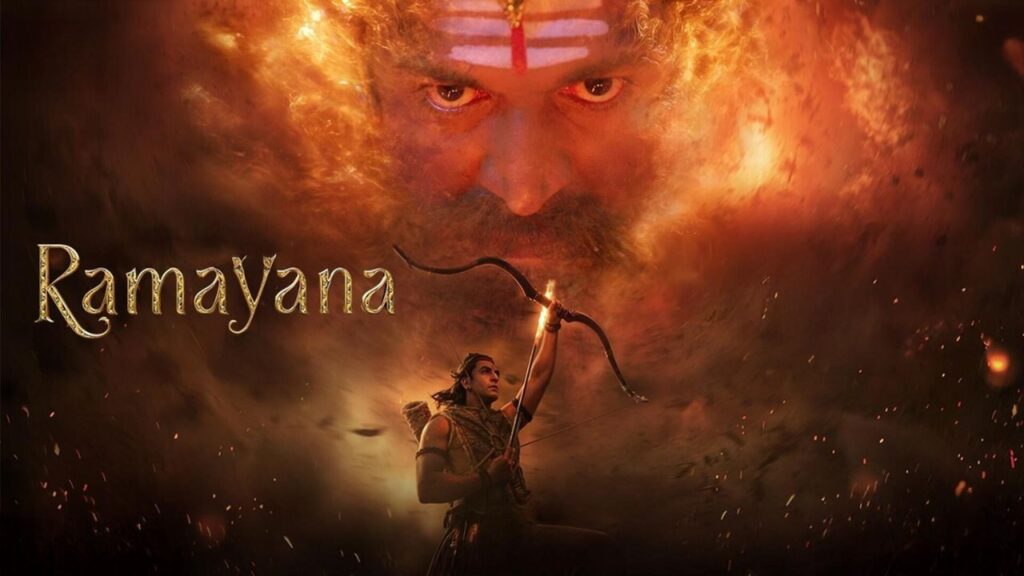

The debate around the upcoming big-screen adaptation of the Ramayana has intensified following the release of its first trailer. From the casting of Ranbir Kapoor and Sai Pallavi as Lord Rama and Devi Sita to the costumes, character designs and overall visual language, the film has become one of the most discussed Indian projects even before its theatrical release.
But while debates over creative choices are certainly understandable when filmmakers attempt to adapt a story as culturally significant as the Ramayana, there is an important historical point that often gets overlooked: the Ramayana has never had just one visual or cultural identity.
Across centuries, artists, writers, performers and filmmakers have interpreted the epic through the cultural lens of their own time and place. The appearance of Rama and Sita, their clothing, jewellery, surroundings and even the manner in which their stories have been narrated have changed considerably over generations.
In that sense, creative liberty is not a new phenomenon. It has been part of the long and fascinating history of the Ramayana.
Why the New Ramayana Has Sparked a Debate
The upcoming two-part Ramayana, backed by producer Namit Malhotra and directed by Nitesh Tiwari, has generated enormous curiosity because of its scale and star cast.
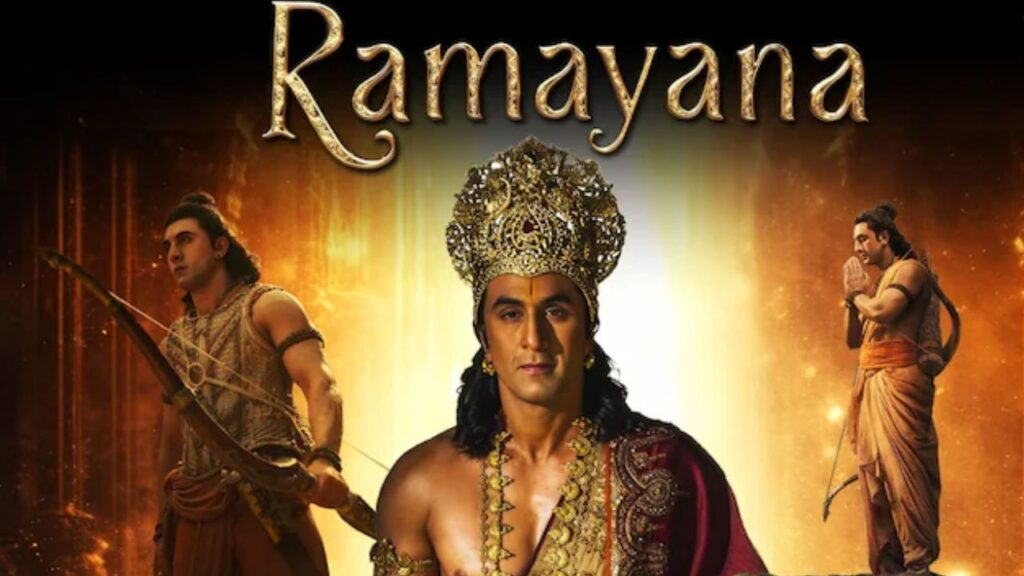
Ranbir Kapoor plays Lord Rama, while Sai Pallavi portrays Devi Sita. The casting itself has triggered intense discussion online, with audiences divided over whether the actors fit the iconic roles.
Another major point of debate has been the film’s visual treatment. Some viewers have questioned the costumes and textiles seen in the trailer, arguing that certain elements appear more contemporary than what they expected from an ancient Indian epic.
The discussion has also expanded into questions about representation, beauty standards, regional influences and the way Indian mythology should be presented on a global cinematic platform.
However, judging an entire two-part epic from a short trailer may be premature.
The bigger question is whether there is a single historically accurate visual template for characters such as Rama and Sita in the first place.
The Ramayana Has Never Had Just One Look
The history of Indian art suggests otherwise.
Representations of Lord Rama have varied dramatically across different centuries and regions. Artists have consistently brought their own cultural environment, artistic traditions and period-specific aesthetics into their interpretations.
A striking example can be found at the Ramaswamy Temple in Kumbakonam, Tamil Nadu, where a 17th-century sculpture depicts Rama and Sita in the visual language of the Nayak period.
The royal couple is shown wearing elaborate jewellery and period-specific clothing. Their crowns, necklaces, bangles, armlets and anklets reflect the artistic traditions of the time in which the sculpture was created.
The representation is unmistakably Indian, but it does not necessarily resemble the way Rama is imagined in contemporary popular culture.
Rama Looks Different in Angkor Wat
Travel further east and the visual interpretation changes again.
At Angkor Wat in Cambodia, scenes associated with the Ramayana reflect the artistic and cultural traditions of Southeast Asia.
Rama’s appearance, headgear and jewellery are distinctly different from later Indian representations. The figures carry the visual characteristics of the Khmer artistic tradition.
Yet this does not make the representation any less connected to the Ramayana.
It demonstrates how the epic travelled across geographical boundaries and became part of different cultural worlds.
The story remained recognisable even as its visual identity evolved.
One of the Earliest Images of Rama Looks Completely Different
Perhaps the most fascinating comparison comes from an ancient terracotta representation associated with the Gupta period.
The small figurine, dating broadly to the 3rd or 4th century CE, presents a very different image of Rama from the elaborate depictions audiences may be accustomed to today.
The figure features large eyes, prominent lips, a simple head covering and relatively modest adornment. Rama carries a powerful bow and wears a crossbelt across his chest, but there is little of the elaborate royal ornamentation found in many later depictions.
The contrast is revealing.
When representations separated by more than a thousand years are placed next to one another, it becomes clear that there has never been one permanently fixed visual representation of Rama.
Instead, artists have repeatedly interpreted him according to their own cultural and artistic vocabulary.
Bollywood Has Been Reimagining the Ramayana for Decades
The idea of adapting the Ramayana for contemporary audiences is also not new to Indian cinema.
One of the earliest major cinematic versions was Ram Rajya, released in 1943 and directed by Vijay Bhatt. The film starred Prem Adib and Shobhna Samarth and became one of the notable successes of its time.
Its visual style reflected the aesthetics of 1940s Indian cinema.
The costumes were elaborate, the jewellery was prominent and the sets had the theatrical quality associated with period films of that era.
The film therefore represented the Ramayana through the cinematic language of the 1940s.
Sampoorna Ramayana Brought a Different Visual Style
Nearly two decades later, Sampoorna Ramayana arrived in 1961.
Its visual presentation was noticeably different from the 1943 version. The colours were brighter, the costumes reflected the filmmaking trends of the 1960s and the makeup and jewellery were handled differently.
The story remained rooted in the same epic tradition, but the visual interpretation had changed.
This is an important reminder that even within Indian cinema, the Ramayana has never remained visually static.
Ramanand Sagar’s Ramayana Became an Iconic 1980s Interpretation
Then came Ramanand Sagar’s Ramayan, which premiered on television in the late 1980s.
For an entire generation of Indian viewers, the appearance of Arun Govil as Rama and Dipika Chikhlia as Sita became deeply associated with the characters.
The costumes, makeup, hairstyles, sets and overall presentation were unmistakably products of their era.
Yet over time, that particular visual interpretation acquired an almost timeless cultural status.
This demonstrates how powerful a successful adaptation can become. A representation created for a particular period can eventually become the visual reference through which subsequent generations imagine the epic.
The Ramayana Has Also Inspired Art Cinema
The epic’s influence has never been restricted to mainstream commercial entertainment.
Indian parallel and art cinema has also explored the Ramayana in unconventional ways.
One important example is Malayalam filmmaker G. Aravindan’s 1977 film Kanchana Sita, which approached the epic from a very different artistic and philosophical perspective.
The film demonstrated that the Ramayana could be explored not merely as a conventional mythological narrative but also as a complex work dealing with human relationships, morality, power and social questions.
This tradition of reinterpretation extends beyond cinema as well.
Indian theatre and literature have repeatedly returned to the Mahabharata and Ramayana, often questioning established perspectives and presenting familiar characters through new intellectual and social lenses.
Creative Liberty Did Not Begin With Bollywood
The current debate sometimes creates the impression that filmmakers have suddenly decided to take liberties with ancient epics.
History tells a different story.
The Ramayana has travelled through languages, regions and cultures for centuries. Different versions, oral traditions, literary retellings, folk performances, paintings, sculptures, theatre productions, television serials and films have all contributed to its enormous cultural legacy.
Each generation has found something different in the story.
Some interpretations have focused on devotion. Others have explored morality, politics, relationships, gender, duty or human conflict.
The visual representation has changed alongside those interpretations.
That does not mean every creative decision automatically works or that audiences cannot criticise an adaptation. They absolutely can.
But criticism and historical context can coexist.
The Debate Over Casting Is Also Part of a Larger Conversation
The casting of Ranbir Kapoor and Sai Pallavi has become another major talking point.
Some viewers believe the actors bring the required screen presence and emotional depth to Rama and Sita, while others have different expectations based on previous portrayals.
There has also been online discussion around whether Bollywood adequately represents India’s regional diversity when casting characters from ancient Indian traditions.
However, Indian cinema has a long history of actors from different parts of the country becoming major stars and portraying characters across linguistic and cultural boundaries.
From Vyjayanthimala and Waheeda Rehman to Hema Malini, Rekha, Sridevi, Jaya Prada, Aishwarya Rai, Vidya Balan, Deepika Padukone and Rashmika Mandanna, actresses from different regions have repeatedly made an impact on Hindi cinema.
Therefore, reducing the casting debate simply to a question of North versus South would overlook the larger history of Indian popular culture.
Why Comparing Ramayana With The Odyssey Makes Sense
Interestingly, the current discussion around the Ramayana has parallels with the debate surrounding Christopher Nolan’s upcoming adaptation of Homer’s Odyssey.
Nolan’s film has also attracted questions about casting, visual interpretation, language and the degree of creative freedom involved in adapting an ancient epic for modern audiences.
Such discussions are inevitable when filmmakers take stories that have survived for thousands of years and attempt to translate them into contemporary cinema.
The challenge is enormous.
Filmmakers must satisfy audiences familiar with the source material while also creating a cinematic experience that feels fresh and accessible.
There will inevitably be disagreements over what should remain unchanged and what can be reimagined.
The Ramayana Is a Living Tradition
Perhaps the most important point is that the Ramayana is not simply an ancient text preserved behind glass.
It remains a living cultural tradition.
Its stories continue to appear in folk theatre, classical performances, television, literature, children’s books, paintings, sculpture, music and cinema.
That is precisely why every new adaptation generates such strong reactions.
People are not simply discussing a movie. They are discussing characters and stories that have been part of India’s cultural imagination for generations.
That emotional connection makes criticism inevitable.
But it also makes new interpretations valuable.
Should the New Ramayana Be Judged Before Its Release?
The trailer can certainly be discussed and analysed.
Audiences are free to question the costumes, casting, visual effects, dialogue, character designs or any other creative decision presented in the promotional material.
However, a trailer represents only a fraction of a much larger film.
For a two-part cinematic adaptation of an epic as vast as the Ramayana, it may be more useful to wait and see how the filmmakers handle the complete story.
Does the film understand its characters?
Does it capture the emotional and philosophical dimensions of the epic?
Does its creative liberty serve the narrative?
Does the adaptation offer something meaningful to audiences familiar with the Ramayana while also introducing the story to viewers who may encounter it for the first time?
Those questions can only truly be answered after watching the film.
More Retellings Could Be a Good Thing
The controversy surrounding the new Ramayana may ultimately have a positive consequence.
It is bringing the epic back into everyday conversations, encouraging audiences to revisit its history, compare different interpretations and explore the many ways in which the story has been represented.
That can only be beneficial if the conversation encourages curiosity rather than simply outrage.
The Ramayana has survived because generations have continued to tell it.
There is no reason that process should stop now.
A film can succeed, fail or fall somewhere in between. It can be praised for its ambition and criticised for its choices. But each new interpretation adds another chapter to the long history of how India and the world have imagined one of its greatest epics.
So, debate the casting. Question the costumes. Analyse the trailer. Compare it with earlier versions. Praise what works and criticise what does not.
But perhaps the most meaningful response is to watch the complete film before deciding whether the interpretation succeeds.
Because if a new Ramayana adaptation encourages even more people to read, research, discuss and engage with the epic, that itself is a victory.
The Ramayana has been retold for centuries. There is no reason to stop now.
FAQs
Q1. Why is the Ramayana adaptation facing controversy?
The upcoming two-part Ramayana has sparked debate over its casting, character appearances, costumes, visual style and the extent of creative liberty used in its adaptation.
Q2. Has the Ramayana always been portrayed in the same way?
No. Artistic representations of Rama and Sita have changed significantly across different periods, regions and cultures, reflecting the artistic traditions of their time.
Q3. How have artists historically depicted Lord Rama differently?
Representations range from ancient Indian sculptures with simple clothing and adornments to later depictions featuring elaborate jewellery, crowns and region-specific artistic styles.
Q4. Are there different cinematic versions of the Ramayana?
Yes. The epic has been adapted for Indian cinema and television several times, including Ram Rajya (1943), Sampoorna Ramayana (1961) and Ramanand Sagar’s iconic television series.
Q5. What is the argument about creative liberty in Ramayana adaptations?
Supporters of creative liberty argue that the epic has been retold and visually interpreted for centuries. They believe filmmakers can bring their own artistic perspective while remaining mindful of the source material.